PRV-13 (Odd Pair) Russian Height Finding Radar
PRV-13

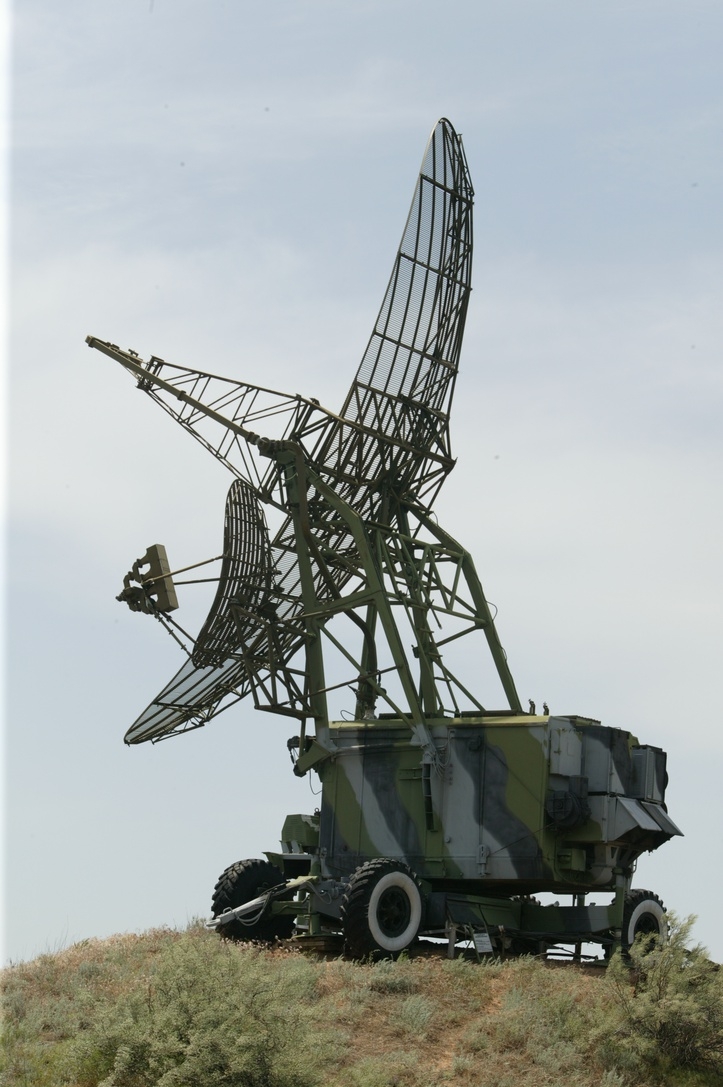
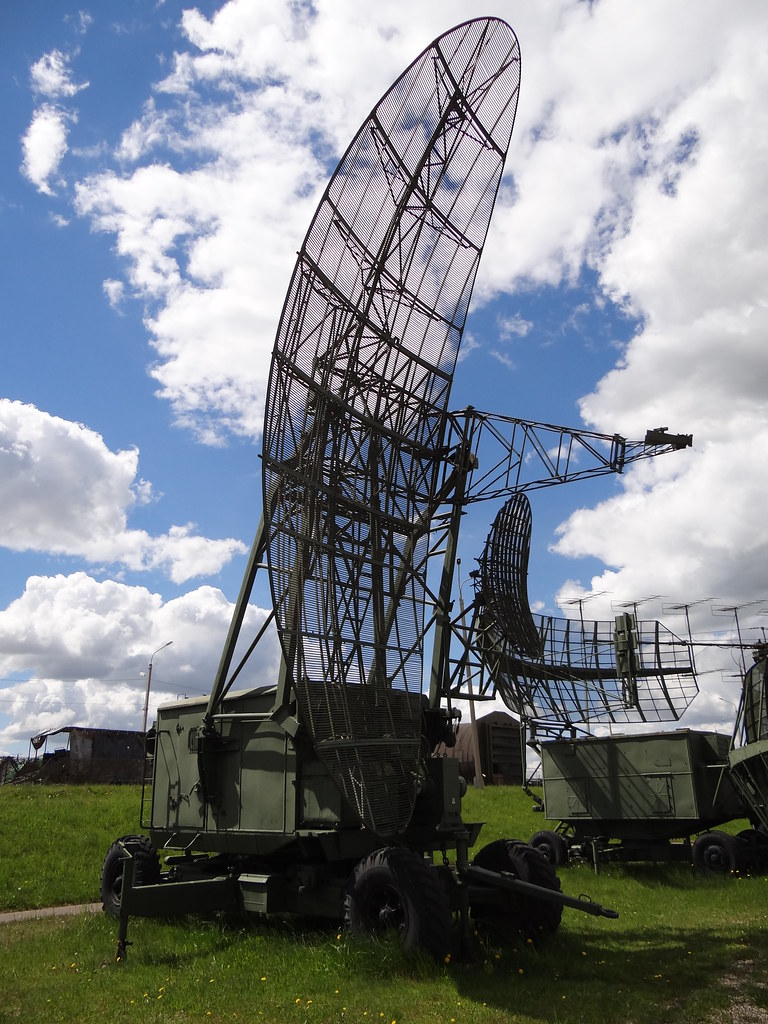
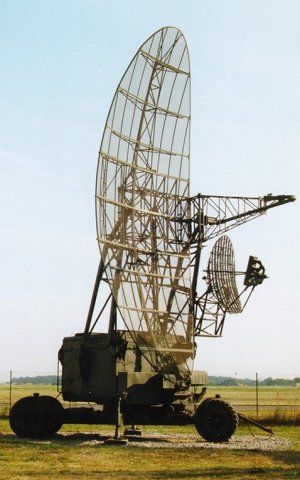
RV-13 “Odd Pair” was a fully remote controlled height-finder in the former Warshaw Pact. It was used for heights up to 85 km. This height-finder was on duty as a transitional solution for the new states in the German Air Force up to 1998. A special feature is its compensation antenna (the so-called “baby-antenna”) used for sidelobe suppression. The transmitter stage of the PRV-13 uses a magnetron at a fixed frequency, with a second transmitter tuned on another frequency on standby. There where four reserve frequencies that could never be used before for reasons of confidentiality. Changing this frequency means, changing the magnetron. The PRV-13 was a patchwork of from proven electron tube assemblies used in its predecessors too, and solid-state assemblies and modules using integrated CMOS circuits. Very interesting was the kind of generation of the elevation angle marks: a cathode ray tube was deflected in scale to the elevation angle. In this tube was clamped a precise grid of wires. When the synchronously electron beam into this tube hit one of these wires, then it created an output pulse (standing for an electronic range mark). --- Additional Data (TRADOC ODIN WEG) --- Frequency: ~2.7 GHz (S, NATO Band E) Antenna Dimensions: 4.5 x 3 m Associated Weapon Systems: С-75 (S-75): В-750 / V-750; С-125 (S-125): 5В24 / 5V24 Role: Height-Finder Remarks: Classic Soviet height-finder --- From Radartutorial.eu (https://www.radartutorial.eu/19.kartei/11.ancient/karte056.en.html) --- PRV-13 “Odd Pair” was a fully remote controlled height-finder in the former Warshaw Pact. It was used for heights up to 85 km. This height-finder was on duty as a transitional solution for the new states in the German Air Force up to 1998. A special feature is its compensation antenna (the so-called “baby-antenna”) used for sidelobe suppression. The transmitter stage of the PRV-13 uses a magnetron at a fixed frequency, with a second transmitter tuned on another frequency on standby. There where four reserve frequencies that could never be used before for reasons of confidentiality. Changing this frequency means, changing the magnetron. The PRV-13 was a patchwork of from proven electron tube assemblies used in its predecessors too, and solid-state assemblies and modules using integrated CMOS circuits. Very interesting was the kind of generation of the elevation angle marks: a cathode ray tube was deflected in scale to the elevation angle. In this tube was clamped a precise grid of wires. When the synchronously electron beam into this tube hit one of these wires, then it created an output pulse (standing for an electronic range mark).