LCS Independence
LCS Independence
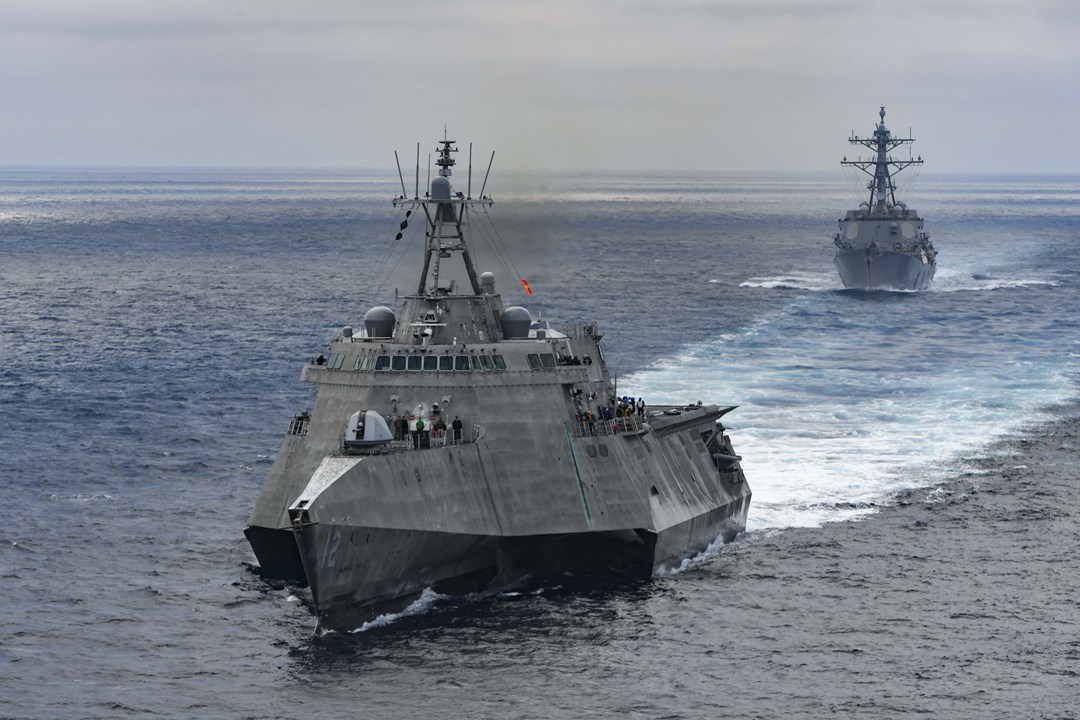
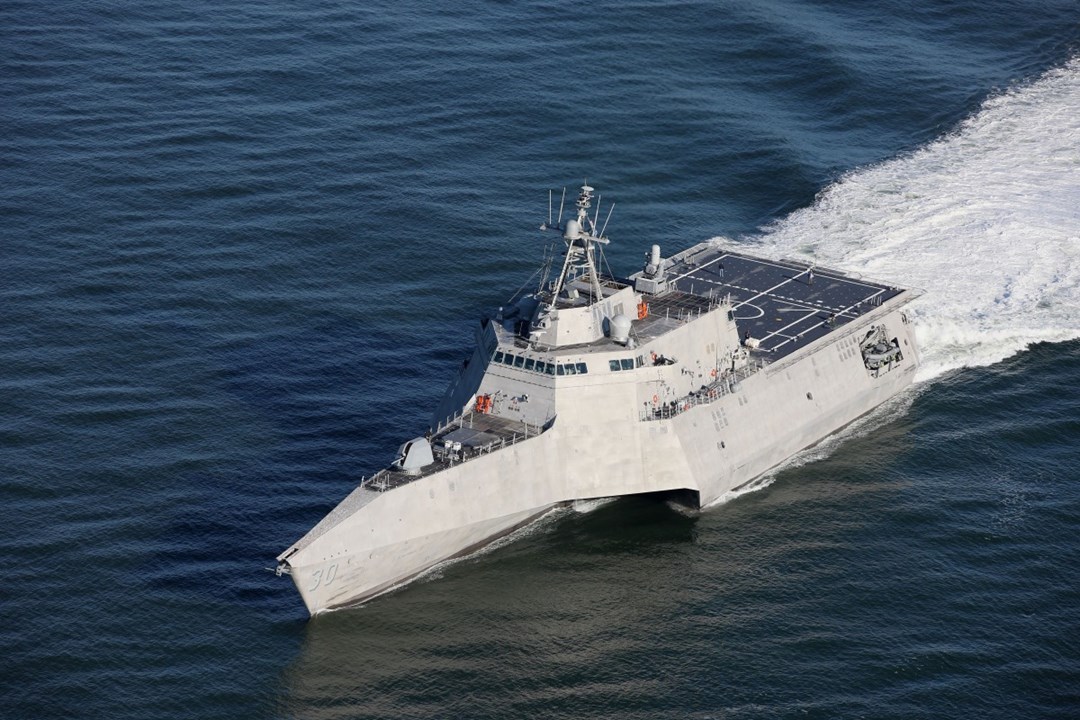
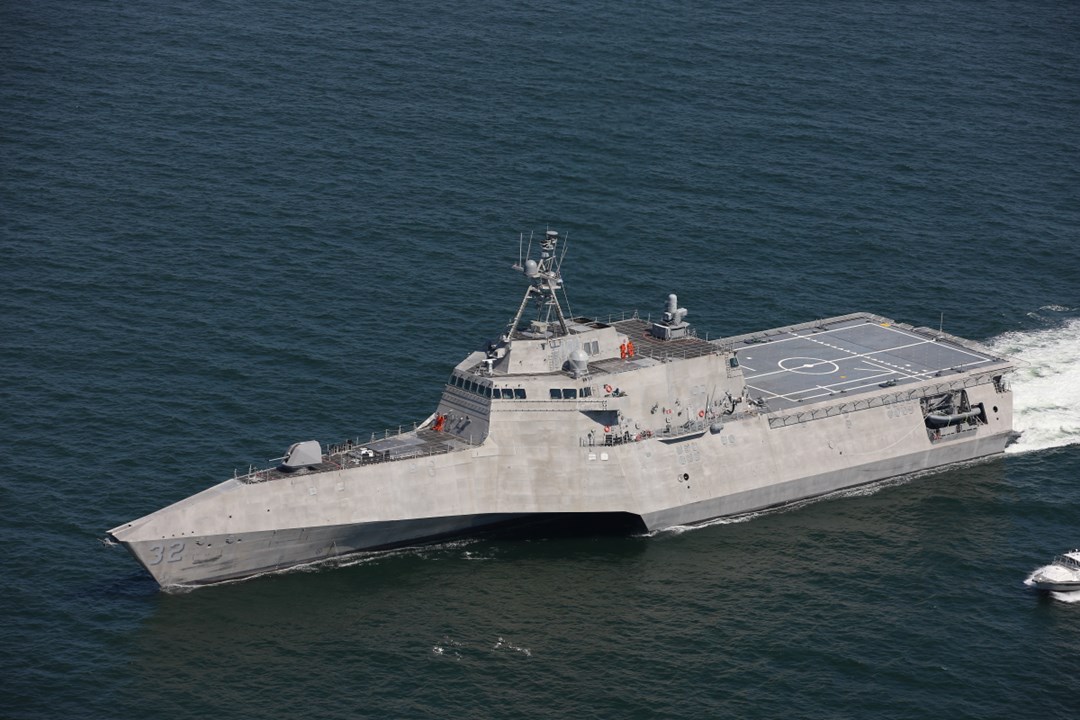
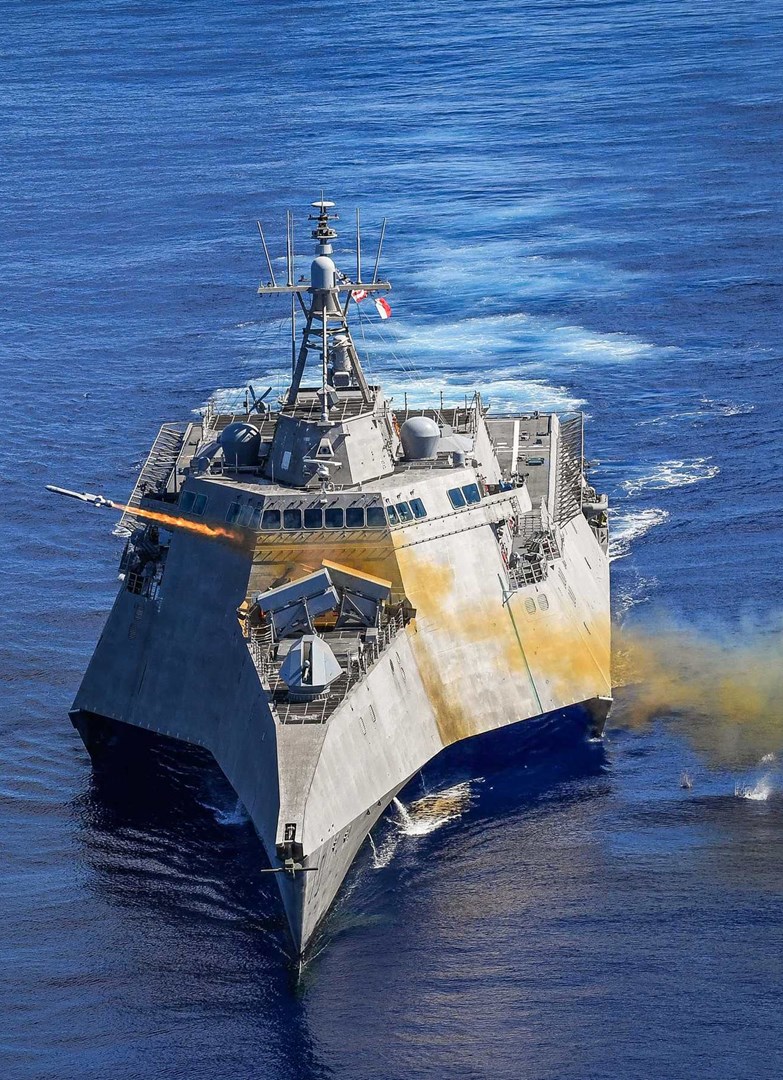
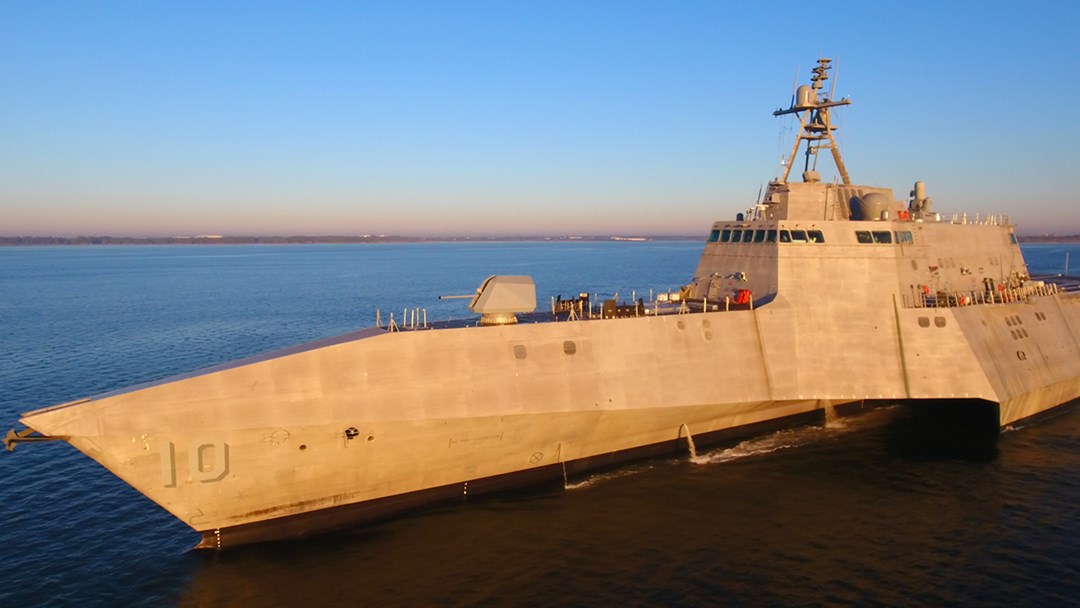
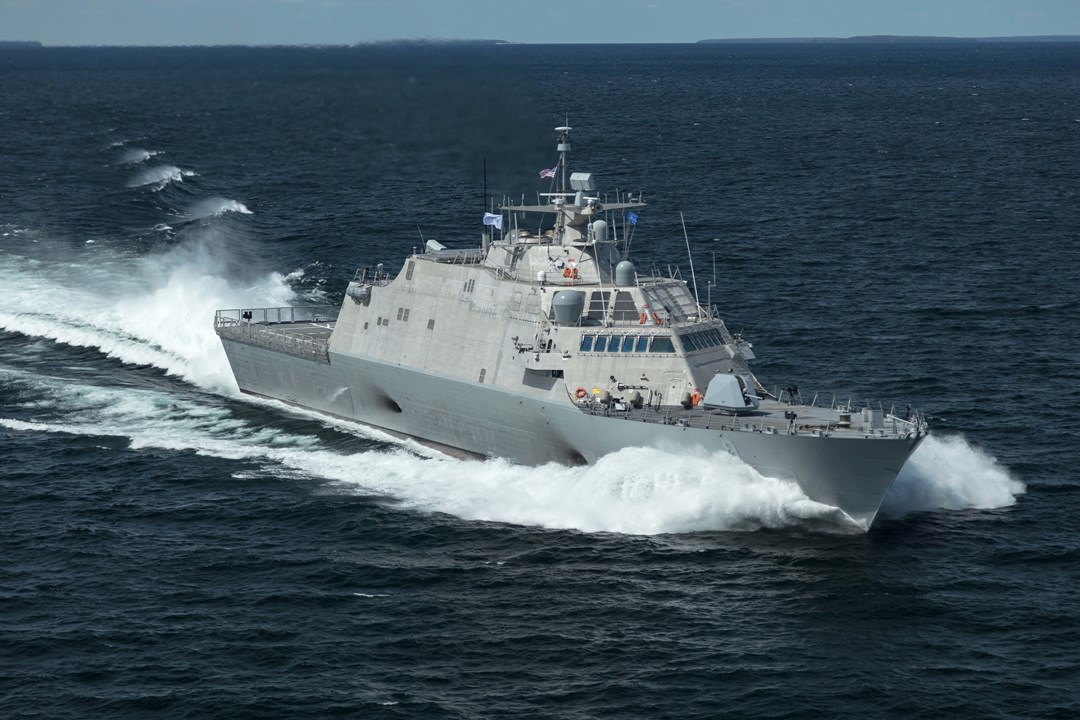
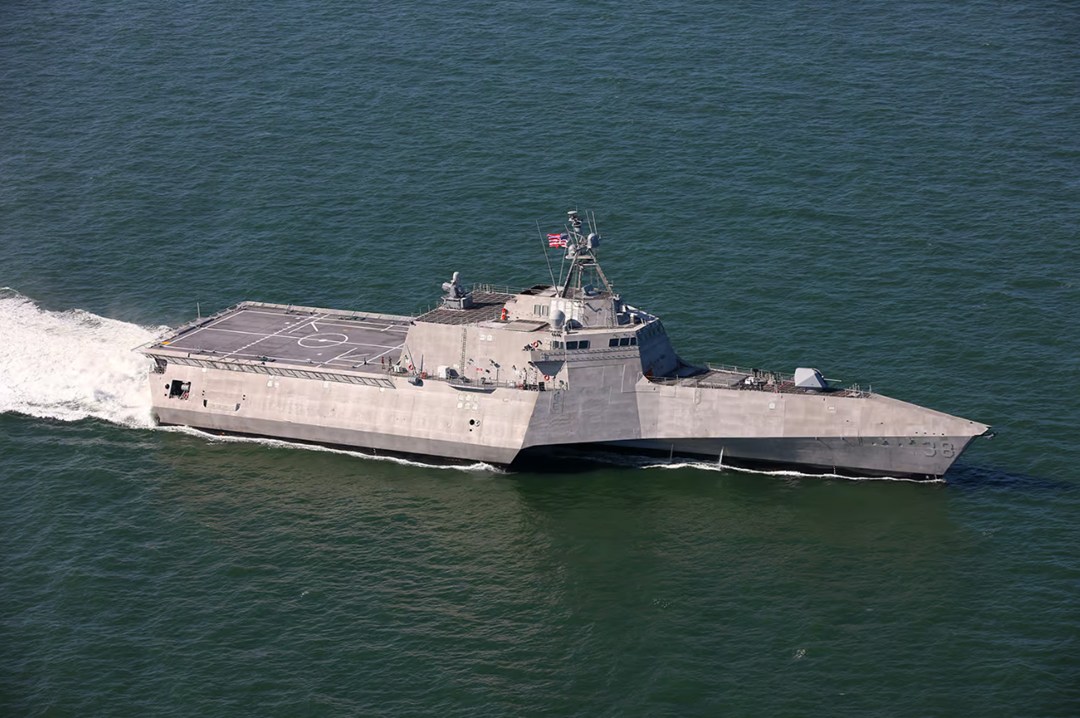
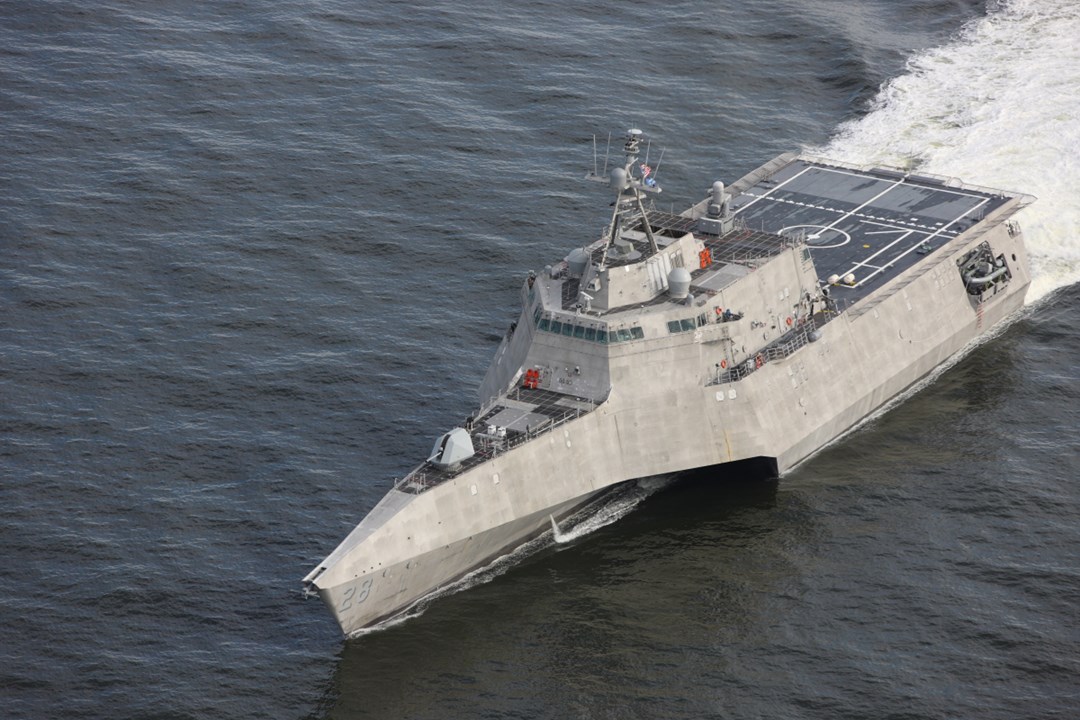
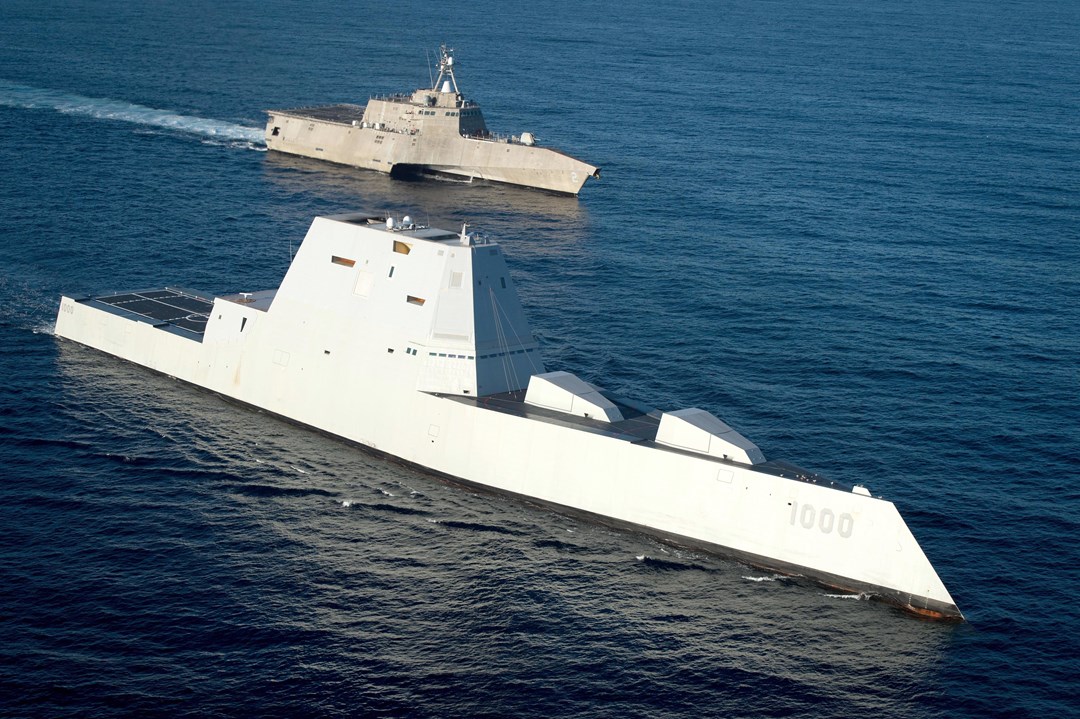
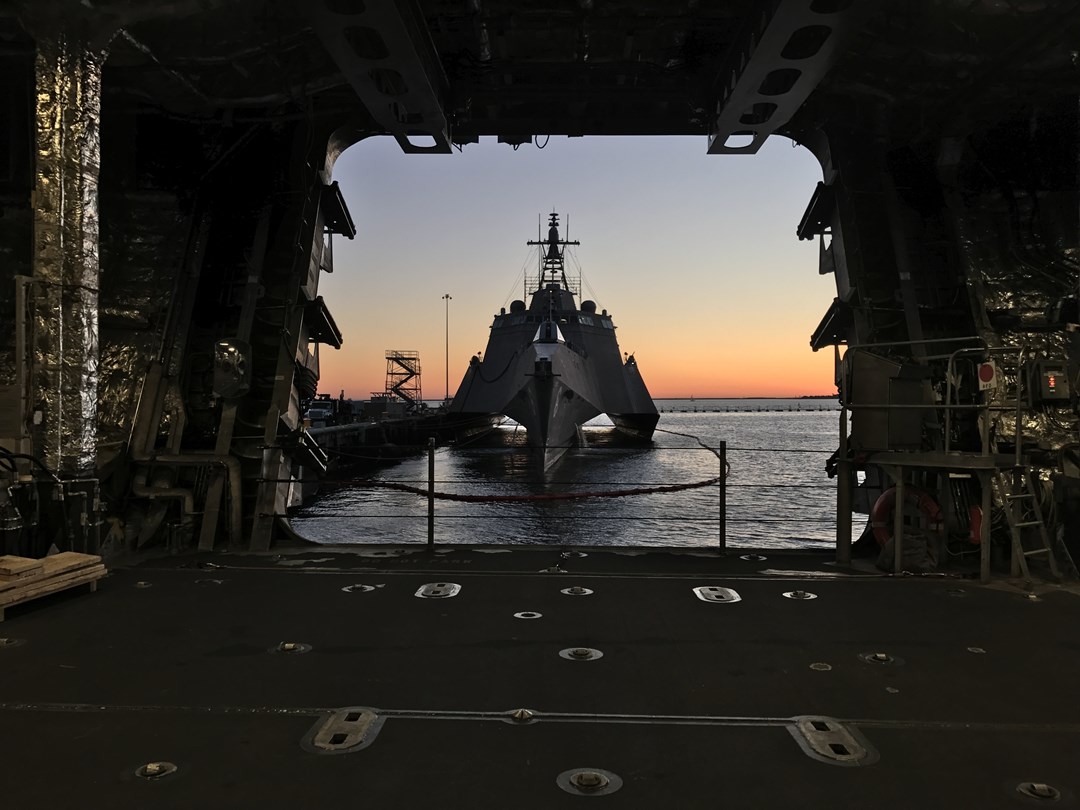
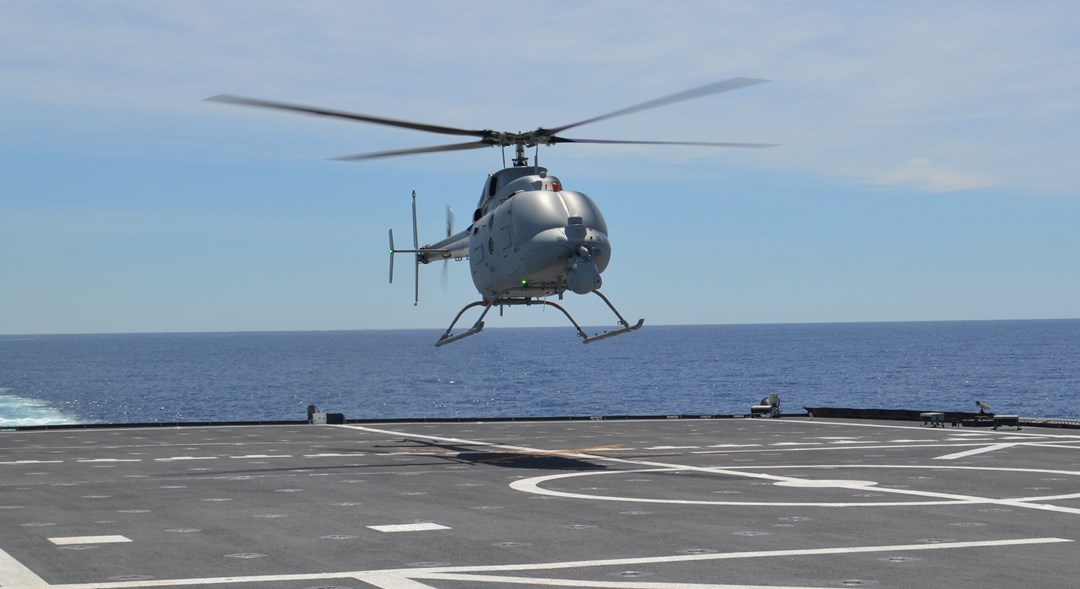
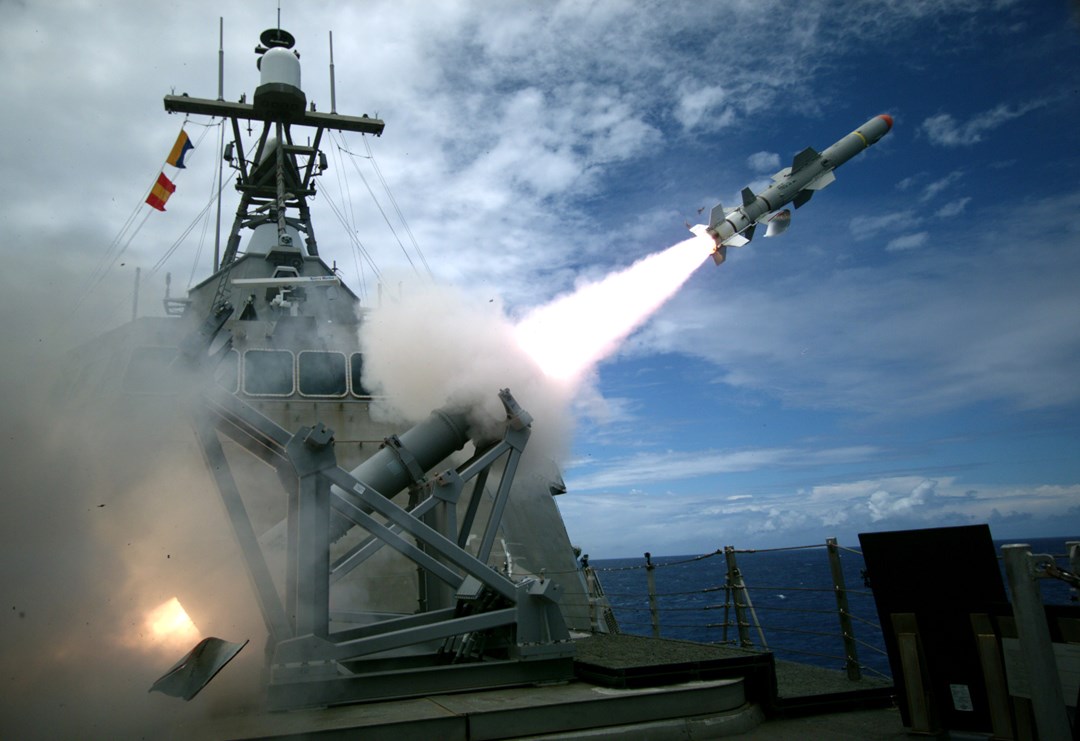
The General Dynamics Bath Iron Works approach consists of a high-speed trimaran hull optimized for sprint speeds of 45 knots and delivering the largest usable payload volumes of any existing US Navy fighting ship. Its large and stable flight deck supports operations of two MH-60S/R helicopters, multiple MQ-8B Fire Scout Vertical Takeoff Unmanned Aerial Vehicles (VTUAVs), or a single CH-53 heavyweight helicopter. The spacious hangar is suitable for two MH-60S/R helicopters or several VTUAVs. The propulsion systems combines two diesel engines and two LM2500 gas turbines along with four steerable waterjets and one steerable thruster for enhanced maneuverability in shallow waters. The trimaran hull ship can launch and recover aircraft at sea state 5 and watercrafts at sea state 4 using facilities at the stern while the ship itself remains operable at sea state 8. The standard equipment of General Dynamics LCS includes a single 57mm gun; surface-to-air missiles launchers; small caliber machine guns; decoys and countermeasures; air, surface and subsurface sensors; Joint Force Tactical Coordination and Interoperation; side mission bay access; and mission focused payload. General Dynamics was expected to build two Flight 0 LCS to be delivered to the US Navy before the end of 2008. The US Navy cancelled the second ship in 2007. Bath Iron Works, a General Dynamics subsidiary, was awarded a $223 million contract as industry team leader for design and construction of the first trimaran-hull Littoral Combat Ship October 14th 2005. On 19 January 2006, General Dynamics-led team conducted the keel laying ceremony for LCS 2 ship. On April 4, 2006 the US Navy named LCS 2 USS Independence. In November 2004 Lockheed-Martin selected United Defense (now BAE Systems) MK 110 57mm naval gun for its flight 0 LCS proposal. Mk 110 gun system along with Mk 295 intelligent ammunition will provide self-defense capability for the LCS against smaller, fast moving threats. In 2004, the US Navy signed a memorandum of understanding (MoU) with the US Army to procure the NLOS-LS PAM weapon system for the Littoral Combat Ship (LCS). The LCS armed with revolutionary NLOS-LS PAM was projected to be ready in fiscal year 2008. In late April 2006, the US Navy made public that the first four LCS ships would be homeported at Naval Station San Diego, California. This decision was influenced by the Quadrennial Defense Review (QDR) emphasis on the Pacific theater. Indepence-class ships will feature two rotational crews named gold and blue similar to Trident submarines rotational crew system.
deagel.com: https://www.deagel.com/x/x/a002109