ARMSNET
Military Equipment Database
Initializing 0%

HQ-17 (SA-15A) Chinese Short-Range Air Defense Missile System

HQ-17
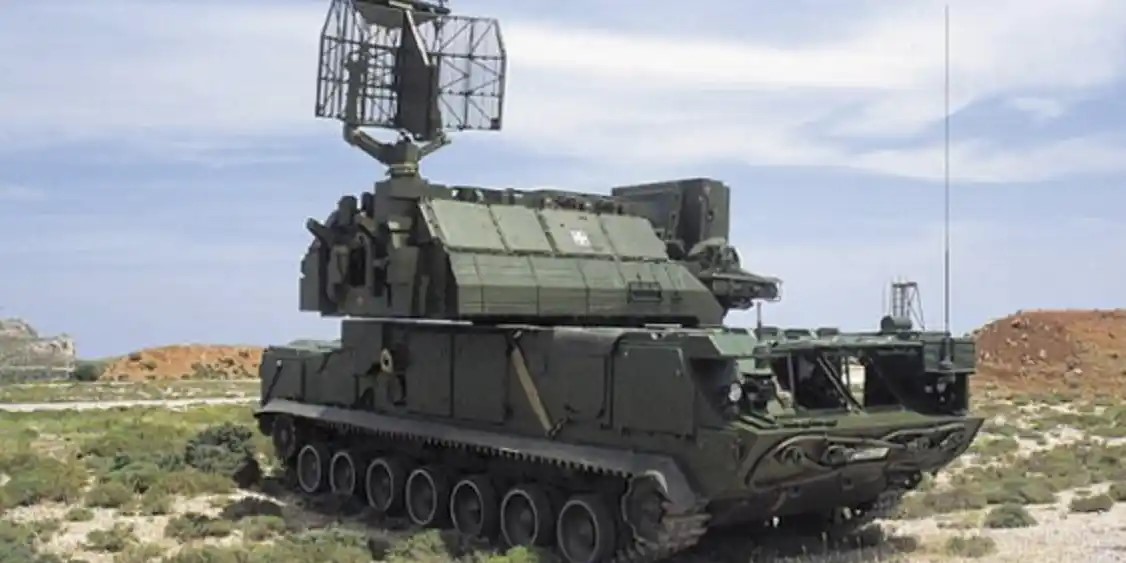
Short-Range Surface-to-Air Missile System
Spotted an error? Sign in to suggest an edit.
Basic Information
Name
HQ-17 (SA-15A) Chinese Short-Range Air Defense Missile System
Designation
HQ-17
Alternate Designation
HQ-17; NATO: SA-15A; Hongqi-17; Red Flag-17
Equipment Type
Short-Range Surface-to-Air Missile System
Manufacturer
CASIC
Date of Introduction
2014
Description

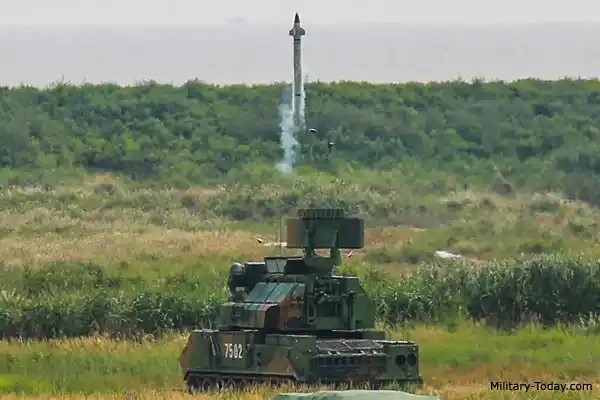
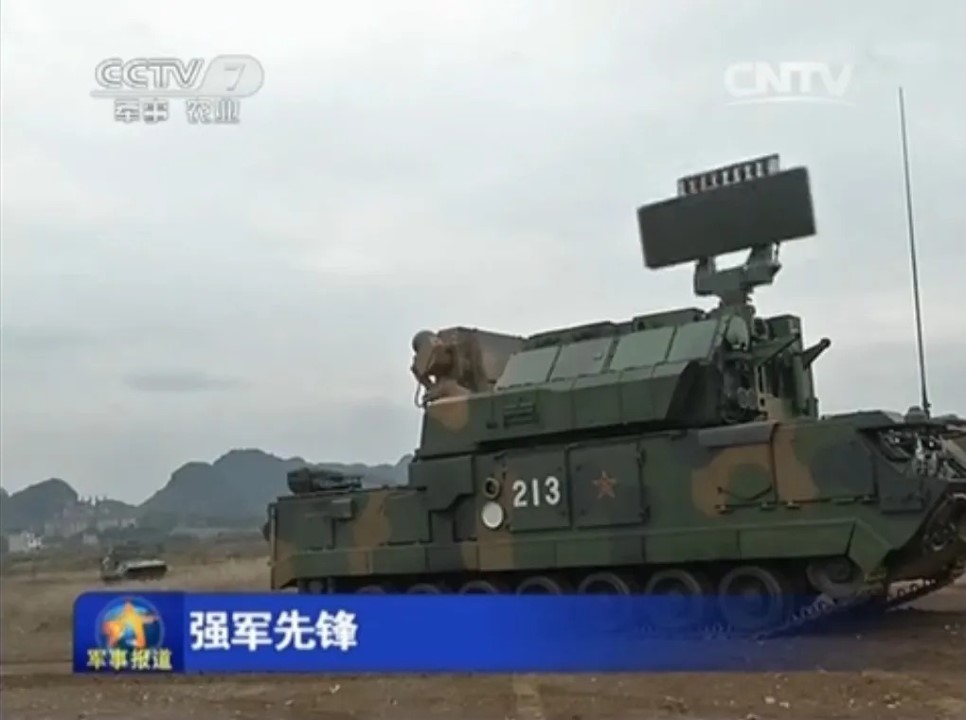
The HQ-17 (SA-15A) Chinese Short-Range Air Defense Missile System is a multiplatform ‘system of systems', using a range of launchers, sensors, and supporting assets to operate. Within the PLAGF, it would typically be expected to be deployed in a battalion or regimental set unit size, depending on the type of formation the HQ-17 is subordinate to. A brigade would typically be provided with a battalion set, while a division would typically be provided with a regimental set. To understand the quantities involved, in the case of HQ-17, a battalion set consists of three batteries, while a regimental set consists of four batteries. This is a Chinese domestically produced and upgraded variant of the Tor-M1, which was revealed in 2014. The system is equipped with several upgrades compared to the Tor-M1 from which it was derived. The most notable of these are the changes to the TLAR vehicle, which is equipped with an enhanced search radar and a refined fire control radar. The HQ-17 system launches missiles from a static position after the system's TLARs have stopped and is not known to be capable of launching whilst on the move. When in road march configuration, the system is highly mobile, and the combat elements of an HQ-17 battery can move together at a maximum speed of approximately 60 kilometers per hour. However, this speed may vary depending on terrain and weather conditions. The system's TLARs are capable of operating their search radars whilst on the move, and an HQ-17 battery is estimated to be capable of transitioning from road march configuration to combat-ready configuration within seconds of the TLARs halting. Furthermore, the crews are not required to leave their vehicles during this process, but the commander is required to change seats from the front driver compartment to the commander's position in the operator's compartment. The HQ-17 system boasts a high degree of autonomy, and the HQ-17 TLAR vehicle is capable of operating independently if necessary. However, more commonly, the HQ-17 TLARs would be expected to operate in pairs, with a battery containing two of these pairs. The battery is coordinated from the battery command post. Once activated, an HQ-17 interception operates on the following basic process: Surveillance, detection, and engagement: The TLAR's radar detects and tracks a threat, with the command post personnel making an identification and decision to engage. Once launched, the missile is guided by autopilot for some of the boost phases and then switches over to radio command guidance for mid-course updates and terminal guidance. The TLAR's fire control radar tracks both the missile and the target and sends guidance corrections to the missile. Target interception: Once at the appropriate proximity, the missile proximity fuze activates the warhead to defeat the threat. The more granular process by which this is carried out is as follows: A threat is detected, classified, and tracked by a TLAR radar or external search radar. This detects, classifies, and tracks the target. The target is automatically probed with an IFF ping, and is communicated to the command post. In some modes of operation, the target may be passed to the command post first, and a decision may be made to probe the target with an IFF ping afterward manually. The command post provides operators with available information on the identified threat, and if classified as such, the operators decide whether to engage. The command post authorizes a TLAR to conduct the engagement. The HQ-17 missile begins its flyout using an INS-based autopilot to place it on a predetermined trajectory. After the boost phase, the missile receives live tracking and guidance from the TLAR. Radio command guidance updates from the TLAR are used to provide guidance to the missile through the mid-course phase and terminal phases. Once in proximity to the target, the missile radio proximity fuze activates the warhead to destroy the target.

Ground Specifications
Crew 17
Mobility Type Tracked
Main Weapon HQ-17 missile
Engine Diesel (750 hp)
NBC Protection Yes
Max Speed 65.0 km/h
Range 600.0 km
Variants
HQ-17A Wheeled variant.
FM-2000 FM-2000 is an export version of the HQ-17A. It was first publicly revealed in 2018. It uses a Dongfeng high mobility chassis with 6x6 configuration.
HQ-17AE This is an export variant of the HQ-17A, which was publicly revealed for the first time in video footage from CCTV on 5 March 2021. In contrast to the earlier FM-2000, the HQ-17AE appears externally identical to the HQ-17A, and it is thought that this variant replaced the FM-2000 system in China's export offer portfolio. The system is thought to be identical in terms of structure, composition, and performance to the HQ-17A system; however, there are likely to be minor differences such as the operating frequency of the radars and changes to the IFF system for export customers.
System
Alternative Designation HQ-17; NATO: SA-15A; Hongqi-17; Red Flag-17
Type Short-Range Air Defense Missile System
Manufacturer China Aerospace Science and Industry Corporation (CASIC)
Configuration Track
Crew The HQ-17 TLAR has three crew, consisting of the driver, the commander, and the operator.
Note A typical battery would consist of four TLARs, one battery command vehicle, two transloaders, two transporters, one technical service vehicle, one spare parts vehicle, and three security vehicles. This would total 14 vehicles per battery. A battery would also have 32 ready-to-launch missiles, and 48 missile reloads.
Dimensions
Length 8.0 m
Width 3.2 m
Height 4.0 m
Weight, Combat 32 tons
Automotive
Engine Name INA
Engine Type Diesel
Engine Power 750 hp
Maximum Range 600 km
Maximum Speed 65 km/h
Amphibious No
Gradient 35°
Side Slope 25°
Trench 2.0 m
Fording 1.0 m
Ground Clearance 450 mm
Ground Pressure 0.8 kg/cm2
Main Weapon System
Launch System The HQ-17 missile operates using a mechanical cold-launch system. This system uses a mechanical catapult which is located inside the launch container and is powered by a pyrotechnic device. The catapult consists of a telescoping rod, with a thicker outer rod and a thinner inner rod. The outer rod portion of the catapult is fixed to the launch container and the inner rod is attached to the missile using a hook on the end of the rod end which connects with a catch on the base of the missile. Several other hooks and catches are used to align the catapult and missile within the launch container, but the primary pulling power comes from the lower hook. At launch, a pyrotechnic charge is ignited and the inner rod is forced upward, telescoping into the outer rod, with sufficient force to pull the missile up with it via the hook at the base. After the inner rod has reached its travel limit, it stops, but the missile carries on upward and out of the container at a speed of 25 m/s due to the kinetic force imparted onto it. Once clear of the launch container, the steering fins and stabilization fins unfold. Once the missile has reached a height of between 16 and 20 m, the missile engages its declination motor, using the small gas generator to supply thrust to the nozzles located between the steering fins. The purpose of this is to effect a post-launch pitching maneuver which places the missile nose onto an approximate heading towards its intended target. The main rocket motor is activated either after a specified one-second delay from the start of the cold launch, or once the missile has deviated by at least 50° from its original vertical orientation. Once the main rocket motor is ignited, the missile rapidly climbs to meet the target.
Missile Name The HQ-17 TLAR (Transporter, Launcher and Radar) is equipped with the HQ-17 missile. Eight ready to launch missiles can be fitted per TLAR.
Container Length 1,507 mm
Container Width 539 mm
Container Height 3,005 mm
Loaded Container Weight 1,053 kg
Missile Length 2,895 mm
Missile Diameter 230 mm
Missile Wingspan 650 mm
Propulsion Solid propellant, single-stage
Guidance System The missile operates on the automatic command to line-of-sight (ACLOS) radio command guidance principle. An inertial navigation system is used for part of the boost phase, with command guidance updates used for mid-course updates and the terminal guidance. For mid-course and terminal guidance, the TLAR fire control radar tracks both the missile and the target, sending course corrections to the missile as appropriate. The command guidance system is understood to operate using proportional navigation guidance logic, aligning the course of the missile with the predicted future position of the target based upon its range and speed.
Maximum Speed 700-800 m/s
Target Engagement Range 1.5 km to 15 km and at altitudes from 10 m to 10 km, and is estimated to be capable of engaging crossing targets out to a maximum range of 8 km. The missile has a top speed of approximately 700-800 m/s and is capable of engaging targets travelling at a maximum of 700 m/s (Mach 2.04).
Warhead Type HE-FRAG
Warhead Weight 14.5 kg
Fuze Type Radio proximity
Maximum Range 15.0 km
Minimum Range 1.5 km
Maximum Altitude 10.0 km
Minimum Altitude 10.0 m
Radar Systems
3D Phased Array Radar The HQ-17 TLAR search radar is a 3D phased array radar with track while scan functionality, and is thought to operate in the S-band. The radar uses a flat-faced rectangular antenna. The peak and average power of the radar is not confirmed. It is stated to have a nominal maximum detection range of over 27 km, however the maximum detection would in practice depend on the RCS of the target and numerous other factors. As such, the list below provides a more detailed capable of locating the following target types at the following typical ranges: Fighter aircraft – 27 km; Helicopters – 20 km; UAVs – 15 km. The radar is provided with independent two-axis stabilization to enable target search while on the move. As with the Tor family which the HQ-17 is derived from, the search radar is estimated to be capable of scanning a total sector measuring 360° in azimuth, and 32° in elevation. The search radar is likewise thought to have two main preset sector search positions, with one position used for target search at lower altitudes, from 0-32° in elevation, while the second position is used for searching for higher-altitude targets from 32-64° in elevation. It is thought that like the Tor family, a pair of HQ-17 TLARs can scan alternate elevation ranges while exchanging data with their partner. Under this model, one TLAR would scan for lower-altitude targets, while its partner would scan for higher-altitude targets, with both sharing the resulting common airspace picture providing coverage through 360° in Azimuth and 0-64° in elevation. Using this data-sharing, the TLARs are able to engage targets located by their partner.
IFF Antenna The small antenna mounted directly above the search radar antenna is the TLAR's rectangular IFF antenna, which is used to interrogate potential targets with an IFF ping prior to engagement.
Fire Control Radar The fire control radar is an either a phased array or AESA radar with electronic beam steering in azimuth and elevation, and thought to operate in the X-band. The vehicle has been stated to be capable of engaging two targets simultaneously, suggesting that the radar has two targeting channels. The tracking range, average and peak power figures for the radar are not known, but would be expected to be higher than the 20-23 km tracking range of the Tor family 9A331-1 TLAR. The angular resolution, range resolution, and error figures are not known. In operation, the fire control radar is cued to targets by the search radar. Upon receiving the cue, the fire control radar performs an independent search of the assigned coordinates. Once the target has been selected, a missile is launched, and in the earliest phase of flight the missile is guided toward the target by an INS autopilot. At the same time as the missile is launched, the autonomous capture column generates a wide beam, capturing the missile within the beam, and providing the targeting computer with position updates of the missile's location, and providing guidance corrections from an estimated 250 m out to approximately ≥1.5 km. At this point, the missile enters the fire control radar's field of regard, and the fire control radar takes over missile tracking and guidance functions. At this stage, the missile is acquired by the fire control radar, which measures the coordinates of both the target and the missile, and sends guidance commands to put the missile on an intercept course with the target. The fire control radar continues to provide the missile course corrections through the terminal phase. It should be noted that although the effective ranges at which the handover between autonomous capture column and fire control radar are estimated, these are supported by missile's minimum effective range of approximately 1.5 km, since the autonomous capture column cannot be used for terminal guidance, and the missile would require a minimum distance for the terminal guidance provided by the fire control radar to function. In total, the HQ-17 TLAR is capable of engaging two targets simultaneously, as long as the simultaneous engagement takes place within the fire control radar's field of regard. The minimum interval between missile launches is approximately 2.5 seconds.
Cassegrain Antenna The small bulbous antenna mounted to the top-left corner of the fire control radar is the autonomous columns for capture of the missile. This consists of an inverse Cassegrain antenna which can be elevated or depressed, located underneath a radio-transparent bulbous cover. This device is used immediately after the launch of a missile, it generates a very wide beam to capture the missile within the beam. This then continuously updates the targeting computer with the location of the missile, and is also used to provide the missile with course correction guidance for the initial phase of flight, before it can be captured by the much narrower beam of the fire control radar. It has been understood that a single column of this design is capable of carrying out the capture of two missiles.
Protection
Armor INA
Applique Armor INA
NBC Protection Yes
Smoke Equipment INA
Details
Country of Origin China
Filter Label
H
Classification
Domain
Ground
Equipment Status
Active
Dimensions
Length
8 m
Width
3.2 m
Height
4 m
Weight
32000 kg
Operators (1)
China
Something went wrong. Please reload the page. Reload