Su-30K Russian Multirole Fighter Aircraft
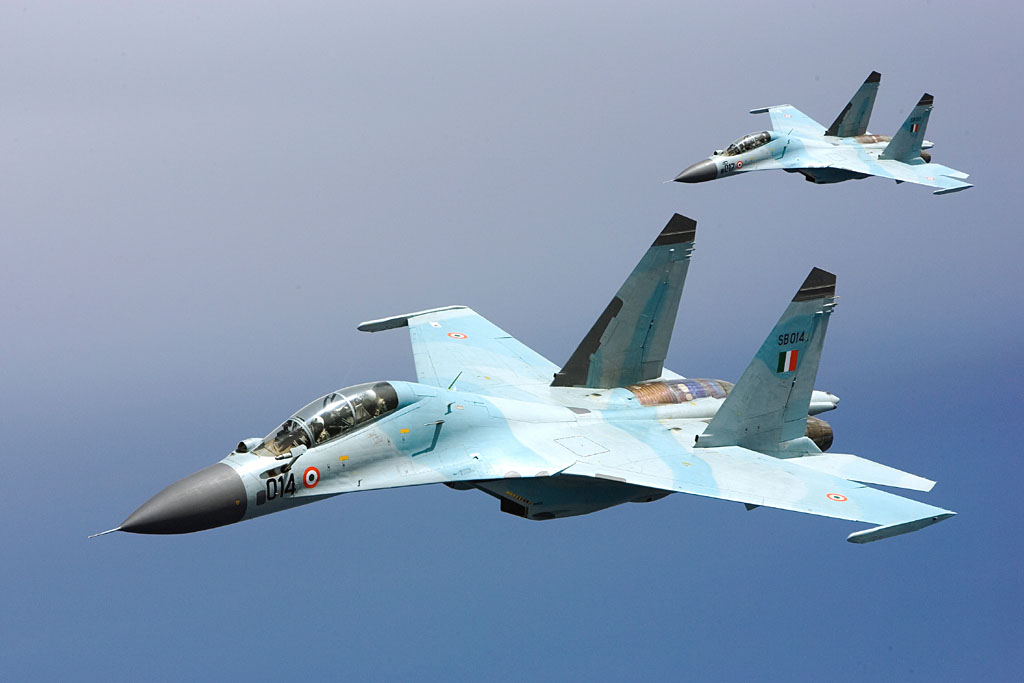

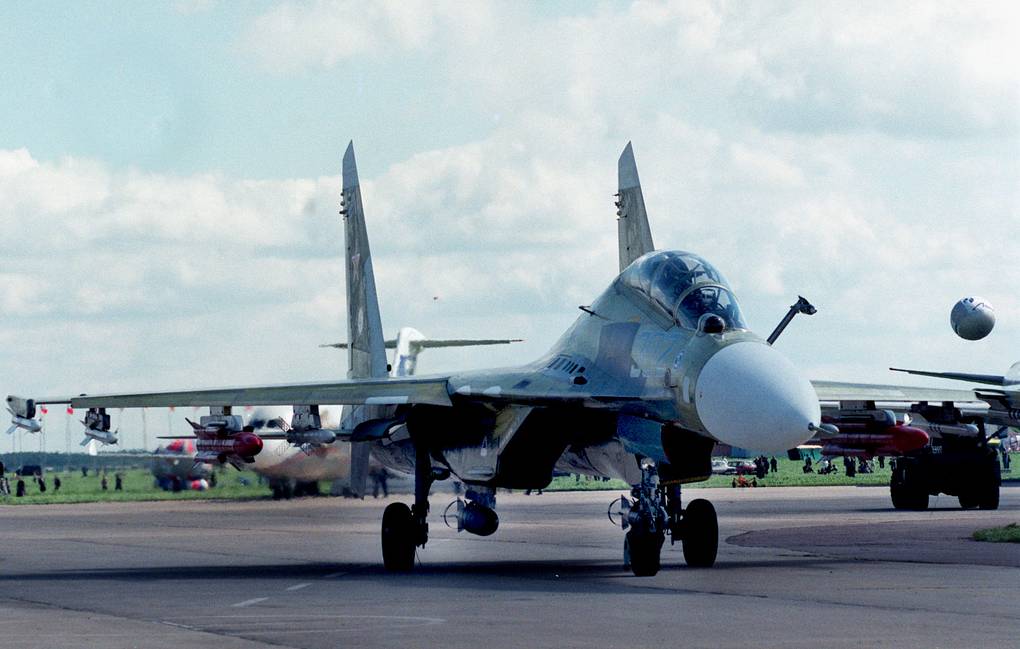
Su-30K Export version of the Russian Su-30. India and Irkut renegotiated a deal that would have upgraded the first 18 Su-30K fighters to the Su-30MKI standard. The proposed agreement would limit the modernization to a replacement of the N-001Mech radar with the N-011M Bars and the addition of a glass cockpit with improved avionics. The Sukhoi Su-30 (Russian: Сухой Су-30; NATO reporting name: Flanker-C) is a twin-engine, two-seat supermaneuverable fighter aircraft developed in the Soviet Union by Russia's Sukhoi Aviation Corporation. It is a multirole fighter for all-weather, air-to-air and air-to-surface deep interdiction missions. The Su-30 started out as an internal development project in the Sukhoi Su-27 family by Sukhoi. The design plan was revamped and the name was made official by the Russian Defense Ministry in 1996. Of the Flanker family, the Su-27, Su-30, Su-33, Su-34 and Su-35 have been ordered into limited or serial production by the Defense Ministry. The Su-30 has two distinct version branches, manufactured by competing organisations: KnAAPO and the Irkut Corporation, both of which come under the Sukhoi group's umbrella. KnAAPO manufactures the Su-30MKK and the Su-30MK2, which were designed for and sold to China, and later Indonesia, Uganda, Venezuela, and Vietnam. Due to KnAAPO's involvement from the early stages of developing Su-35, these are basically a two-seat version of the mid-1990s Su-35. The Chinese chose an older but lighter radar so the canards could be omitted in return for increased payload. It is a fighter with both air supremacy and attack capabilities, generally similar to the U.S. F-15E Strike Eagle. Irkut traditionally served the Soviet Air Defense and, in the early years of Flanker development, was given the responsibility of manufacturing the Su-27UB, the two-seat trainer version. When India showed interests in the Su-30, Irkut offered the multirole Su-30MKI, which originated as the Su-27UB modified with avionics appropriate for fighters. Along with its ground-attack capabilities, the series adds features for the air-superiority role, such as canards, thrust-vectoring, and a long-range phased-array radar. Its derivatives include the Su-30MKM, MKA, and SM for Malaysia, Algeria, and Russia, respectively. The Russian Air Force operates several Su-30s and has ordered the Su-30SM version. The integrated aerodynamic configuration, combined with the thrust vectoring control ability, results in high manoeuvrability and unique takeoff and landing characteristics. Equipped with a digital fly-by-wire system, the Su-30 is able to perform some very advanced manoeuvres, including the Pugachev's Cobra and the tailslide. These manoeuvers quickly decelerate the aircraft, causing a pursuing fighter to overshoot, as well as breaking a Doppler radar-lock, as the relative speed of the aircraft drops below the threshold where the signal registers to the radar. The aircraft's powerplant incorporates two Saturn AL-31F afterburning low-bypass turbofan engines, fed through intake ramps. Two AL-31Fs, each rated at 123 kN (28,000 lbf) of full afterburning thrust ensures Mach 2 in level flight, 1,350 km/h speed at low altitude, and a 230 m/s climbing rate. With a normal fuel reserve of 5,270 kg, the Su-30MK is capable of performing a 4.5-hour combat mission with a range of 3,000 km. An aerial refueling system increases the range to 5,200 km (3,200 mi) or flight duration up to 10 hours at cruise altitudes. The aircraft features autopilot ability at all flight stages including low-altitude flight in terrain-following radar mode, and individual and group combat employment against air and ground/sea-surface targets. Automatic control system interconnected with the navigation system ensures route flight, target approach, recovery to airfield and landing approach in automatic mode.