Kabina 66/5n87 (Back Trap) Russian 3D Long-Range Radar System
Kabina 66/5n87
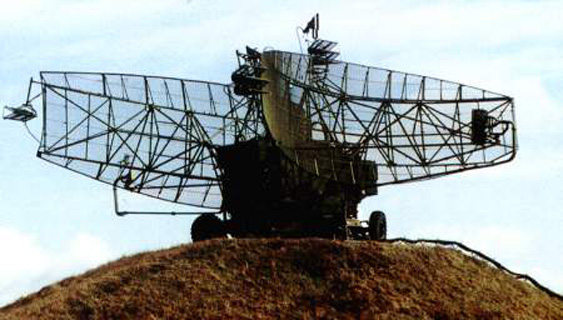
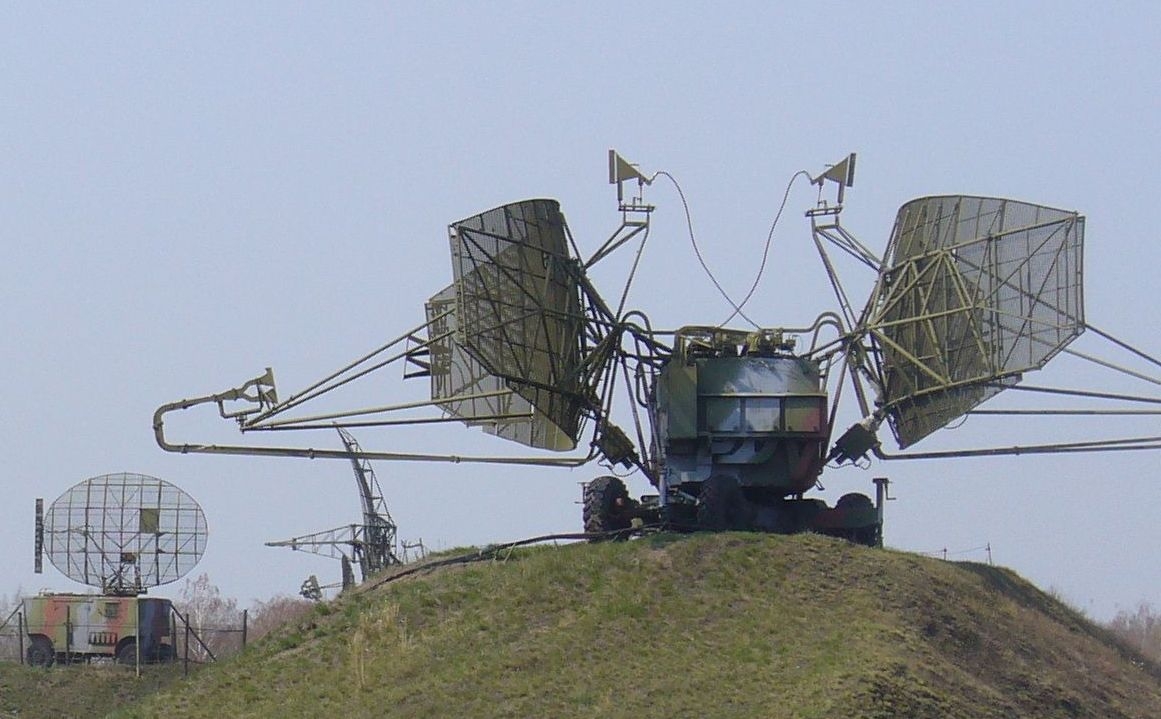
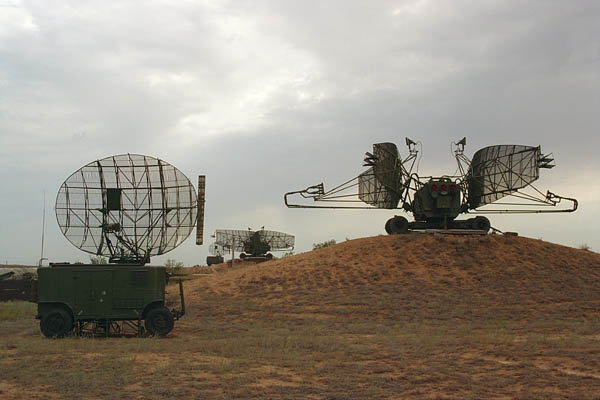
Air defense radar unit of the former Soviet Union Interesting at this radar unit is the diametral attachment of 2 antenna systems. Every antenna is meant for another elevation angle. Since two equal radar units always turned a location synchronously, four height ranges were felt therefore (like a Stacked- Beam- Antenna). The Kabina 66 was coupled with several height-finders (2 - 4 height-finders PRV-13 or PRV-17). The frequency is processed with four impulses but only two of these are transmitted. Two radar units work synchronously as a couple but also separate operation is possible. The rotary drive is hydraulically carried out. The power supply (300 kW / 400 Hz) is carried out of convertor or with diesel engines. A transfer needs 19 railroad plate freight cars. --- Additional Data (TRADOC ODIN WEG) --- Frequency: 2–4 GHz (S, NATO Band E/F) Antenna Dimensions: 16 x 5 m Associated Weapon Systems: С-75 (S-75): В-750 / V-750; С-125 (S-125): 5В24 / 5V24 Role: 2D Early Warning/GCI Remarks: Used with S-75/S-125, phased out --- From Radartutorial.eu (https://www.radartutorial.eu/19.kartei/11.ancient/karte041.en.html) --- Kabina 66 (Russian designator: 5N87; Cyrillic: 5Н87; NATO designator: “Back Net”) was an air defense radar system of the former Soviet Union Interesting at this radar unit is the diametral attachment of 2 antenna systems. Every antenna is meant for another elevation angle . Since two equal radar units always turned a location synchronously, four height ranges were felt therefore (like a Stacked- Beam- Antenna ). The Kabina 66 was coupled with several height-finders (2 to 4 height-finders PRV-13 or PRV-17 ). The frequency is processed with four impulses but only two of these are transmitted. Two radar units work synchronizedly as a couple but also separate operation is possible. The rotary drive is hydraulicly carried out. The power supply (300 kW / 400 Hz) is carried out of convertor or with diesel engines. A transfer needs 19 railroad plate freight cars.