Liaoning Class(Type 001 Class) Chinese Aircraft Carrier
Aircraft Carrier
Spotted an error? Sign in to suggest an edit.
Other
Basic Information
Name
Liaoning Class(Type 001 Class) Chinese Aircraft Carrier
Designation
—
Alternate Designation
—
Equipment Type
Aircraft Carrier
Manufacturer
Mykolaiv South Nevskoye Planning and Design Bureau
Date of Introduction
2012
Description
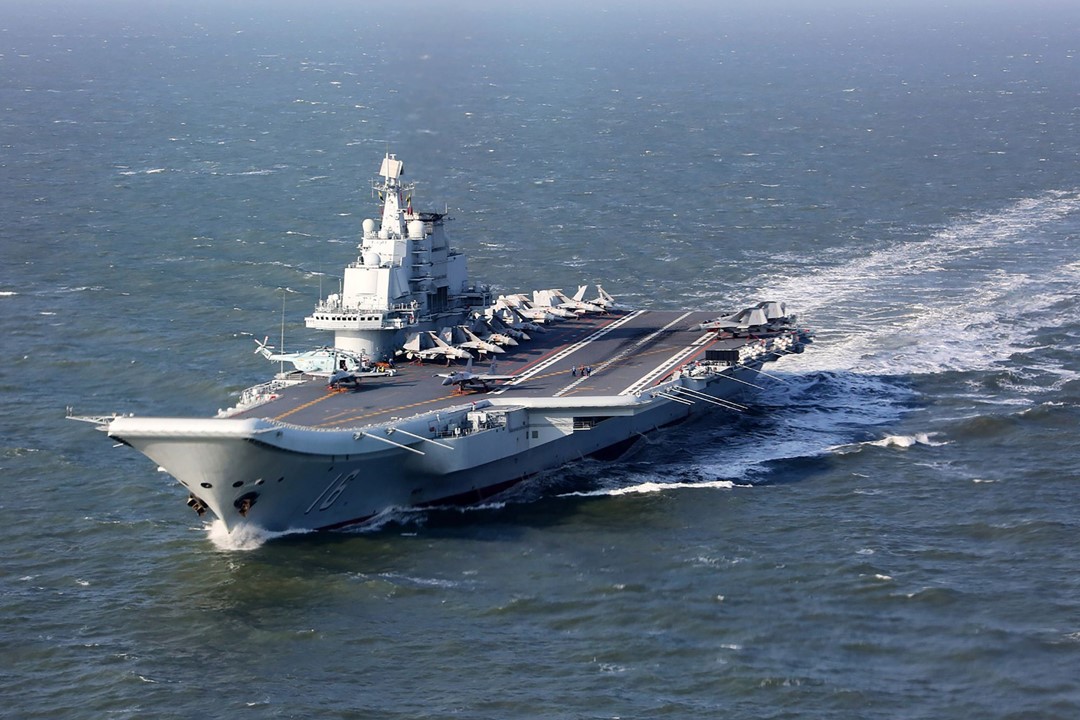
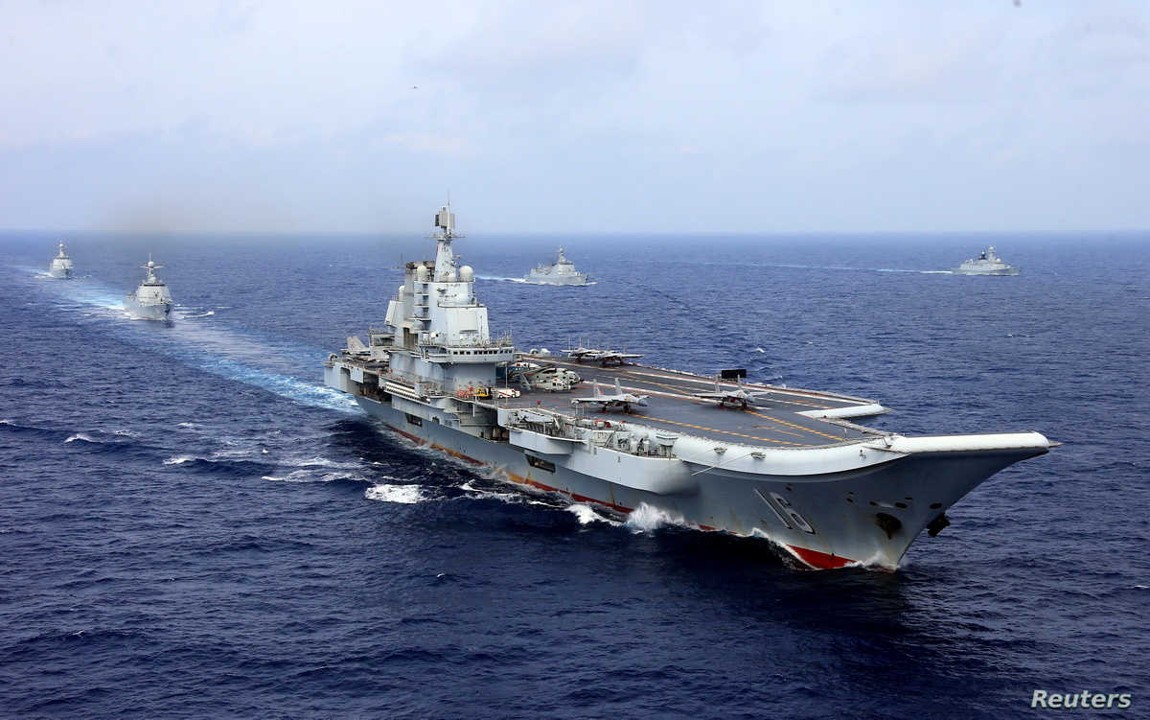
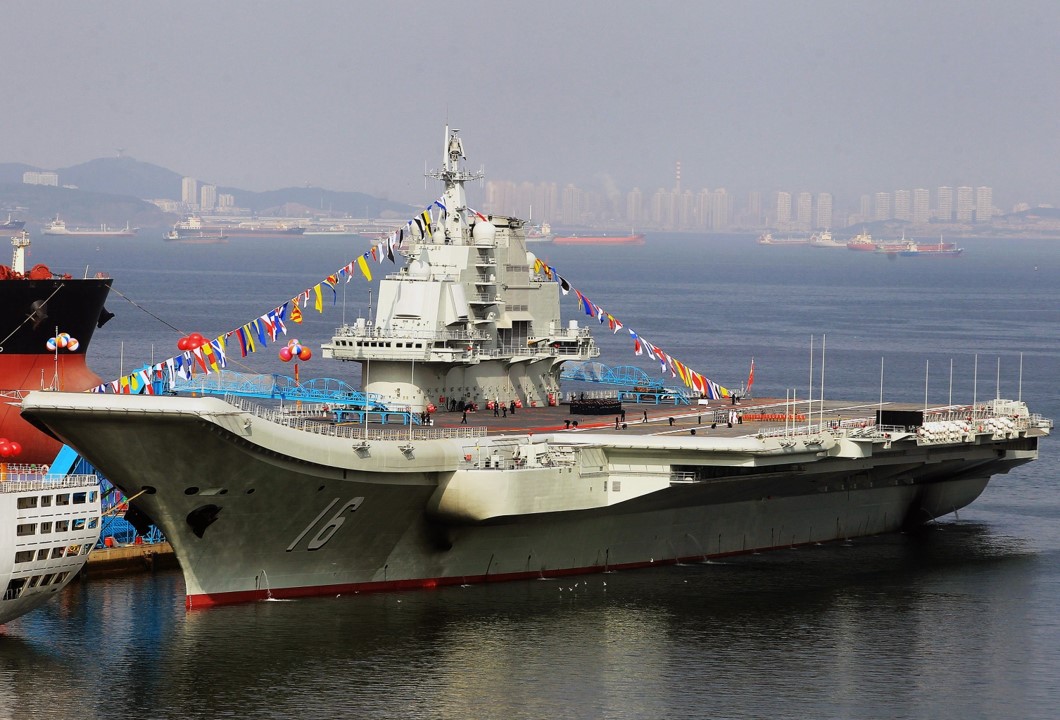
The Liaoning Class (Type 001 Class) Chinese Aircraft Carrier is the first aircraft carrier commissioned into the People's Liberation Army Navy Surface Force, she is classified as a training ship, intended to allow the Navy to experiment, train and gain familiarity with aircraft carrier operations.
Air & Air Defense Specifications
Crew
1960
Max Speed
30.0 km/h
Range
3850.0 km
Endurance
45.00 hrs
System
Alternative designations
Liaoning Class; Type 001 Class
Type
Aircraft Carrier
Builder
Mykolaiv South
Nevskoye Planning and Design Bureau
Crew
1,960 (200 off. + 626 air crew + 40 flag staff)
Dimensions
Length, Overall
304.5 m
Length, Waterline
280.0 m
Beam, Overall
70.0 m
Beam, Waterline
37.0 m
Draft
10.5 m
Flight Deck Length
304.5 m
Flight Deck Beam
70.0 m
Hanger Length
183.0 m
Hanger Width
29.4 m
Hanger Height
7.5 m
Displacement, Standard
46,637 tons
Displacement , Load
59,439 tons
Automotive
Propulsion
8 x boilers; 4 x turbines
Power
200,000 hp (147 MW); 4 shafts
Maximum Speed
30 knots (56 km/h)
Maximum Range
3,850 nm at 29 knots
8,500 nm at 18 knots
Endurance
45 days
Armament
Weapon Station #1
Name
4 x FL-3000N 24-cell launchers
Type
Missile Launcher
Missile
Instead of using QW-1 Vanguard MANPADs, the FL-3000N system uses the HHQ-10 (Red Flag 10) naval surface to air missile developed from TY-90 missile.
Length
2 m
Diameter
0.12 m
Maximum Range
> 9 km for subsonic targets, > 6 km for supersonic targets
Minimum Range
< 500 meters
Guidance System
passive RF + ImIR or ImIR only.
The FL-3000N missile utilizes a combined guidance system that incorporates both passive radio frequency (RF) guidance and imaging infrared (ImIR) guidance. There are a pair of horn like protrusions mounted on the ImIR seeker at the tip of the missile, and these two protrusions are the passive RF seeker. An optional ImIR only guidance is also available and the missile is a fire and forget weapon.
Fire Control
The fire control system (FCS) of FL-3000N can simultaneously control two launchers, and can be integrated into other FCS on board ships. Alternatively, FL-3000N is also capable being directly controlled by other FCS on board ships. The system is usually fully automatic without human intervention, but manual operation can be inserted when needed.
Weapon Station #2
Name
2 x Type 730 CIWS
Type
Seven-barreled 30 mm Gatling gun CIWS.
Caliber
30 mm
Barrels
7-barrel (Type 730)
Crew
Automated, with human oversight
Rate of Fire
1,200-4,200 rounds/minute (Type 730)
11,000 rounds/minute (Type 1130)
Effective Firing Range
1–1.5 km
Maximum Firing Range
3 km
Feed System
Type 730: One ammunition boxes, holding 640 rounds
Type 730B/C, LD-2000: Two ammunition boxes, each holding 500 rounds (total 1000 rounds)
Type 1130: Two ammunition boxes, each holding 640 rounds (total 1280 rounds)
Main Armament
1×30 mm H/PJ-12 or H/PJ-11 Gatling gun
Guidance System
TR47C J-band radar
OFC-3 electro-optical fire control system
Ammunition Weapon Station #2
Cartridge
INA
Caliber
30 mm
Basic Load
INA
Weapon Station #3
Name
2 x RBU-6000
Type
213 mm caliber Soviet anti-submarine rocket launcher.
Launcher, Length
2 m
Launcher, Width
1.75 m
Launcher, Height
2.25 m
Launcher, Weight
3,100 kg (empty)
Launcher, Elevation
-15° to +65°
Launcher, Traverse
180°
Maximum Effective Range
Ballistic 1 - 350 m to 1700 m, Ballistic 2 - 1500 m to 5500 m
Rocket Name
RGB-60 projectile
Rocket, Length
1.83 m
Rocket, Diameter
0.212 m
Rocket, Weight
113.5 kg
Rocket, Warhead Weight
23 kg
Rocket, Depth
10 to 500 m
Rocket, Sink Rate
11.6 m/s
Aircraft
J-15 or Su-33 Flanker
Quantity
Up to 24
Ka-31 Helix / Ka-27 / Z-8 / Z-9 / Z-18
Quantity
Up to 12
Radars
1 x Top Plate (Fregate MAE-3) air search
The Fregat, Top Plate and Top Steer NATO codename, is a family of 3D, 360-degree/full-coverage ship-based radar systems developed for the Soviet Union Navy and designed to provide surveillance and detection of surface and airborne targets and to deliver target designation data to weapon systems. The Fregat radar system can operate effectively in intense jamming and countermeasures environments. Moreover, the radar system also provides identification friend or foe (IFF).
The Fregat family of radar systems features automatic target tracking and built-in self-diagnosis system. The radar system is made of line replaceable units that can be removed with ease in the event of a malfunction. The radars developed under Fregat family are tailored for a variety of ships depending on their displacement and purpose. The main differences among them are: air surveillance range, number of channels and frequency bands, and weight. Typically, Fregat radars operate in the E-band excepting the lightest Fregat MAE-4k which operates in the H-band. All variants can detect a surface ship at the line-of-sight while the maximum detection range for an airborne target with the radar cross section of a non-stealth fighter aircraft varies from 58 to 230 kilometers.
The Fregat MAE-3 radar system is intended for medium and large displacement ships. It is an E-band two-channel radar with a maximum instrumented range of 300 kilometers and a maximum vertical detection range of 30 km. Fregat MAE-3 can detect a fighter aircraft at a maximum range of 180 km or a missile at a maximum range of 38 km. The radar's equipment and the antenna station weigh approximately 9.1-t (6.6-t and 2.5-t respectively).
1 x Type 346 Dragon Eye air search/fire
Type 346 radar is a highly digitized, multi-function, dual-band (S and C bands) naval active electronically scanned array (AESA) installed on Type 052C destroyers, Type 052D destroyers, Type 055 destroyers and Type 001A aircraft carriers[1] of the PLAN. The radar is named as the Star of the Sea (Hai-Zhi-Xing, 海之星) by its developer and it is one of the two competitors for PLAN’s SAPARS (Shipborne Active Phased Array Radar System) project/program. Due to its secrecy and lack of information, Type 346 radar has been frequently but erroneously confused with a Chinese fire control radar Type 348, and mistakenly identified as Type 348 by many sources. Furthermore, it is also frequently confused with and misidentified as Sea Lion series C-band phased array radars developed by another design house. Several models in the Type 346 series have been developed. When Star of the Sea was selected as the winner of SAPARS and accepted into Chinese service, it received the Chinese naval designation for the entire radar system as H/LJG-346 or Type 346 for short. The NATO reporting name for Type 346 radar is Dragon Eye.
1 x Sea Eagle surface search
Type 382 radar is a Chinese naval 3-D air search radar designed to replace earlier Chinese Type 381.
Contrary to many frequent but erroneous claim, Type 382 radar is not a simple Chinese copy of Russian MR-710 Fregat (meaning frigatebird) radar (NATO reporting name: Top Plate), though Type 382 does borrow heavily from MR-710 radar. Type 382 radar program had already begun in the early 1990s, before the start of the negotiation of importing Russian Sovremennyy-class destroyer in 1994. Type 382 is designed to be a successor of earlier Type 381, but development had run into technological bottleneck for the next generation passive phased array radar due to the technical and industrial limitations in the early and mid-1990s China had at the time. The import of Russian MR-710 radar had provided a significant boost in the development of Type 382 radar in that designers of Type 382 can borrow ideas of MR-710, and as a result, Type 382 has become a cross between Type 381 and MR-710. L
Chinese designers abandoned the development of passive phased array radar and decided to adopt the planar array of MR-710 with the same back-to-back configuration of MR-710, because Chinese industry at the time could not provide a new generation passive phased array with the reliability and performance level required by Chinese navy. The more matured planar array of MR-710 not only provided better reliability, but also proved to be more capable than the domestic Chinese passive phased array designed in the mid-1990s. However, Chinese passive phased array Type 381 does have its advantage over its Russian counterpart in that the equipment below deck is far more compact and reliable. Type 382 design was hence altered to combine the best of two systems by integrating the planar array of MR-710 above the deck and the electronic cabinets and operator consoles of Type 381 below deck together. As a result, the original more than 20 cabinets of MR-710 is drastically reduced on the Type 382. However, the most significant difference between MR-710 and Type 382 is that the former is only a single band radar operates at E-band, while the latter is a dual band radar operates at two frequency bands: S (E/F) and C (G/H) bands. Hence Type 382 also has a name: Sea Eagle (Hai-Ying, 海鹰) S/C, named after the frequency bands it operates at.Maximum power of Type 382 is increased to 100 kW from the 90 kW of the original MR-710. while the maximum range against a fighter sized target is increased to 250 km from the original 230 km of MR-710. In addition to stronger power and higher precision, the rotation rate of Type 382 is increased from the original 12/min to nearly 30/min and scan rate is also nearly doubled.
Image Sources
Notes
https://foreignpolicy.com/2015/02/03/the-long-strange-trip-of-chinas-first-aircraft-carrier-liaoning/; https://www.aljazeera.com/news/2018/5/19/china-bomber-makes-debut-landing-on-south-china-sea-island; https://www.defensenews.com/naval/2017/01/31/analysis-chinese-aircraft-carrier-program-progressing-substantially-into-the-new-year/;
Details
Country of Origin
China
Category
Naval
Naval
Filter Label
L
Classification
Domain
Air & Air Defense
Equipment Status
Active
Dimensions
Length
304.5 m
Width
70 m
Height
—
Weight
—
Operators (1)
China
Something went wrong. Please reload the page.
Reload