WZ-511 (Type 77) Chinese Amphibious Armored Personnel Carrier (APC)
WZ-511

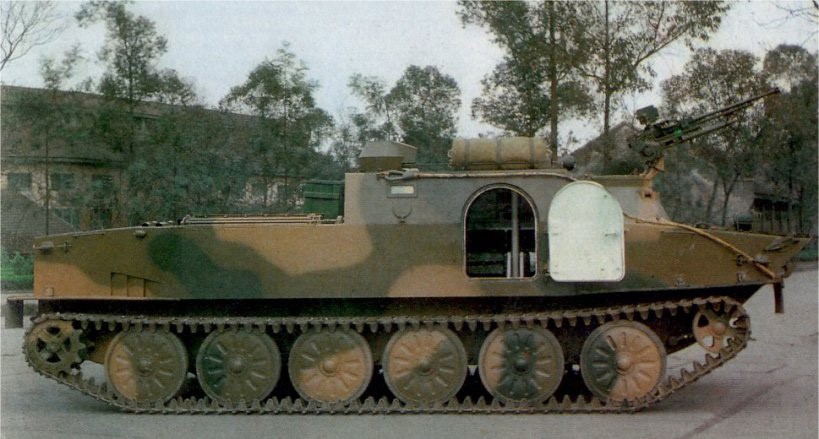
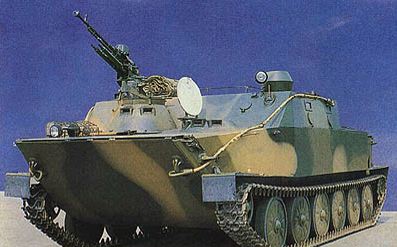
The WZ-511 (Type 77) Chinese Amphibious Armored Personnel Carrier (APC) was an APC in its basic configuration. It had a crew compartment at the front, a dismount compartment in the center, and an engine compartment at the rear. Its industrial designation was WZ511 and for a time it was designated as M1974 by NATO. This design required the dismounts to climb out of the vehicle via hatches in the roof, a design principle that was eventually abandoned because it exposed the dismounts to enemy fire and could result in dismounts falling beneath the tracks of the vehicle if it were mobile. Based on the hull design of the Type 63 amphibious tank, the Type 77-1 is mainly used for carrying troops, artillery guns, and cargo in the river regions of south China, where the mobility of heavier tracked armored vehicles is limited. The Type 77 is generally similar to the Russian BTR-50 in terms of layout and purposes, though the two vehicles share little in their designs. Development of the Type 77 began in April 1965, with two prototypes rolled out in the same year. After some modifications, the vehicle received its design certificate in 1977 and was officially designated as Type 77-1. The Type 77-2 is an amphibious armored personnel carrier (APC) derived from Type 77-1. The project began in 1978 and the vehicle received its design certificate in 1980. Meanwhile, there are around 200~300 Type 77-2 APCs in service with the PLA Marine Corps. The vehicle is generally regarded as outdated but still effective in modern amphibious warfare.