Leopard 1A1 German Main Battle Tank (MBT)
Leopard 1A1
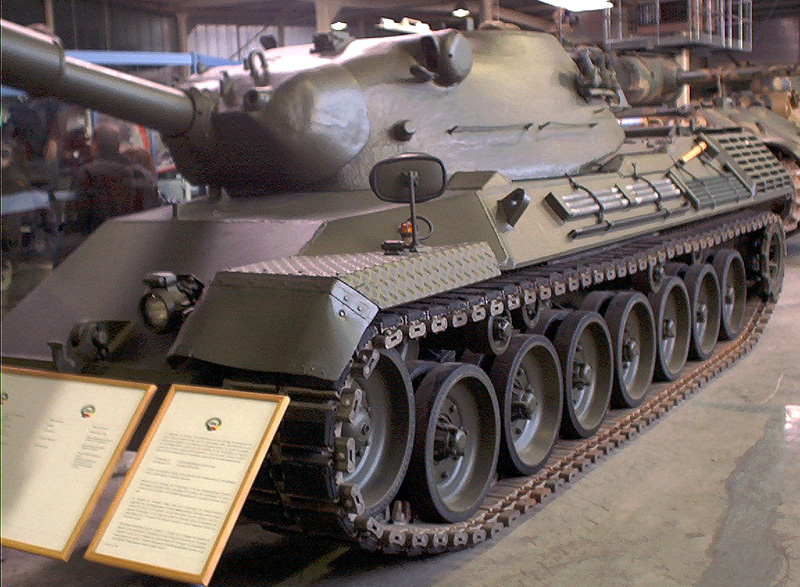
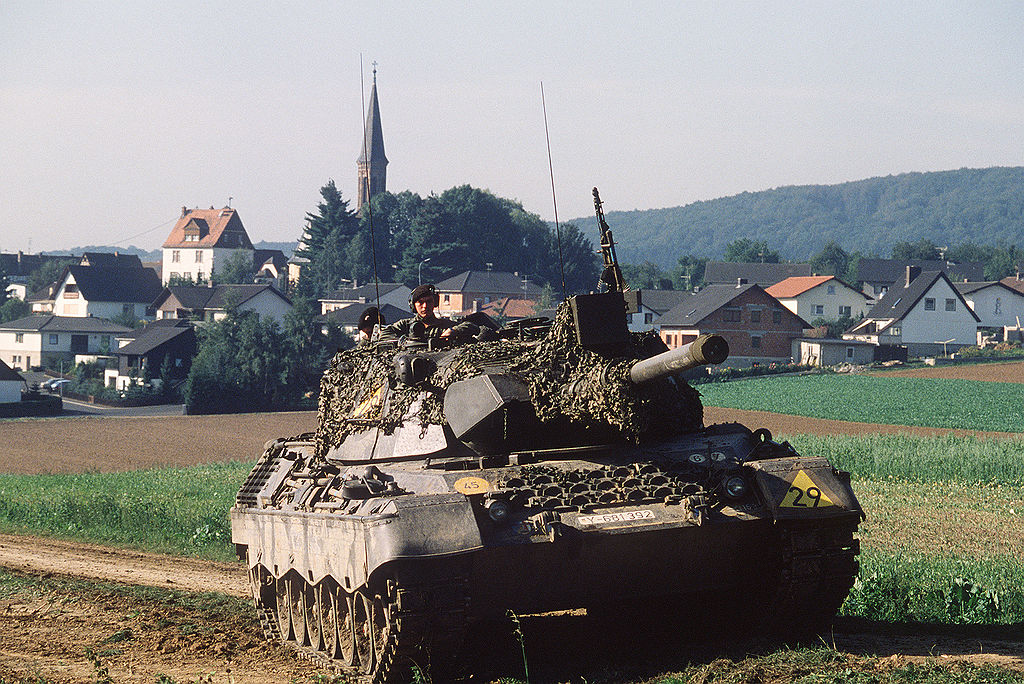
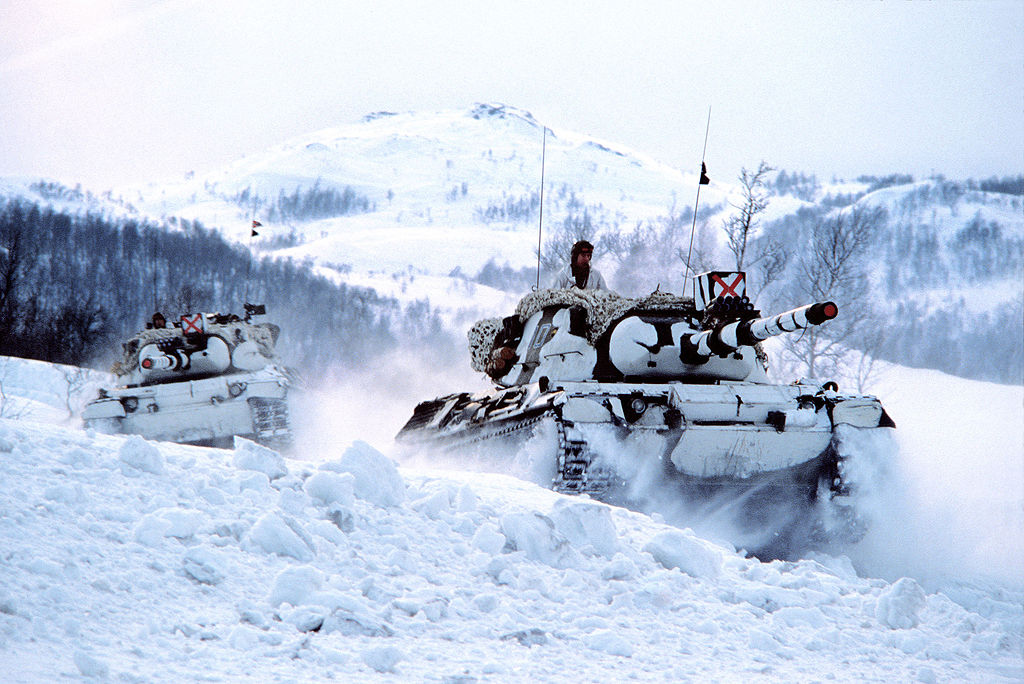
The Leopard (or Leopard 1) is the main battle tank designed and produced by Porsche in West Germany that first entered service in 1965. Developed in an era when HEAT warheads were thought to make conventional heavy armor of limited value, the Leopard focused on firepower in the form of the German-built version of the British L7 105-mm gun, and improved cross-country performance that was unmatched by other designs of the era. The design started as a collaborative project during the 1950s between West Germany and France and was later joined by Italy, but the partnership ended shortly after and the final design was ordered by the Bundeswehr, with full-scale production starting in 1965. In total, 6,485 Leopard tanks have been built, of which 4,744 were battle tanks and 1,741 were utility and anti-aircraft variants, not including 80 prototypes and pre-series vehicles. The Leopard quickly became a standard of European forces, and eventually served as the main battle tank in over a dozen countries worldwide, with West Germany, Italy, and the Netherlands being the largest operators until their retirement. Since 1990, the Leopard 1 has gradually been relegated to secondary roles in most armies. In the German Army, the Leopard 1 was completely phased out in 2003 by the Leopard 2, while Leopard 1-based vehicles are still widely used in utility roles. The Leopard 2 has replaced the Leopard 1 in service with many other nations as well, with derived vehicles using the Leopard 1 hull still seeing service. Currently, the largest operators are Greece, with 520 vehicles, Turkey, with 397 vehicles, and Brazil with 378 vehicles. Most of these vehicles have been upgraded with various improvements to armor, firepower, and sensors to maintain their ability to engage modern threats. After the first batch was delivered, the next three batches were the Leopard 1A1 model, which included a new gun stabilization system from Cadillac Gage that allowed the tank to fire effectively on the move. The 1A1 also added the now-famous "skirts" along the sides to protect the upper tracks, and a new thermal jacket on the gun barrel to control heating. A less important change was to use rectangular rubber blocks fastened to the treads with a single pin instead of the earlier two-pin "shaped" versions. The rubber blocks could be easily replaced with metal X-shaped crampons for movement on ice and snow in the winter. Between 1974 and 1977, all of the machines in the first four batches were brought to the same Leopard 1A1A1 standard and given additional turret armor developed by Blohm & Voss. A further upgrade in the 1980s added leftover image-intensifier night sights, which were being handed down from the Leopard 2 as they were themselves upgraded. The PZB 200 image intensification system was mounted in a large box on the upper right of the gun, creating the Leopard 1A1A2. A further upgrade with SEM80/90 all-digital radios created the Leopard 1A1A3. Later improvements to the image intensifier created the Leopard 1A1A4.