ARMSNET
Military Equipment Database
Initializing 0%

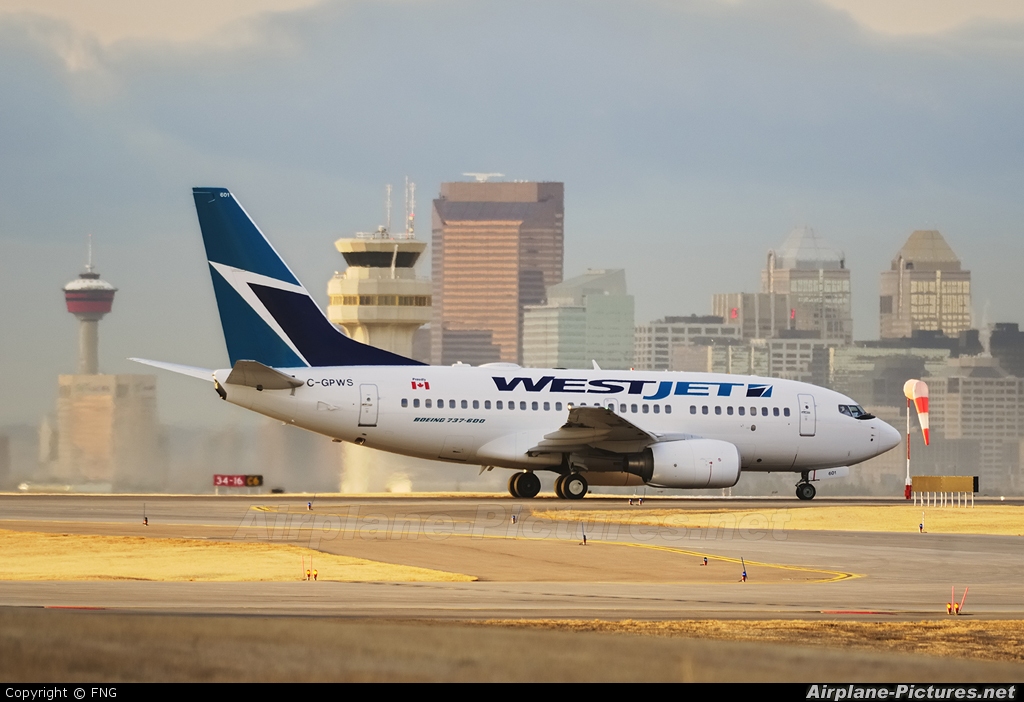
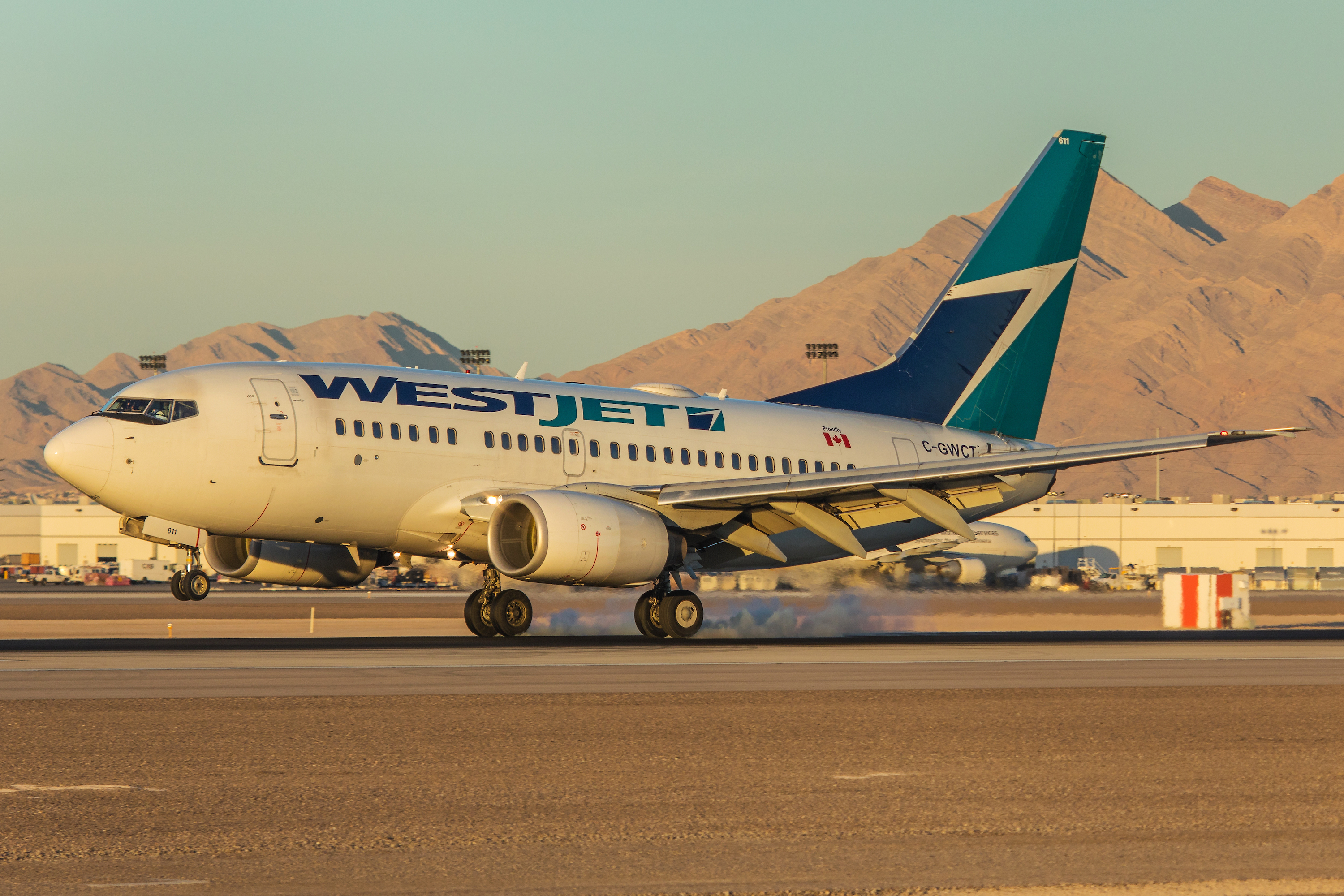
B737-600 (Boeing 737-600) American Cargo Transport Aircraft

B737-600

Spotted an error? Sign in to suggest an edit.
Basic Information
Name
B737-600 (Boeing 737-600) American Cargo Transport Aircraft
Designation
B737-600
Alternate Designation
Equipment Type
Manufacturer
Boeing
Date of Introduction
1991
Description

The B737-600 was known as the 737-500X prior to 1995. It accommodates 108-140 passengers. It is part of the Next Generation series -- the smallest model. The wings have increased chord and span lending more fuel capacity, better fuel efficiency and a longer range. The Boeing 737 is a narrow-body aircraft produced by Boeing Commercial Airplanes at its Renton Factory in Washington. Developed to supplement the 727 on short and thin routes, the twinjet retains the 707 fuselage cross-section and nose with two underwing turbofans. Envisioned in 1964, the initial 737-100 made its first flight in April 1967 and entered service in February 1968 with Lufthansa. The lengthened 737-200 entered service in April 1968. It evolved through four generations, offering several variants for 85 to 215 passengers. The -100/200 original variants were powered by Pratt & Whitney JT8D low-bypass engines and offered seating for 85 to 130 passengers. Launched in 1980 and introduced in 1984, the 737 Classic -300/400/500 variants were re-engined with CFM56-3 turbofans and offered 110 to 168 seats. Introduced in 1997, the 737 Next Generation (NG) -600/700/800/900 variants have updated CFM56-7s, a larger wing and an upgraded glass cockpit, and seat 108 to 215 passengers. The latest generation, the 737 MAX -7/8/9/10, powered by improved CFM LEAP high bypass turbofans and accommodating 138 to 204 people, entered service in 2017. Boeing Business Jet versions are produced since the 737NG, as well as military models. As of December 2019, 15,156 Boeing 737s have been ordered and 10,571 delivered. Actual backlog stands at 4,398 when including "additional criteria for recognizing contracted backlog with customers beyond the existence of a firm contract". Initially, its main competitor was the McDonnell Douglas DC-9, followed by its MD-80/MD-90 derivatives. It remained the highest-selling commercial jetliner until surpassed in total orders by the Airbus A320 family in October 2019. The current 737 MAX, designed to compete with the A320neo was grounded worldwide in March 2019 following two fatal crashes.

Air & Air Defense Specifications
Crew 2
Engine Turbofan (22000 hp)
Variants
B737-100 This is the initial production civil airliner version, with a 94-ft (28.65-m) long fuselage and a maximum passenger capacity of 115. First flight took place on April 9, 1967. Only 30 were built, all of which entered commercial service. One was later acquired by the Mexican air force as a VIP transport.
B737-200 This version features a 6-ft (1.82-m) fuselage stretch and more powerful JT8D engines. There were 1,095 aircraft built.
B737-2X9 Surveiller This version is a 737-200 with 14 first-class and 88 coach passenger seats as well as a Motorola side-looking airborne modular multi-mission radar (SLAMMR) -- a variant of the AN/APS-131/135 radar -- and two associated 16-ft (5-m) long slotted waveguide antennas on the upper rear fuselage sides. At 30,000 ft (9,144 m), the detection range for small ships is 100 nm (115 mi; 185 km). Three improved Surveillers are in service in Indonesia. Modifications to the Indonesian versions include enhanced side-looking airborne modular radar; a new nose-mounted IR-detection system; as well as radar and GPS. Also installed on the improved version is the Boeing-developed data processing and display system (DPDS).
B737-300 The B737-300 is the extended-range version with stretched fuselage and quieter, more fuel-efficient CFM56-3-B engines. First flight occurred on Aug. 24, 1984; it entered service on Dec. 7, 1984. More than 850 were ordered. One each has been in VIP service with the South Korean and Thai air forces.
B737-400 This variant is similar to the B737-30, but with additional 10-ft (3.05-m) stretch to fuselage, 168-passenger capacity and higher rated engines. First flight occurred on Feb. 19, 1988; the first was delivered on Sept. 15, 1988. More than 170 were ordered.
B737-500 The B737-500 is a short-fuselage (101 ft 9 in/31.01 m) version of the B737-300 with a passenger capacity of 132. First flight took place on June 30, 1989. More than 165 were ordered.
B737-600 The B737-600 was known as the 737-500X prior to 1995. It accommodates 108-140 passengers. It is part of the Next Generation series -- the smallest model. The wings have increased chord and span lending more fuel capacity, better fuel efficiency and a longer range.
B737-700 Launched in November 1993, this was the first of the Next Generation series to enter service. It accommodates 128-149 passengers. The aircraft is similar to the B737-600, though the wings have increased chord and span, lending more fuel capacity, better fuel efficiency and a longer range.
B737-700 Increased Gross Weight Quick Change This variant was chosen by the U.S. Navy to replace the C-98s in the Reserves. Its features include continuous double-slotted flaps, new leading-edge slats and a large cargo door fitted to the front fuselage. Two were ordered for delivery by the end of 2001. A commercial version has not been made available.
B737-800 The B737-800 was launched on Sept. 5, 1994. It is the longest variant of this series; it has a seating accommodation of 162-189 passengers.
B737-900 This is a stretched version that can accommodate 18 more passengers than the 737-800. At least 10 orders have been placed for this aircraft. The eyebrow windows located above the cockpit windscreen were removed in January 2005. Kits are available to remove the eyebrow windows from earlier 737-900s. An increased range version, the 737-900ER, was launched on July 18, 2005. Its maximum takeoff weight rose to 187,800 lb (85,185 kg); maximum zero-fuel weight, 149,500 lb (67,812 kg); maximum landing weight, 157,400 lb (71,395 kg); and range, 3,200 nautical miles (3,682 mi, 5,926 km) with 180 passengers.
Boeing Business Jet The business jet was launched on July 2, 1996, as a joint venture between Boeing and General Electric. It is a corporate version of the 737-700. While between eight and 63 passengers will be typically accommodated, the plane can be configured to seat as many as 100. There is an integrated GPS and SATCOM. The range is 6,200 nautical mile (nm) (7,139 mi, 4,437 km). Three auxiliary tanks offer an increase in range of 4,830 nm (5,562 mi, 3,456 km).
System
Alternate Designation(s) B737-600; Boeing 737-600
Primary Function / Type Cargo/Passenger Aircraft
Manufacturer Boeing Commercial Airplanes
Crew 2 (pilot, co-pilot)
Passengers 108-140 passengers
Number of Engines 2
Number of Hard Points INA
Dimensions
Length 31.24 m
Width (Wing Span) 34.32 m
Wing Area 124.5 sq m
Height 12.57 m
Cabin Length 21.79 m
Cabin Width 3.53 m
Cabin Height 2.13 m
Cabin Volume 131.28 cu m
Empty Weight 36,870 kg
Maximum Payload 15,998 kg
Maximum Takeoff Weight 56,700 kg
Automotive
Engine Name 2 x CFM International CFM56-7B
Number of Engines 2
Engine Type Turbofan
Engine Power 22,000 lb (9,786 kg) static thrust each
Standard Internal Fuel Capacity 20,104 liters
Maximum Internal Fuel Capacity 26,036 liters
Maximum Normal Operating Speed 542 knots (624 mph, 1,003 km/h)
Maximum Cruise Speed 542 knots (624 mph, 1,003 km/h)
Economical Cruise Speed 523 knots (602 mph, 969 km/h)
Long Range Cruise Speed 429 nokts (494 mph, 795 km/h)
Takeoff Safety Speed at Max Takeoff Weight 148 knots (170 mph, 274 km/h)
Speed at Threshold at Maximum Landing Weight 133 knots (153 mph, 246 km/h)
Climb Rate at 100,000 lb (43,359 kg) 3,760 ft/min (1,146 m/min)
Maximum Range at Economical Cruise Speed 3,195 nm (3,679 mi, 5,917 km)
Maximum Fuel at Long-Range Cruise Speed w/19,150-lb (8,705-kg) payload 3,190 nm (3,673 mi, 5,911 km)
Fire Control / Avionics
FCS Name INA
Computerized FCS No
Navigation Radar INA
Protection
Stealth Properties No
Heat Signature Reduction No
Add on Armor No
NBC Protection INA
EW Counter Measures INA
Chaffs/Flares INA
Details
Country of Origin United States
Category Fixed Wing Aircraft
Air > Fixed Wing Aircraft
Filter Label
B
Classification
Domain
Air & Air Defense
Equipment Status
Active
Dimensions
Length
31.24 m
Width
34.32 m
Height
12.57 m
Weight
56700 kg
Operators (25)
China
United States
United Kingdom
South Korea
Turkey
India
Iran
Pakistan
Brazil
South Africa
Argentina
Australia
Chile
Colombia
Congo, Republic of the
Indonesia
Kazakhstan
Malaysia
Mexico
Mongolia
Netherlands
Nigeria
Peru
Saudi Arabia
Thailand
Something went wrong. Please reload the page. Reload