B737-200 (Boeing 737-200) American Cargo Transport Aircraft
B737-200
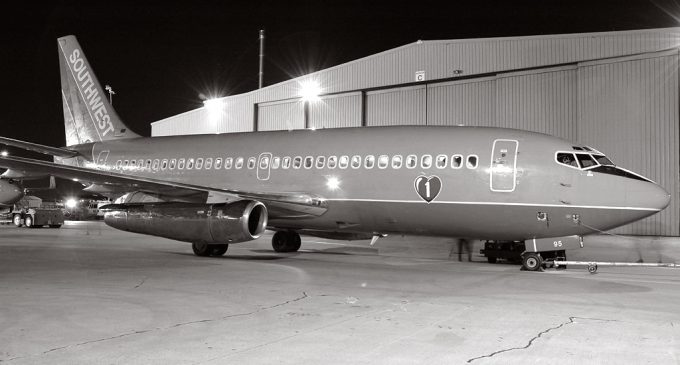
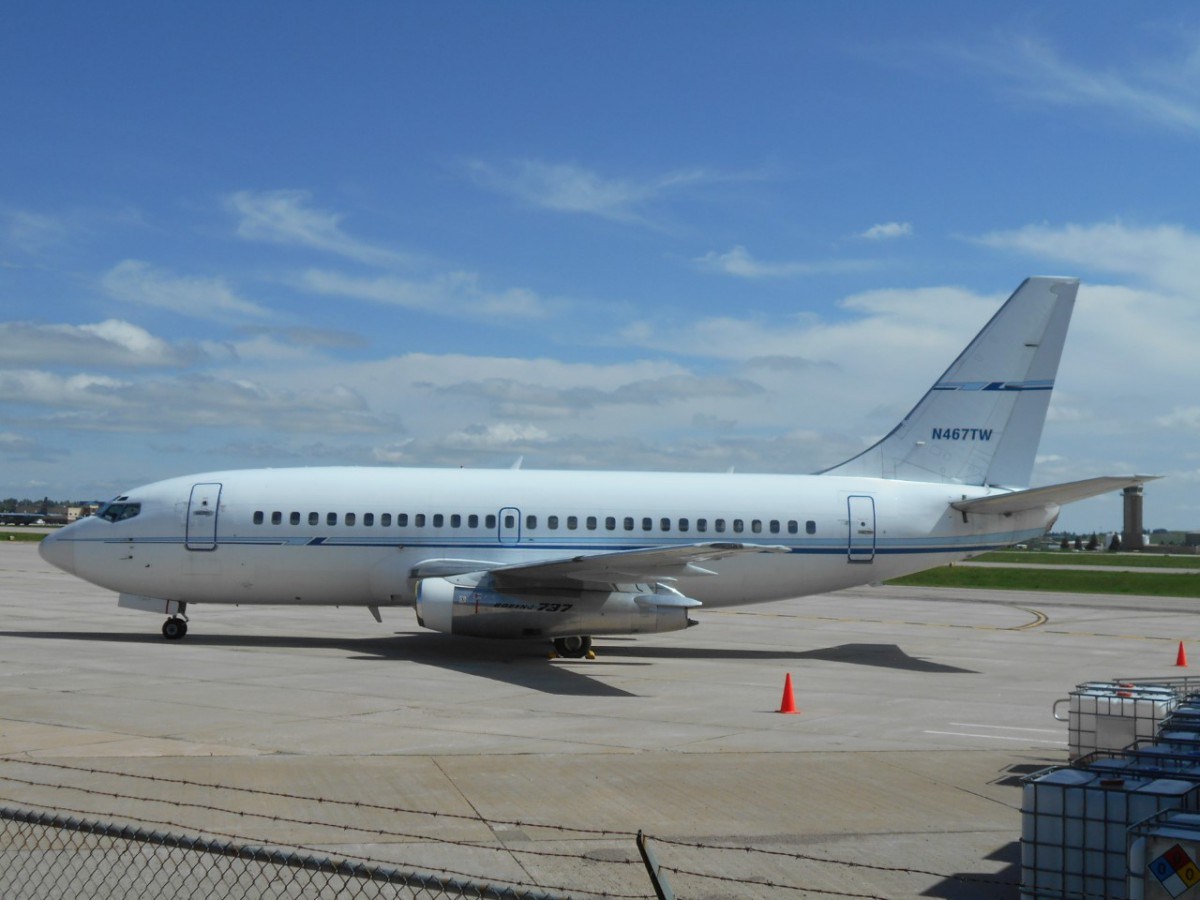

The 737-200 had its maiden flight on August 8, 1967. It was certified by the FAA on December 21, 1967, and the inaugural flight for United was on April 28, 1968, from Chicago to Grand Rapids, Michigan. The lengthened -200 was widely preferred over the -100 by airlines. The 737-200 was a 737-100 with an extended fuselage, launched by an order from United Airlines in 1965. The -200 was rolled out on June 29, 1967, and entered service with United in April 1968. The 737-200 Advanced is an improved version of the -200, introduced into service by All Nippon Airways on May 20, 1971. The -200 Advanced has improved aerodynamics, automatic wheel brakes, more powerful engines, more fuel capacity, and longer range than the -100.[35] Boeing also provided the 737-200C (Combi), which allowed for conversion between passenger and cargo use and the 737-200QC (Quick Change), which facilitated a rapid conversion between roles. The 1,095th and last delivery of a -200 series aircraft was in August 1988 to Xiamen Airlines. With a gravel kit modification (features preventing foreign object damage), the 737-200 can use unimproved or unpaved landing strips, such as gravel runways, that other similarly-sized jet aircraft cannot. Gravel-kitted 737-200 Combis are currently used by Canadian North, First Air, Air Inuit, Nolinor, and Air North in northern Canada where gravel runways are common. For many years, Alaska Airlines made use of gravel-kitted 737-200s to serve Alaska's many unimproved runways across the state. Nineteen 737-200s, designated T-43, were used to train aircraft navigators for the U.S. Air Force. Some were modified into CT-43s, which are used to transport passengers, and one was modified as the NT-43A Radar Test Bed. The first was delivered on July 31, 1973 and the last on July 19, 1974. The Indonesian Air Force ordered three modified 737-200s, designated Boeing 737-2x9 Surveiller. They were used as Maritime reconnaissance (MPA)/transport aircraft, fitted with SLAMMAR (Side-looking Multi-mission Airborne Radar). The aircraft were delivered between May 1982 and October 1983. Many 737-200s have been phased out or replaced by newer 737 versions. After 40 years, in March 2008, the final 737-200 aircraft in the U.S. flying scheduled passenger service were phased out, with the last flights of Aloha Airlines. The variant still sees regular service through North American charter operators such as Sierra Pacific. In July 2019, there were a combined 46 Boeing 737-200s in service, mostly with "second and third tier" airlines, and those of developing nations. In 1970, Boeing received only 37 orders. Facing financial difficulties, Boeing considered closing the 737 production-line and selling the design to Japanese aviation companies.[15] After the cancellation of the Boeing Supersonic Transport, and scaling back of 747 production, enough funds were freed up to continue the project. In a bid to increase sales by offering a variety of options, Boeing offered a 737C (Convertible) model in both -100 and -200 lengths. This model featured a 134 in × 87 in (340 cm × 221 cm) freight door just behind the cockpit, and a strengthened floor with rollers, which allowed for palletized cargo. A 737QC (Quick Change) version with palletized seating allowed for faster configuration changes between cargo and passenger flights. With the improved short-field capabilities of the 737, Boeing offered the option on the -200 of the gravel kit, which enables this aircraft to operate on remote, unpaved runways. Until retiring its -200 fleet in 2007, Alaska Airlines used this option for some of its combi aircraft rural operations in Alaska. Northern Canadian operators Air Inuit, Air North, Canadian North, First Air and Nolinor Aviation still operate the gravel kit aircraft in Northern Canada, where gravel runways are common. In 1988, the initial production run of the -200 model ended after producing 1,114 aircraft. The last one was delivered to Xiamen Airlines on August 8, 1988.