Hwasong-10 (Musudan) North Korean Intermediate-Range Ballistic Missile
Hwasong-10
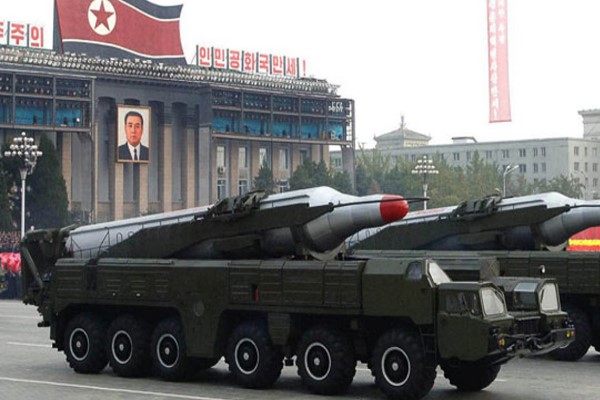
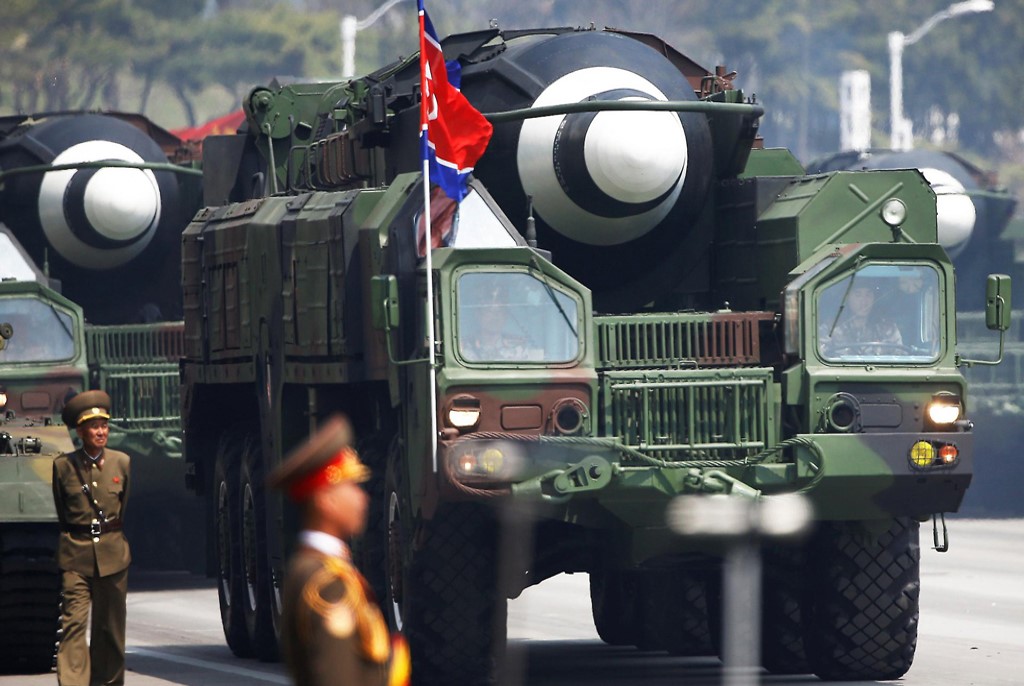
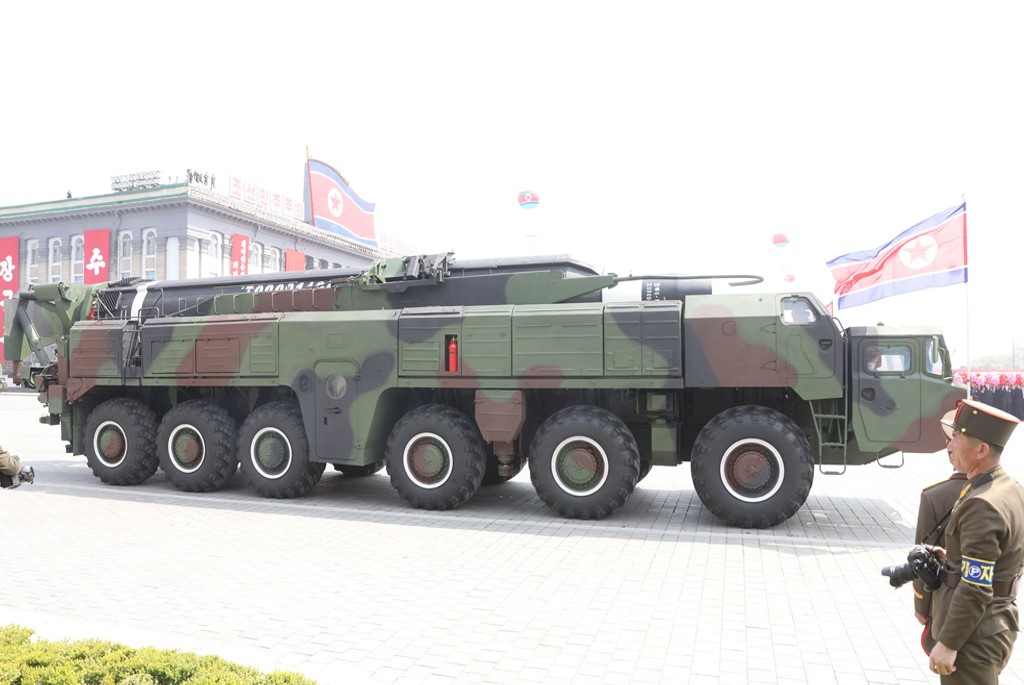
The Hwasong-10), also known by the names BM-25 and Musudan (Korean: 무수단; Hanja: 舞水端), is a mobile intermediate-range ballistic missile developed by North Korea. Hwasong-10 was first revealed to the international community in a military parade on 10 October 2010 celebrating the Korean Worker's Party's 65th anniversary, although experts believe these were mock-ups of the missile.Hwasong-10 resembles the shape of the Soviet Union's R-27 Zyb submarine-launched missile, but is slightly longer. It is based on the R-27, which uses a 4D10 engine propelled by unsymmetrical dimethylhydrazine (UDMH) and nitrogen tetroxide (NTO). These propellants are much more advanced than the kerosene compounds used in North Korea's Scuds and Nodong missiles. Since April 2016 the Hwasong-10 has been tested a number of times, with two apparent partial successes and a number of failures. The Hwasong-10 was not shown in the April 2017 and February 2018 military parades, suggesting that the design had not been deployed. Assuming a range of 3200 km, the Musudan could hit any target in East Asia (including US military bases in Guam and Okinawa). Inventory is less than 50 launchers. In the mid-1990s, after the collapse of the Soviet Union, North Korea invited the Makeyev Design Bureau's ballistic missile designers and engineers to develop this missile, based on the R-27 Zyb. In 1992, a large contract between Korea Yon’gwang Trading Company and Makeyev Rocket Design Bureau of Miass, Russia was signed. The agreement stated that Russian engineers would go to the DPRK and assist in the development of the Zyb Space Launch Vehicle (SLV). It was decided that, as the Korean People's Army's MAZ-547A/MAZ-7916 Transporter erector launcher could carry 20 tonnes, and the R-27 Zyb was only 14.2 tonnes, the R-27 Zyb's fuel/oxidizer tank could be extended by approximately 2 metres. Additionally, the warhead was reduced from a three-warhead MIRV to a single warhead. The actual rocket design is a liquid fuel rocket, generally believed to use a hypergolic combination of unsymmetrical dimethylhydrazine (UDMH) as fuel, and nitrogen tetroxide (NTO) as oxidizer.[4] Once the fuel/oxidizer combination are fed into the missile, it could maintain a 'ready to launch' condition for several days, or even weeks, like the R-27 SLBM, in moderate ambient temperatures. A fueled Hwasong-10 would not have the structural strength to be safely land transported, so would have to be fueled at the launch site. It was originally believed that the rocket motors of Hwasong-10 is made up the second stage of the Taepodong-2, which North Korea unsuccessfully test fired in 2006. However analysis of the Unha-3 launch, believed to be based on the Taepodong-2, showed that the second stage did not use the same fuel as the R-27, and is probably based on Nodong rocket technology. Initially it was believed that there is a possibility that Hwasong-10 likewise is using the Nodong's kerosene and corrosion inhibited red fuming nitric acid (IRFNA) propellants, reducing the missile's range by about half. However it is unlikely that North Korea uses IRFNA propellants which will reduce its range by about half, after the experts acknowledged that the June 22 twin test range could be at 3,150 km if the missile was not launched in the lofted trajectory.