R-36M
R-36M
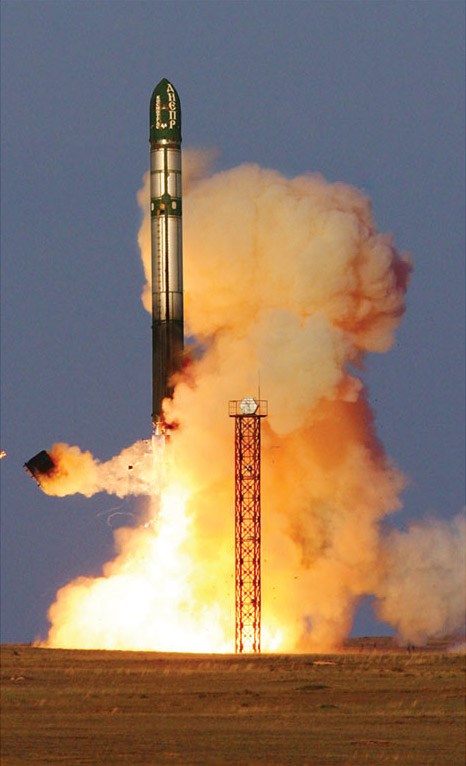
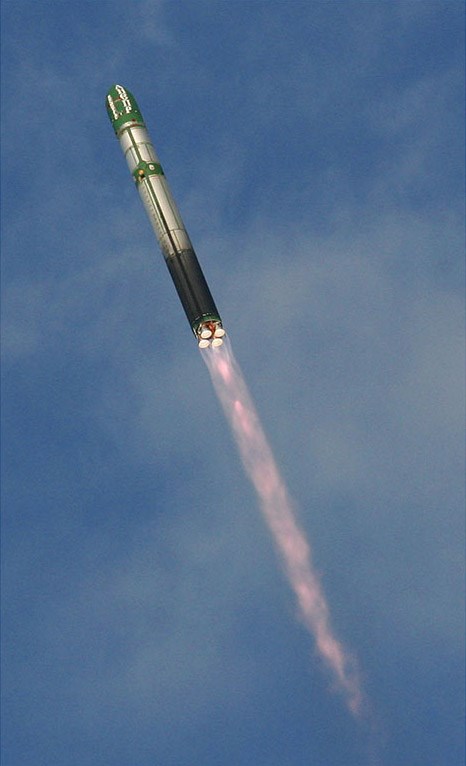
The R-36M is an intercontinental ballistic missile (ICBM) developed by the Soviet Union to counter American MIRVed (Multiple Independently targetable Re-entry Vehicle) Minuteman ICBMs. Up to 10 warheads can be carried by a single R-36M ballistic missile at ranges of more than 10,000 kilometers. More than 300 R-36M ballistic missiles were deployed beginning in 1975 through the early 1990s when the Soviet Union disintegrated. The Russian Federation dismantled the major part of its R-36M ICBMs with around 120 missiles deployed and fully serviceable with its Nuclear Strategic Forces in the mid-2000s. Despite early assessments of START II forced MIRVed missiles to withdrawal before 2007, current reports suggest that Russia will retain the R-36M in service until 2015 and beyond. The R-36M propulsion system consists of two liquid-propellant stages with some improvements over the original R-36 design. The R-36M replaced the R-36 (SS-9) ICBMs and in fact were homed at R-36s' underground silos. Between the early 1970s and late 1980s at least six variants of the R-36M missile were tested and three of them deployed with other variants developed and tested but not deployed. The MIRVed variants of the R-36M missile are equipped with warhead yielding between 550 and 1,300 kilotons. The single warhead variants are equipped with a massive nuclear warhead yielding between 18 and 25 megatons.
deagel.com: https://www.deagel.com/x/x/a000957