DSP
DSP
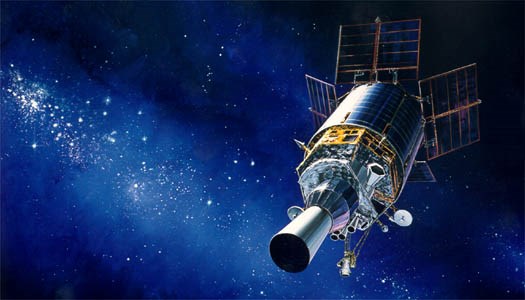


Defense Support Program (DSP) is a satellite constellation developed by TRW, now Northrop-Grumman, as the spaceborne segment of NORAD's Tactical Warning and Attack Assessment system since 1970. DSP satellites key element is its infrared sensor payload which detects and tracks ballistic missiles and also detects nuclear explosions and space launches. Since its inception TRW/Northrop-Grumman has been providing updates to the DSP spacecraft which has translated into lower procurement cost, extended service life and increased capabilities. The first DSP launch occurred in 1970. The last of 23 DSP spacecraft was put into orbit in May 2005 by a Boeing Delta IV Evolved Expendable Launch Vehicle-Heavy (EELV-H). In the early 2000s DSP's infrared sensor proved suitable for providing early warning for natural disasters like volcanic eruptions and forest fires. As of early 2006, the US Air Force plans call for replacing DSP constellation with far more capable STSS, formerly SBIRS-low, and SBIRS-high constellations beginning in 2007.
deagel.com: https://www.deagel.com/x/x/a000774 Wikidata (https://www.wikidata.org/wiki/Q1182623)