ARMSNET
Military Equipment Database
Initializing 0%

P-18 (Spoon Rest D) Russian Mobile 2D VHF Radar

P-18
Multi-Mission Radar
Spotted an error? Sign in to suggest an edit.
Basic Information
Name
P-18 (Spoon Rest D) Russian Mobile 2D VHF Radar
Designation
P-18
Alternate Designation
P-18; Spoon Rest D; 1Rl131 Terek; Russian: П-18М / P-18M; Name: П-18М / P-18M Terek; NATO: SPOON REST-D
Equipment Type
Multi-Mission Radar
Manufacturer
SKB Design Bureau
Date of Introduction
1970
Description

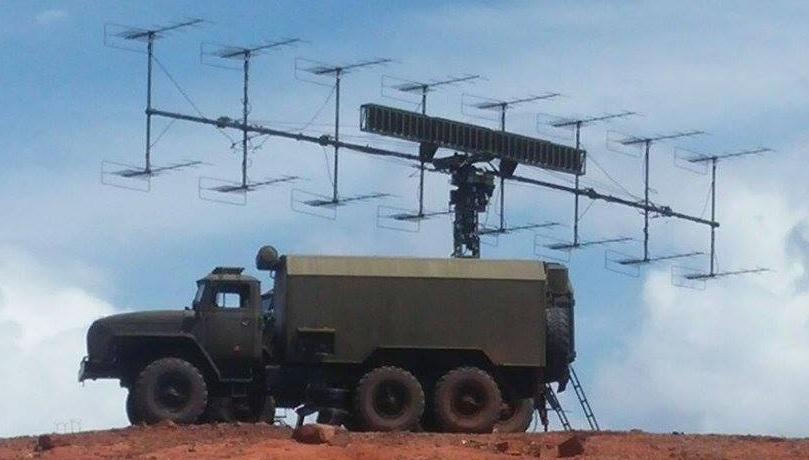
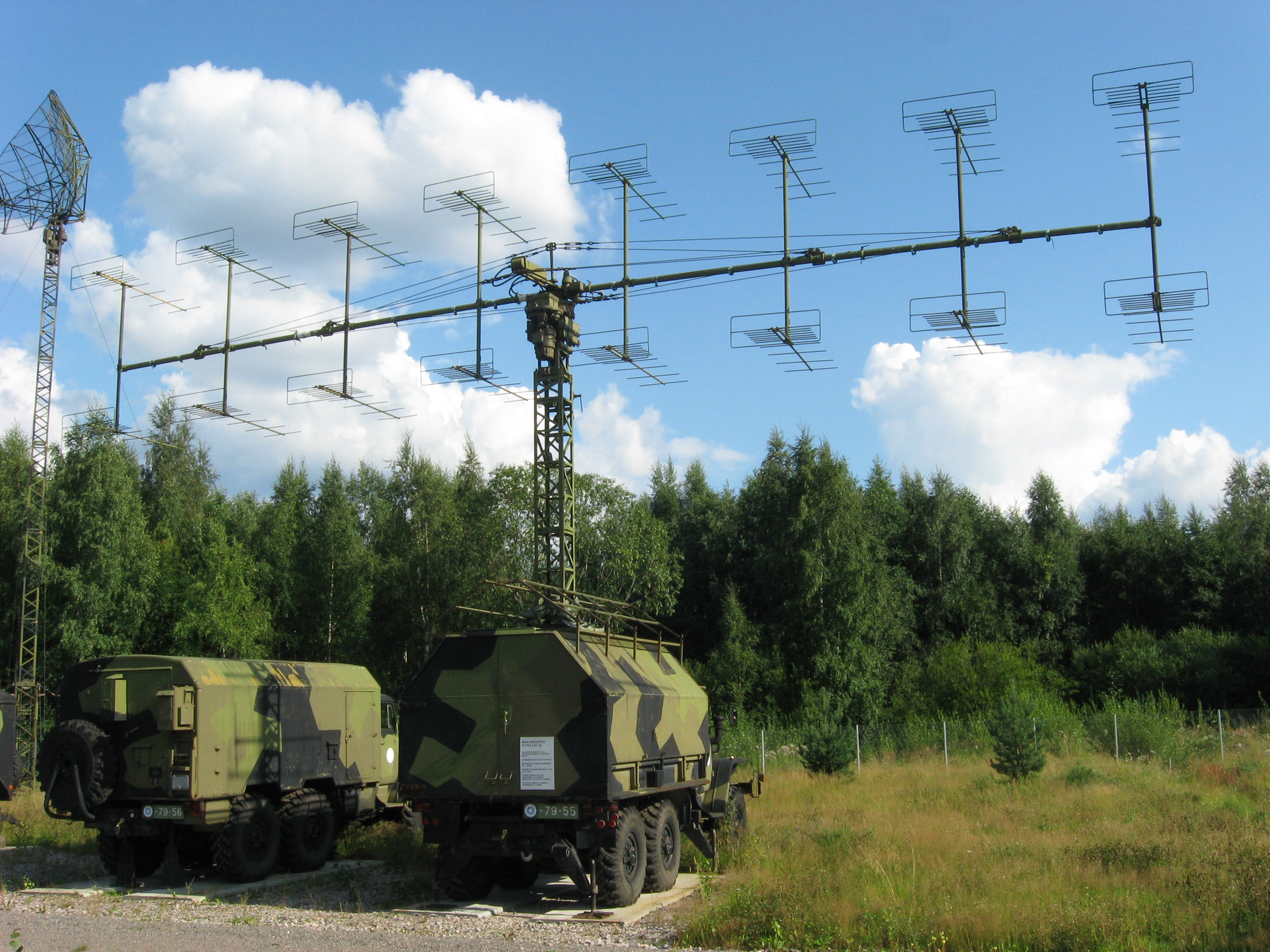
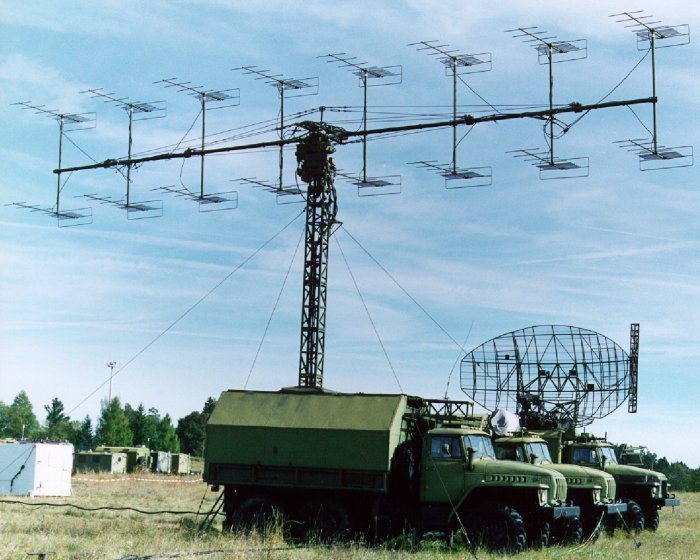
The P-18, also known as the 1RL131 Terek and designated as "Spoon Rest D" by NATO, is a 2D VHF radar developed and operated by the former Soviet Union. It is an early warning radar that evolved from the earlier P-12 radar, officially entering service in 1970 after the successful completion of its development program. The P-18 was created by the SKB Design Bureau, a division of State Plant No.197 named after V. I. Lenin, which also developed the P-12 radar. In 1979, a new secondary IFF radar, the 1L22 "Parol," was introduced to complement the P-18. Unlike its predecessor, the NRS-12 (NATO "Score Board"), the new interrogator was mounted on a separate truck. The P-18 remains in active service today and has been widely exported. Numerous companies offer upgrade options to enhance its performance and reliability, as well as to replace outdated components. One such upgrade package from NNIIRT includes the installation of a solid-state transmitter and receiver, automatic jammer suppression equipment, and PC-based signal processing, testing, and interface equipment. Depending on the manufacturer, modification, and radar nationality, these upgraded versions of the P-18 may be referred to as the P-18M, P-18-1, or P-18-2. The P-18 was eventually surpassed by the 1L13 "Nebo" VHF surveillance radar in 1984. Currently, the Russian-Belarusian company Defense Systems provides upgrades for P-18 radars. Additionally, Retia, a Czech civil and military electronics company, has developed a fundamental modernization of the P-18 called ReVEAL. This upgraded version is now solid-state, digitized, and equipped with an enhanced IFF system, while also retaining compatibility with the legacy IFF. The entire system is repackaged into a standard container and has already been sold in several dozen units. --- Additional Data (TRADOC ODIN WEG) --- Frequency: 150–180 MHz (VHF, NATO Band B) Antenna Dimensions: 7 x 3 m Associated Weapon Systems: С-75 (S-75): В-750 / V-750; С-125 (S-125): 5В24 / 5V24 Role: Early Warning/Surveillance Remarks: Most exported VHF radar --- From Radartutorial.eu (https://www.radartutorial.eu/19.kartei/11.ancient/karte049.en.html) --- The P-18 “Spoon Rest D” (Russian designator: 1RL131 “Terek” ; Cyrillic: 1РЛ131 «Терек») is a general-purpose early warning radar operating in the VHF band . The radar is a further development of the P-12 radar and uses its concept of antenna, transmitter, and receiver. The antenna received four additional Yagi antennas for a narrower antenna pattern. The duplexer was changed because the power splitting between the two antenna planes is made directly in the antenna. The receive path received a low noise preamplifier, initially a traveling wave tube , and later a solid-state amplifier. In the receiver path, some blocks were carried over from the P-12 but got additional built-in electronic switches based on field-effect transistors for remote control. The radar signal processing after Moving Target Indication (MTI), synchronous pulse generation, and the coupling system were transistorized. Later versions that didn’t use in the former GDR received a digital MTI system, which was also offered internationally as a retrofit kit. The blocks of trigger pulse generation, potential storage tubes , and the compensation block are replaced by the new system. The display of the radar data in the basic version happens on two PPI scopes , one of which can be replaced up to 500 m away with all remote control options. For test purposes, there is also an A- Scope. The control of the antenna rotation is a servo-following system with multiple control inputs. It can thus work synchronously with other radar stations, which can then display the video of the P-18 in addition to or instead of their echo signal. Likewise, the evaluation of the foreign echoes can take place in the P-18 or from its remote display unit. The inventory of a P-18 always includes a secondary radar unit. Depending on the scope of delivery, this is either a simple coded NRS-12 or a more complex “Parol” system. While the NRS-12 can still be loaded into the P-18, the “Parol” system requires an additional truck with a trailer. The P-18 can be moved very quickly. It is mounted on two all-terrain trucks (Ural), each with a two-axle trailer. The radar is mainly used in the Eastern European area and the Third World for ManPADs (Strela, Igla). It is also used for larger missile emplacements (e.g.: coupled with a height finder ) as a target assignment radar for the AA-missile complex SA-2 “Guideline”.

Ground Specifications
Crew 3
Mobility Type Wheeled (4x4)
Active Protection None
Variants
Bharat Electronics P-18 upgrade The Bharat Electronics P-18 upgrade introduces a new digital signal processor (offering moving target indication with a staggered pulse repetition frequency – PRF), a color raster-scan display, and identification friend-or-foe provision (antenna, transmitter, receiver, and decoder/interrogator) together with a built-in test facility (via the radarʼs simulator). Readers should note that Bharat quotes the P-18ʼs center frequency and PRF as being 200 MHz and 365 Hz respectively.
ELSYS P-18 upgrade The ELSYS P-18 upgrade replaces the radarʼs existing wideband high-frequency amplifier with the companyʼs ELU-3-18 low-noise microwave amplifier. ELU-3-18 is described as incorporating a limiter and as having frequency range, gain, noise figure and maximum allowable continuous input power values of 150 to 175 MHz, 26 to 33 dB, 3 dB, and 50 W respectively.
LEMZ P-18M LEMZʼs P-18M upgrade package is described as incorporating ‘completelyʼ solid-state technology (including its transmission chain), digital signal/radar data processing, frequency agility, automatic noise jamming compensation, automatic functional checks/diagnostics, a new operatorʼs workstation (with a high-resolution digital monitor), an automated control system interface and a radar data recording facility.
Nitel P-18-2 upgrade The Nitel P-18-2 upgrade package, first presented at the MAKS 2001 trade show, includes several advanced features. It incorporates the MKP-1 anti-active jamming subsystem, which utilizes a dedicated, non-rotating, four-element antenna array. Additionally, the upgrade comes with a KAAS (Komplet Aparaturi Avtomaticseskovo Syoma) automatic data reading and recording unit, a digital passive interference suppression capability, an automatic frequency control amplifier, a new reception chain, a coherent local oscillator, and an updated transmitter control display. The MKP-1 subsystem provides automatic compensation against high-frequency active jamming, achieving a minimum jamming suppression coefficient of 20 dB. This allows the host sensor to detect a target with a radar cross-section of 2.6 m² at an altitude of 3,048 m, even at a distance of 190 km while facing a 200 W/MHz active jamming signal originating from a source located 200 km away.
NNIIRT P-18 upgrade First shown at the August 2001 MAKS 2001 trade show, NNIIRTʼs P-18 upgrade package is designed to increase the radarʼs target co-ordinate measurement capability, enhance its electronic counter-countermeasures provision, improve its reliability, and extend its service life.
P-18-R8 Russia-Belarus joint venture P-18 upgrade Modernization by the Belarus state-owned Radar Design Bureau, KB RADAR in collaboration with the Russian joint-stock company Defense Systems Information Complexes (DS.INFOCOM).
Tetraedr TRS-2D VHF air surveillance radar Belarusian company Tetraedr has developed the Tetraedr Radar System 2-Dimensional (TRS-2D), which is based on the P-18 radar system and combined with a newly developed command post. In essence, the TRS-2D pulsed coherent radar is a significantly upgraded version of the P-18 (1RL131) system (previously known as the P-18T). It consists of an antenna unit and a command-and-control (C2) post. Both units of the TRS-2D radar prototype are housed in Kamaz-43118 6×6 three-axle trucks. The Antenna vehicle has an ‘AMUʼ antenna unit and mast, antenna rotation system, and a closed cab. Located inside the cab are the emitter and receiver, radar synchronizer, topographical and navigational apparatus, along with radar interrogator interface. The independent power source, which has two diesel engines, is located in the front of the cab. The C2 vehicle has a closed cab and an autonomous power system. Located inside the cab are the navigation and communication systems, the data interface for connection with the radar height finder, ADMS, and the automated command post and combat activities recording unit.
Details
Country of Origin Russia
Category Radars
Land > Radars
Filter Label
P
Classification
Domain
Ground
Equipment Status
Active
Dimensions
Length
Width
7 m
Height
Weight
5540 kg
Operators (24)
Russia
Ukraine
Poland
India
North Korea
Czech Republic
Serbia
Belarus
Algeria
Bulgaria
Cuba
Egypt
Finland
Georgia
Hungary
Kazakhstan
Latvia
Lithuania
Myanmar
Romania
Syria
Turkmenistan
Venezuela
Vietnam
Something went wrong. Please reload the page. Reload