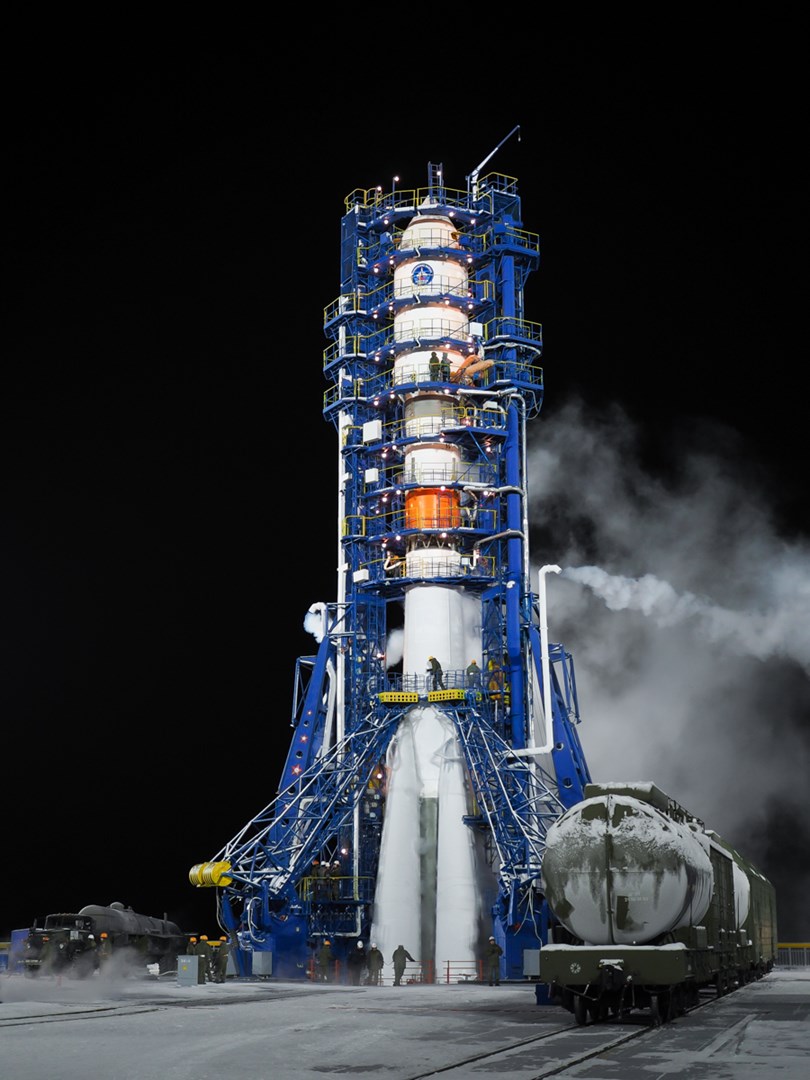
GLONASS-M
GLONASS-M
The GLONASS-M satellites are the second generation of GLObal NAvigazion Satellite System (GLONASS). The program was launched in 2001 by the Russian government with the goal to get a 24-satellite constellation on-station by 2010. The Indian government joined the program as a partner. In early September 2006 the Russian Minister of Defense, Sergei Ivanov, confirmed its country commitment to get the GLONASS-M fully deployed by 2010. The three first GLONASS-M spacecrafts were put into an orbit of 19,140 km of altitude on December 25, 2007. Global coverage of the new constellation is anticipated by 2009. The new navigation constellation will serve to the next-generation weapons such as Russian-made Kh-555 cruise missile and satellite-guided bombs. GLONASS-M has a service life of seven years and provides an horizontal positioning accuracy of 57-to-70 meters, vertical positioning accuracy of 70 meters and speed accuracy of 0.54 kph (15cm/s) with a signal time transfer of 1 micro-second (0.000001 second). The GLONASS-M with an accuracy of 2.9 meters was declared fully operational on April 23, 2014. The last GLONASS-M satellite was placed into orbit on November 28, 2022.
deagel.com: https://www.deagel.com/x/x/a001797