M270 American Multiple Launch Rocket System (MLRS)
M270
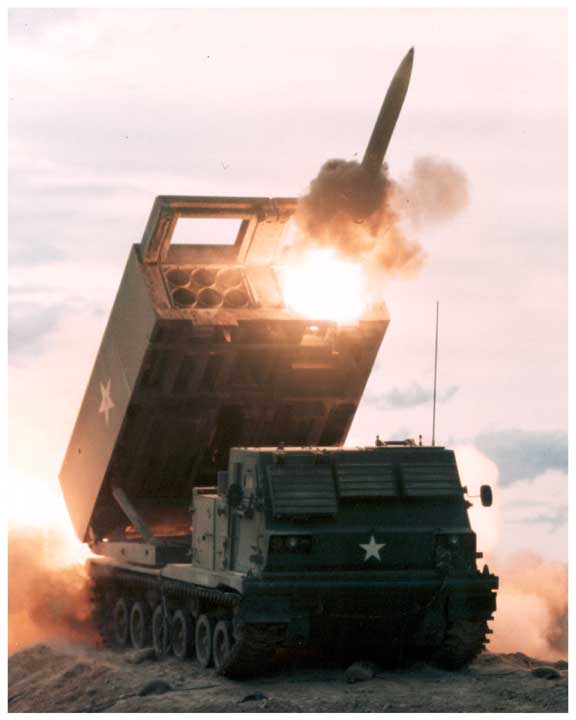
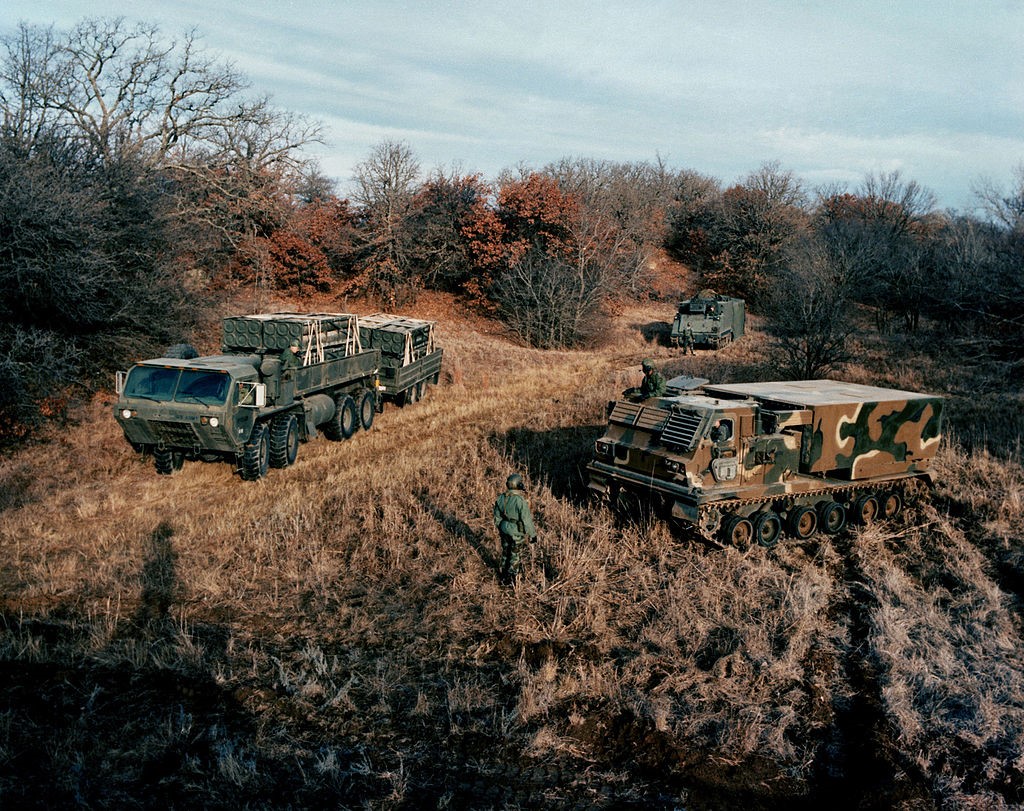
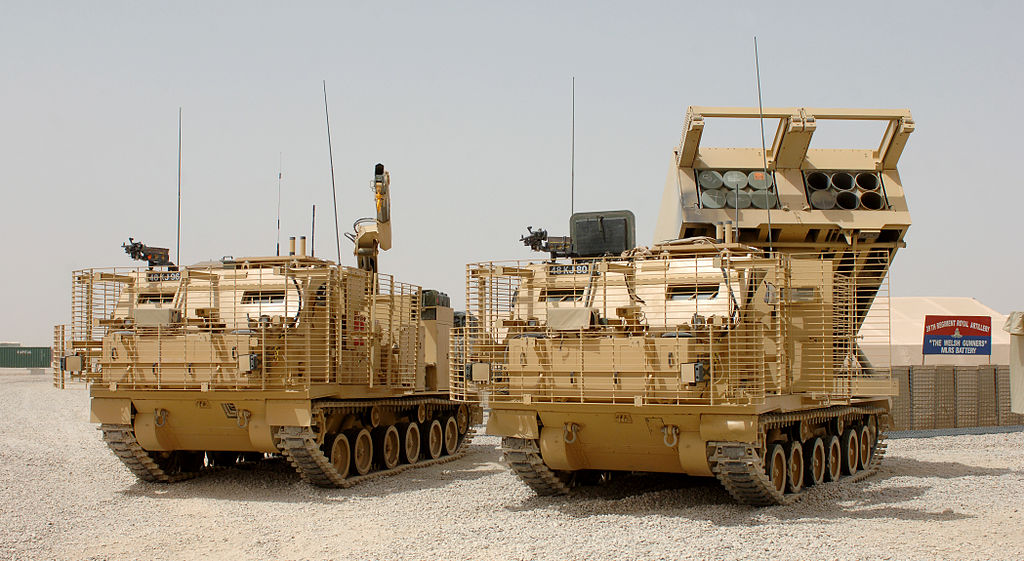
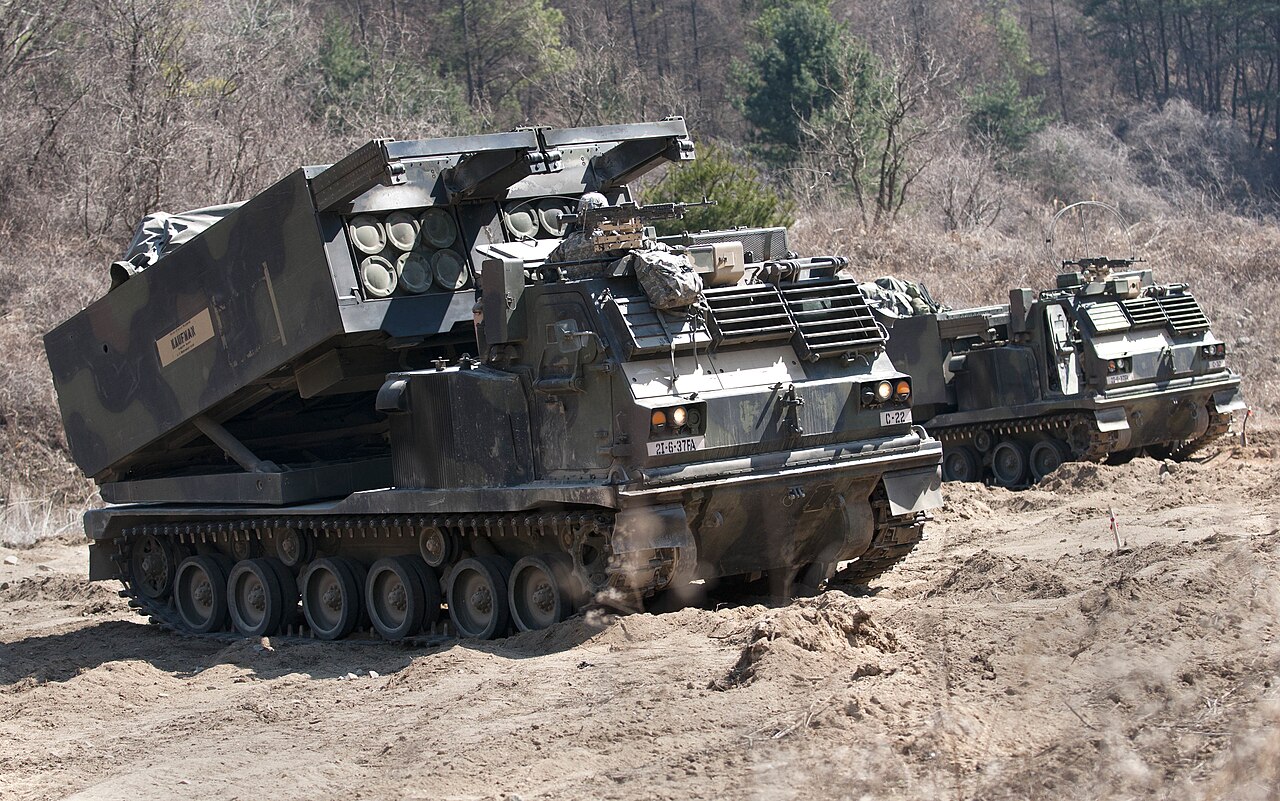
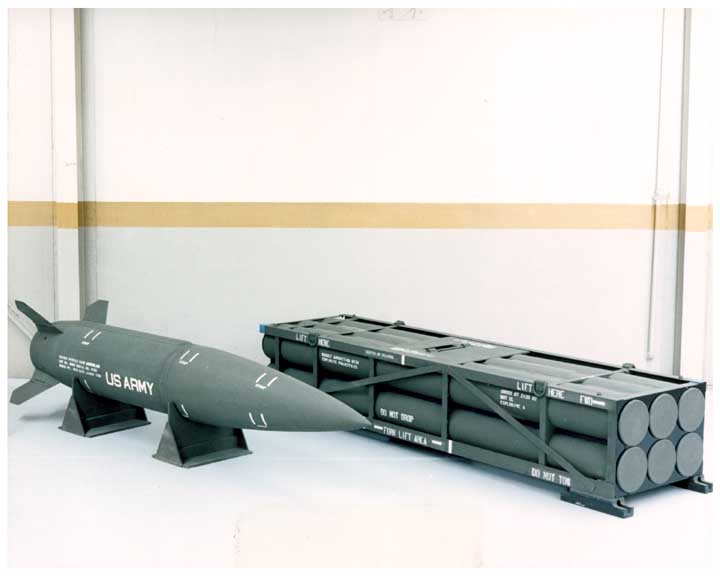
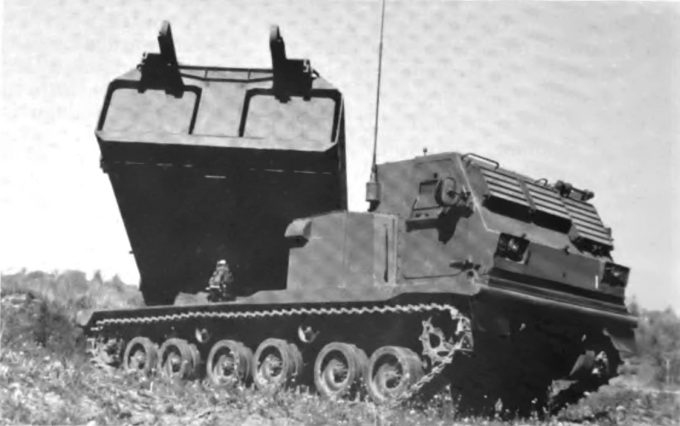

The M270 Multiple Launch Rocket System (M270 MLRS) is an armored, self-propelled, multiple rocket launcher (a type of rocket artillery). Since the first M270s were delivered to the U.S. Army in 1983, the MLRS has been adopted by several NATO countries. Some 1,300 M270 systems have been manufactured in the United States and in Europe, along with more than 700,000 rockets. The production of the M270 ended in 2003, when a last batch was delivered to the Egyptian Army. MLRS was developed jointly by the United Kingdom, United States, West Germany, France and Italy, developed from the older General Support Rocket System (GSRS). The M270 MLRS weapons system is collectively known as the M270 MLRS Self-Propelled Loader/Launcher (SPLL). The SPLL is composed of three primary subsystems: the M269 Loader Launcher Module (LLM), which also houses the electronic Fire Control System, is mated to the M993 Carrier Vehicle. The M993 is a derivative of the Bradley Fighting Vehicle chassis. Cold War doctrine for the M270 was for the vehicles to spread out individually and hide until needed, then move to a firing position and launch their rockets, immediately move away to a reloading point, then move to a completely new hiding position near a different firing point. These shoot-and-scoot tactics were planned to avoid susceptibility to Soviet counterbattery fire. One M270 firing 12 M26 rockets would drop 7,728 bomblets, and one MLRS battery firing 108 rockets had the equivalent firepower of 33 battalions of cannon artillery. The system can fire rockets or MGM-140 ATACMS missiles, which are contained in interchangeable pods. Each pod contains six standard rockets or one guided ATACMS missile; the two types cannot be mixed. The LLM can hold two pods at a time, which are hand-loaded using an integrated winch system. All twelve rockets or two ATACMS missiles can be fired in under a minute. One launcher firing twelve rockets can completely blanket one square kilometer with submunitions. For this reason, the MLRS is sometimes referred to as the "Grid Square Removal System" (metric maps are usually divided up into 1 km grids). Or informally among artillery personnel as "the finger of God", since a single launcher can sanitize an entire grid square, which is about the size of a fingertip on a typical map. A typical MLRS cluster salvo consisted of three M270 vehicles each firing all 12 rockets. With each rocket containing 644 M77 grenades, the entire salvo would drop 23,184 grenades in the target area. However, with a two percent dud rate, that would leave approximately 400 undetonated bombs scattered over the area, which could endanger friendly troops and civilians. In 2006, MLRS was upgraded to fire guided rounds. Phase I testing of a guided unitary round (XM31) was completed on an accelerated schedule in March 2006. Due to an Urgent Need Statement, the guided unitary round was quickly fielded and used in action in Iraq. Lockheed Martin also received a contract to convert existing M30 Dual-Purpose Improved Conventional Munition (DPICM) GMLRS rockets to the XM31 unitary variant. The M31 GMLRS Unitary rocket transformed the M270 into a point target artillery system for the first time. Due to GPS guidance and a single 200 lb (91 kg) high-explosive warhead, the M31 could hit targets accurately with less chance of collateral damage while needing fewer rockets to be fired, reducing logistical requirements. The unitary warhead also made the MLRS able to be used in urban environments. The M31 had a dual-mode fuse with point detonation and delay options to defeat soft targets and lightly fortified bunkers respectively, with the upgraded M31A1 equipped with a multi-mode fuse adding a proximity airburst mode for use against personnel in the open; proximity mode can be set for 3 or 10 meters (9.8 or 32.8 ft) Height Of Burst (HOB). The GMLRS has a minimum engagement range of 15 km (9.3 mi) and can hit a target out to 70 km (43 mi), impacting at a speed of Mach 2.5. A German developmental artillery system, called the Artillery Gun Module, has used the MLRS chassis on its developmental vehicles. In 2012, a contract was issued to improve the armor of the M270s and improve the fire control to the standards of the High Mobility Artillery Rocket System (HIMARS). In June 2015, the M270A1 conducted tests of firing rockets after upgrades from the Improved Armored Cab project, which provides the vehicle with an enhanced armored cab and windows.
System
Ammunition (Option 1)
Ammunition (Option 2)
Ammunition (Option 3)
Wikidata (https://www.wikidata.org/wiki/Q328978)