Z-9 Harbin (WZ-9) Chinese Medium Multi-Role Helicopter
Z-9
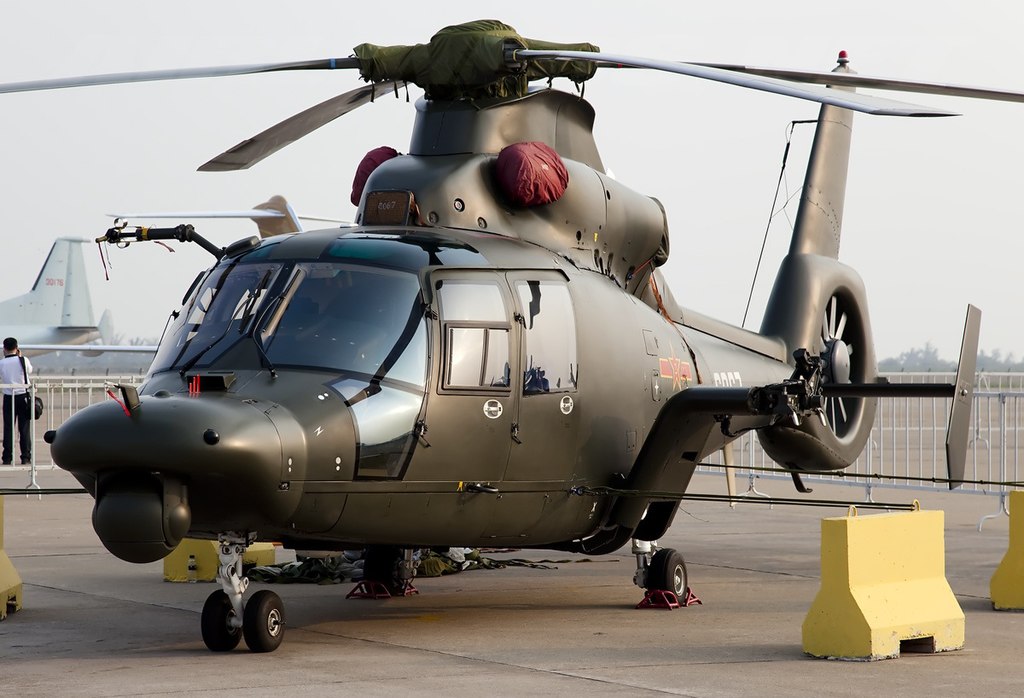
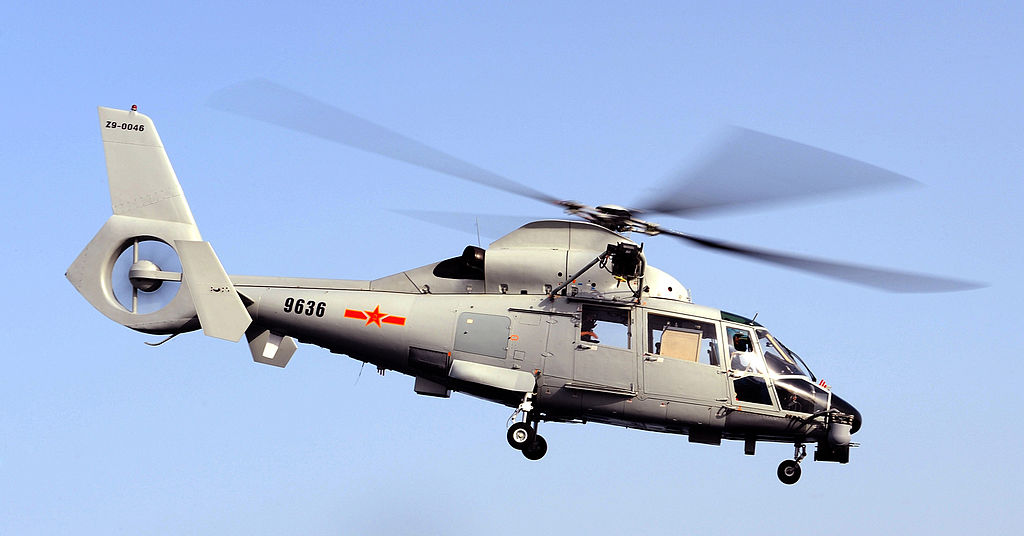
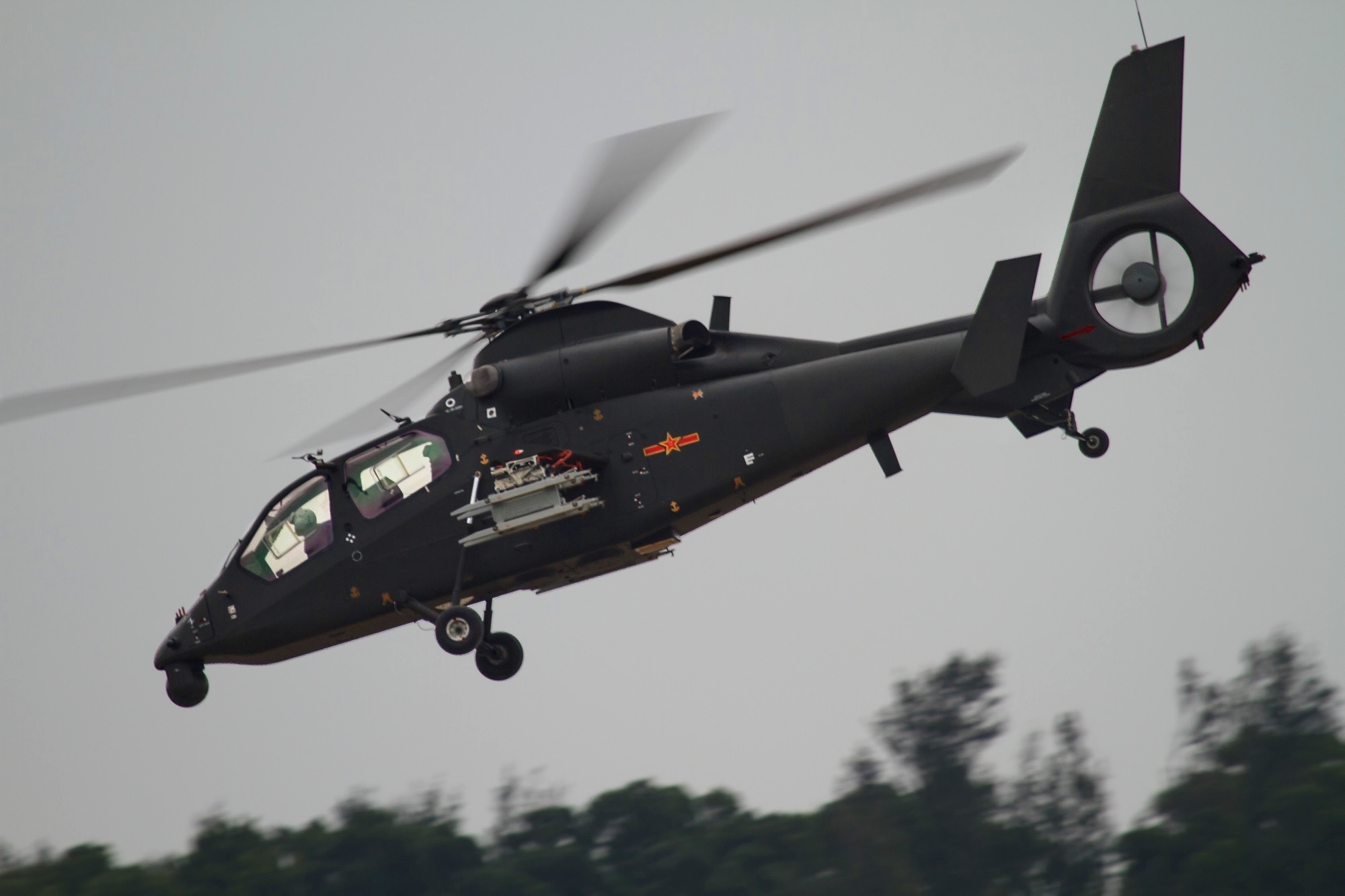
Despite statements from some sources, WZ-9 is too lightly protected to be an "Attack helicopter". The Z-9 was designed to be adaptable for a variety of roles, including transport, direct air support, escort, security, reconnaissance, ambulance, anti-submarine warfare, IW, airborne C2, search and rescue, antiship, and anti-submarine warfare. Each fuselage side has one pylon allowing for a single pod or missile rack. An expected upgrade for WZ-9/Z-9g is the red arrow 9 laser-beam rider/MMW guided ATGM, with 1,200 mm penetration and a 5 km range. The first Z-9 flew in 1981 and was built in China from components supplied by Aérospatiale as part of a production patent bought on 15 October 1980. On 16 January 1992, the indigenous variant Z-9B, constructed with 70% Chinese-made parts, flew successfully. The flight test was completed in November 1992 and the design was finalized a month later. Z-9B production began in 1993 and entered PLA service in 1994. The Z-9B features an 11-blade Fenestron faired-in tail rotor with wider-chord, all-composite blades replacing the 13-blade used in the original AS365N. As a light tactical troop transport, the Z-9 has the capacity to transport 10 fully armed soldiers. Generally, the Z-9 is identical to the AS365N Dauphin, though later variants of the Z-9 incorporate more composite materials to increase structural strength and lower radar signature. The helicopter has a four-blade main rotor, with two turboshaft engines mounted side by side on top of the cabin with an engine layout identical to the AS365N. The Z-9 teardrop-shaped body features a tapered boom to the tail fin, with a rounded nose and stepped-up cockpit, retractable gear, and all flat bottom. In 2002, Harbin obtained Chinese certification for the new H410A variant of the Z-9, which features more powerful Turbomeca Arriel 2C turboshaft engines; Eurocopter issued official objections to Harbin's decision to continue production in spite of the license-production agreement having expired, leading to a period of highly sensitive international negotiations to resolve the dispute.