Bushmaster CSV Australian 4x4 Armored Combat Support Vehicle
Bushmaster CSV
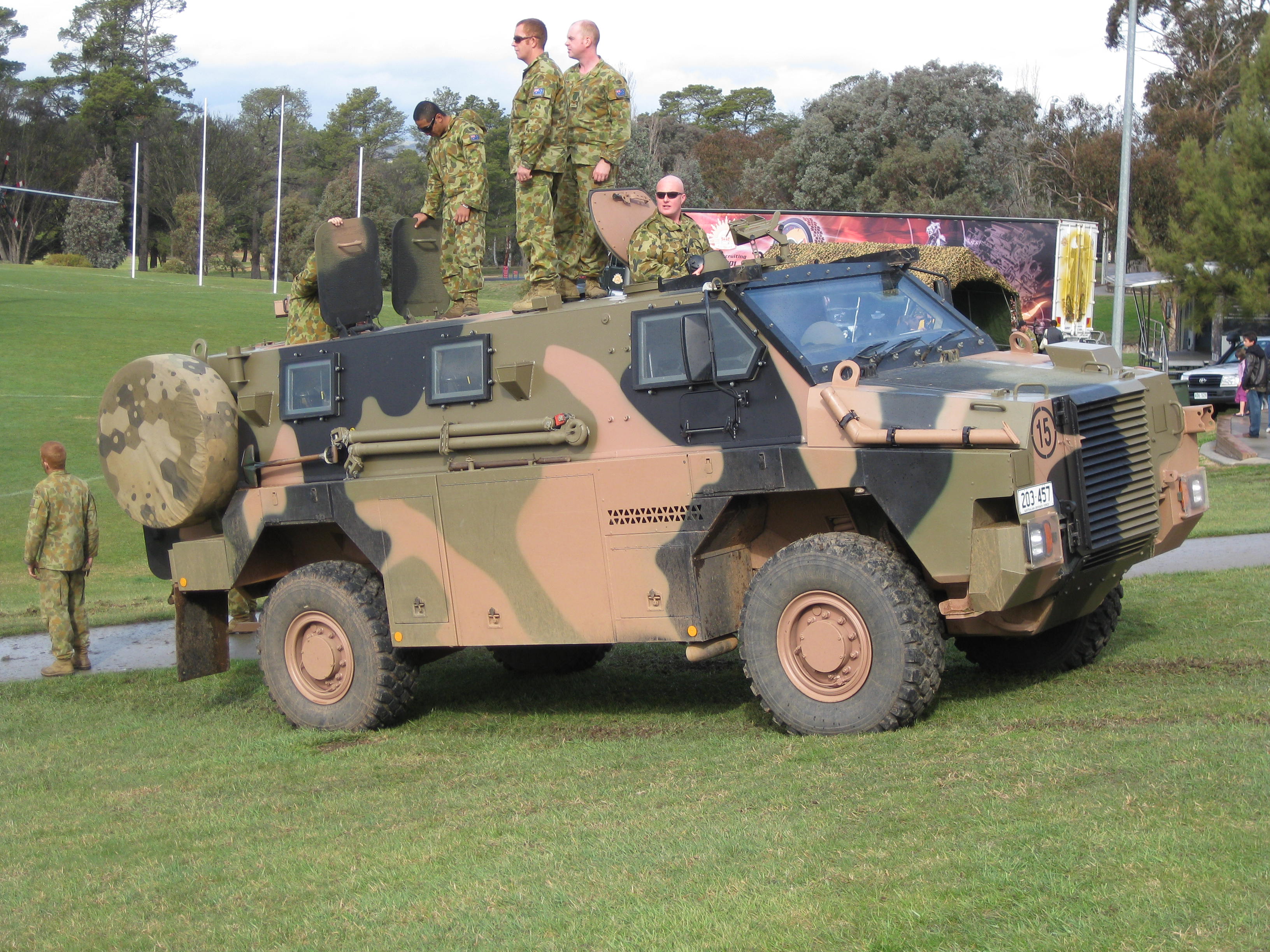
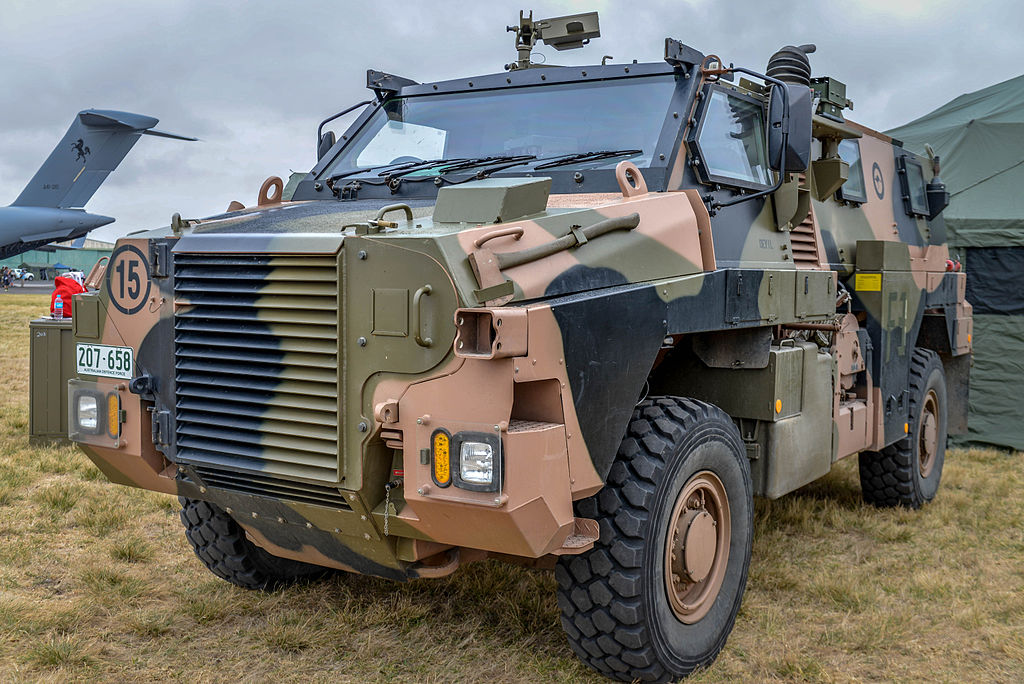
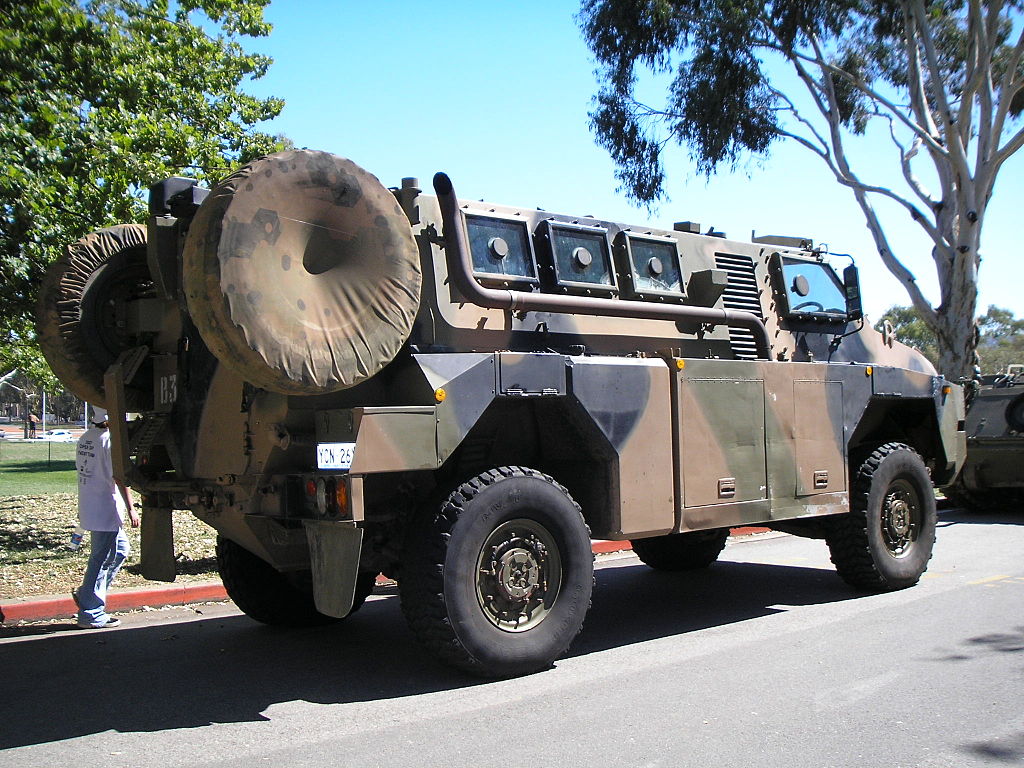
Bushmaster CSV Australian 4x4 Armored Combat Support Vehicle was previously known as the Copperhead. This 4 x 4 vehicle features the Bushmaster cab at the front, with a flat-bed cargo area at the rear, which can carry up to 11,000 lb (5,000 kg) of cargo. The cargo area measures 101 sq ft (9.4 sq m). Upgradeable ballistic protection options are available for the crew cabin. The vehicle has a top speed of 60 mph (100 km/h) and a maximum range of 500 mi (800 km). It also offers high clearance for obstacles, a tight turning circle,s and the ability to travel off-road in all conditions, according to the manufacturer. A dual-cab variant, offered for the British operational utility vehicle system (OUVS) program, featured a larger interior cabin with room for two crew and up to six passengers with four side-opening passenger doors and a flatbed area of 54 sq ft (5 sq m) and a 6,600-lb (3,000-kg) payload. The Bushmaster Protected Mobility Vehicle or Infantry Mobility Vehicle is an Australian-built four-wheel-drive armored vehicle. The Bushmaster was primarily designed by the then government-owned Australian Defence Industries (ADI) and is currently produced by Thales Australia with a support contract provided by Oshkosh Truck following the acquisition of ADI. The Bushmaster is currently in service with the Australian Army, Royal Australian Air Force, Royal Netherlands Army, British Army, Japan Ground Self Defense Force, Fiji Infantry Regiment, Jamaica Defence Force, and the New Zealand Army. The role of the Bushmaster is to provide protected mobility transport (or protected troop lift capability), with infantry dismounting from the vehicle before going into action. As the Bushmaster is only lightly armored, the term Infantry Mobility Vehicle (IMV) was initially adopted to distinguish it from a heavier wheeled or tracked armored personnel carrier, such as the ASLAV and M113 also in Australian service. Later the Bushmaster's designation was changed to Protected Mobility Vehicle (PMV). The Bushmaster is optimized for operations in northern Australia and is capable of carrying up to 9 soldiers and their equipment, fuel, and supplies for 3 days, depending on the type of variant. The vehicle is fitted with air conditioning and was once planned to have a cool water drinking system, but was omitted upon production due to cost constraints. After operational complaints, the drinking water cooling system is being reconsidered for installation. It has a road cruise speed of 100 km/h and an operational range of 800 km. The Bushmaster is a mine-protected vehicle and provides a high degree of protection against land mines, using its v-hull monocoque to deflect the blast away from the vehicle and its occupants. The vehicle's armor provides protection against small arms of up to 7.62 mm ball ammunition, 81mm mortar fragments, Claymore mines, and with additional applique armor, protection for armor-piercing ammunition of up to 7.62mm. The fuel and hydraulic tanks of the vehicle are located outside the crew compartment, while it also has an automatic fire suppression system. The troop carrier variant of the Bushmaster is fitted with one gun ring. The forward gun ring can be fitted with a 5.56 mm or 7.62 mm machine gun. The two rear hatches each have a mounting boss to allow the attachment of a swing mount capable of holding a 7.62 mm machine gun. The Bushmaster is air transportable by C-130 Hercules, C-17 Globemaster III, and Mil Mi-26 aircraft. It is the first armored vehicle to be designed and completely manufactured in Australia since the Sentinel tank during World War II.