FC-1 Xiaolong Chinese Multirole Combat Aircraft
FC-1
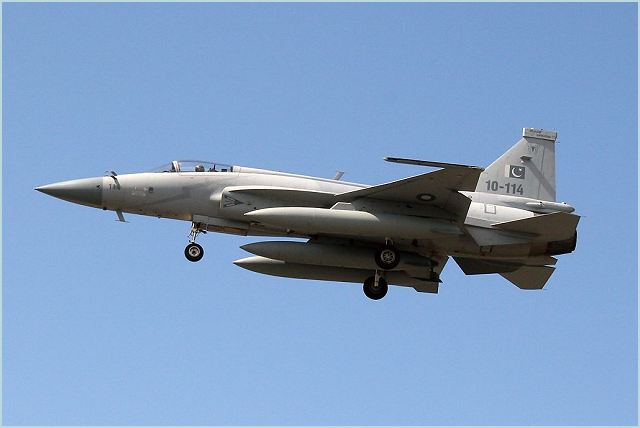
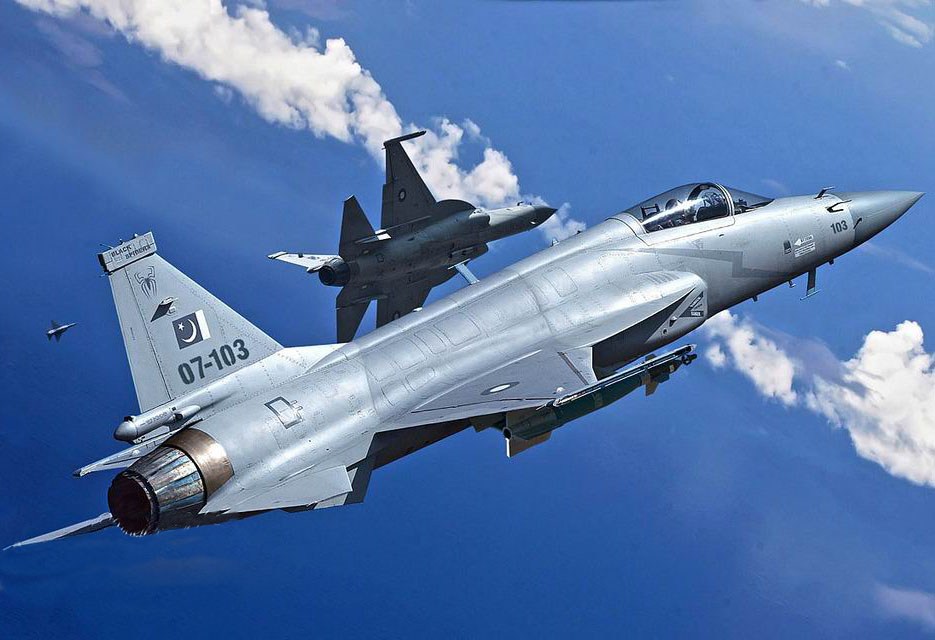
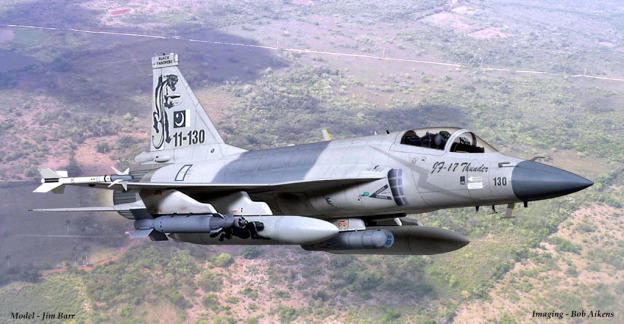

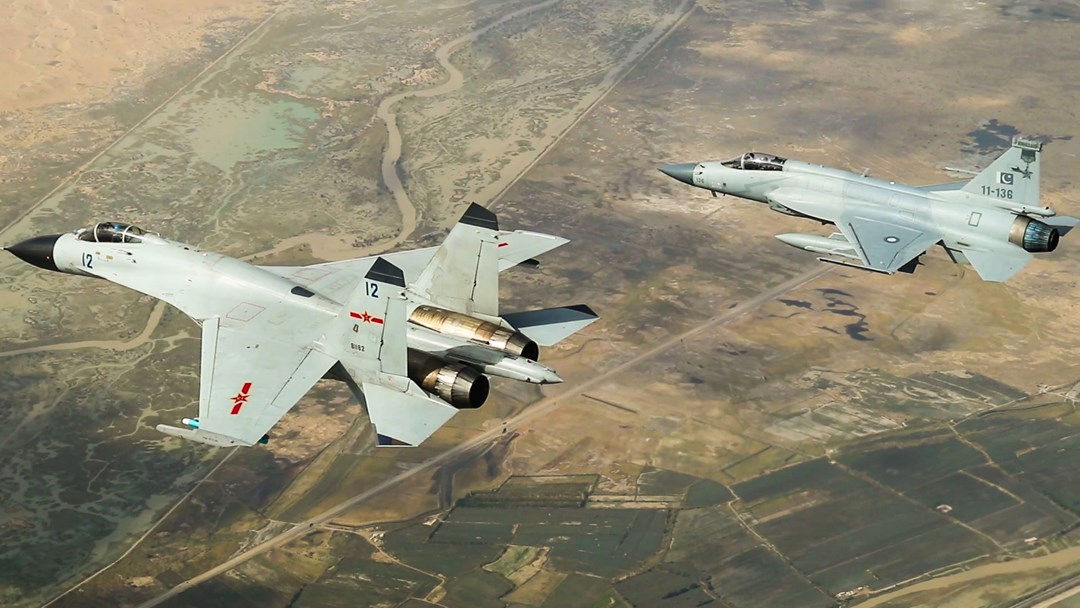


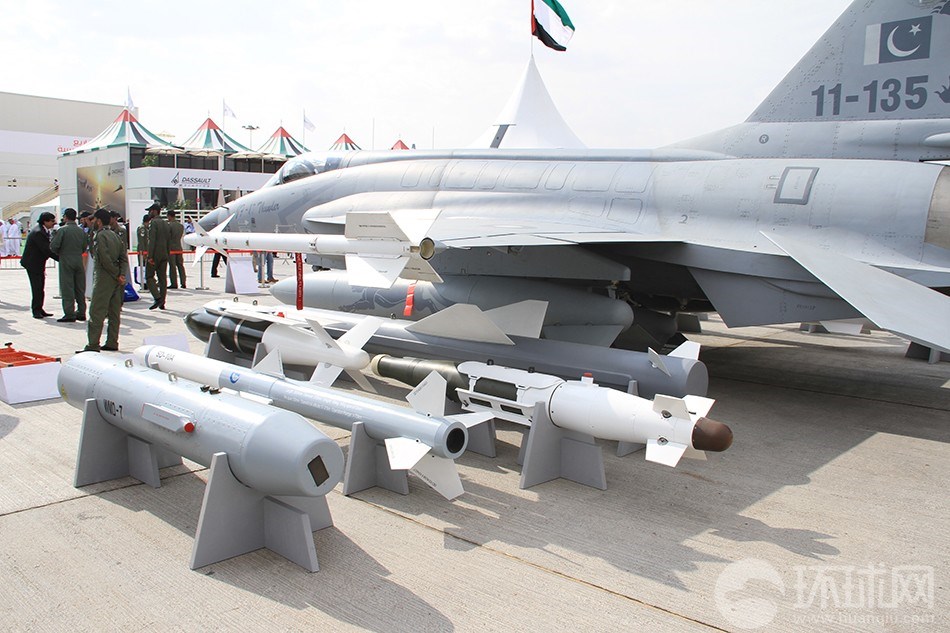


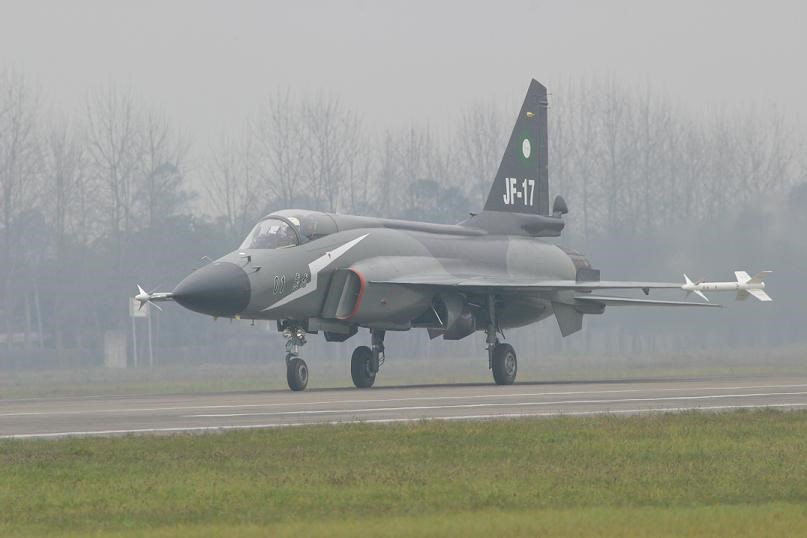

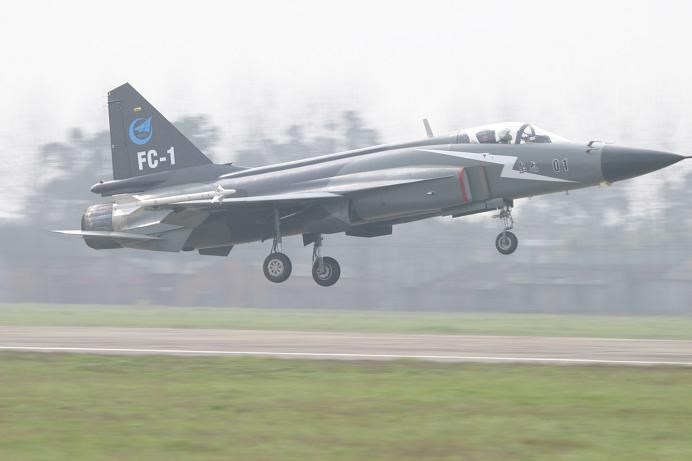
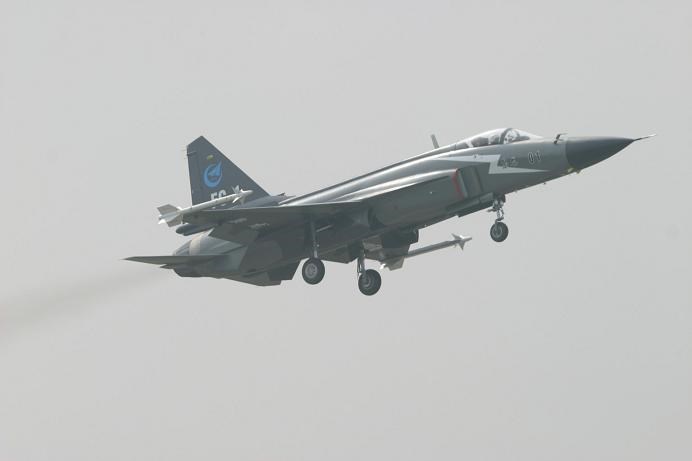

The PAC JF-17 Thunder, or CAC FC-1 Xiaolong, is a lightweight, single-engine, multi-role combat aircraft developed jointly by the Pakistan Aeronautical Complex (PAC) and the Chengdu Aircraft Corporation (CAC) of China. It was designed to replace the A-5C, F-7P/PG, Mirage III, and Mirage V combat aircraft in the Pakistan Air Force. The JF-17 can be used for multiple roles, including interception, ground attack, anti-ship, and aerial reconnaissance. Its designation "JF-17" by Pakistan is short for "Joint Fighter-17", while the designation and name "FC-1 Xiaolong" by China means "Fighter China-1 Fierce Dragon". The JF-17 can deploy diverse ordnance, including air-to-air and air-to-surface missiles, and a 23 mm GSh-23-2 twin-barrel autocannon. Powered by a Guizhou WS-13 or Klimov RD-93 afterburning turbofan, it has a top speed of Mach 1.8. The JF-17 is to become the backbone of the Pakistan Air Force (PAF), complementing the General Dynamics F-16 Fighting Falcon at half the cost. The PAF inducted its first JF-17 squadron in February 2010. In 2015 Pakistan produced 16 JF-17s. As of 2016, Pakistan is believed to have the capacity to produce 25 JF-17 per year. 58% of the airframe is Pakistani and 42% Chinese/Russian-origin. As of December 2016 Pakistan Aeronautical Complex has manufactured 70 jets in the country for use by the Pakistan Air Force of the Block 1 type,and 33 jets of the Block 2 type. The Pakistan Air Force plans, by 2017, to induct a twin-seater version known as the JF-17B for both enhanced operational capability and training. Preparations for a more advanced and technologically sophisticated block III version of the aircraft are underway and the AESA radar, KJ-7A, has been developed, which can track 15 targets and engage 4 targets simultaneously. Since its induction in 2011, the JF-17 Thunder has accumulated 19,000 hours of operational flight. The JF-17 has seen active military service as it is used by the Pakistan Air Force to bomb militant positions in North Waziristan, using both unguided munitions and guided missiles for precision strike capability. The air frame is of semi-monologue structure constructed primarily of aluminum alloys. High strength steel and titanium alloys are partially adopted in some critical areas. The air frame is designed for a service life of 4,000 flight hours or 25 years, the first overhaul being due at 1,200 flight hours. Block 2 JF-17s incorporate greater use of composite materials in the air frame to reduce weight. The retractable undercarriage has a tricycle arrangement with a single steerable nose-wheel and two main undercarriages. The hydraulic brakes have an automatic anti-skid system. The position and shape of the inlets is designed to give the required airflow to the jet engine during maneuvers involving high angles of attack. The mid-mounted wings are of cropped-delta configuration. Near the wing root are the LERX, which generate a vortex that provides extra lift to the wing at high angles of attack encountered during combat maneuvers. A conventional tri-plane empennage arrangement is incorporated, with all-moving stabilities, single vertical stabilizer, rudder, and twin ventral fins. The flight control system (FCS) comprises conventional controls with stability augmentation in the yaw and roll axis and a digital fly-by-wire (FBW) system in the pitch axis. The leading edge slats/flaps and trailing edge flaps are automatically adjusted during maneuvering to increase turning performance. The FCS of serial production aircraft reportedly have a digital quadruplex (quad-redundant) FBW system in the pitch axis and a duplex (dual-redundant) FBW system in the roll and yaw axis. The glass cockpit is covered by a transparent, acrylic canopy that provides the pilot with a good, all-round field of view. It has three large Multifunction Color Displays (MFD) and smart Heads-Up Display (HUD) with built-in symbol generation capability. A center stick is used for pitch and roll control while rudder pedals control yaw. A throttle is located to the left of the pilot. The cockpit incorporates hands-on-throttle-and-stick (HOTAS) controls. The pilot sits on a Martin-Baker Mk-16LE zero-zero ejection seat. The cockpit incorporates an electronic flight instrument system (EFIS) and a wide-angle, holographic head-up display (HUD), which has a minimum total field of view of 25 degrees. The EFIS comprises three color multi-function displays, providing basic flight information, tactical information, and information on the engine, fuel, electrical, hydraulics, flight control, and environment control systems. The HUD and MFD can be configured to show any available information. Each MFD is 20.3 cm (8.0 in) wide and 30.5 cm (12.0 in) tall and is arranged side by side in portrait orientation. The central MFD is placed lowest to accommodate a control panel between it and the HUD. Up to 3,629 kg (8,001 lb) of ordnance, equipment, and fuel can be mounted under the hard points, two of which are on the wing-tips, four are under the wings and one is under the fuselage.
System
Ammunition
Main Missile System #1
Main Missile System #2
Main Missile System #3
Bomb #1
Bomb #2
Bomb #3
deagel.com: https://www.deagel.com/x/x/a000302
