ARMSNET
Military Equipment Database
Initializing 0%

R440 Crotale French 4x4 Short-Range Air Defense Missile System

R440 Crotale
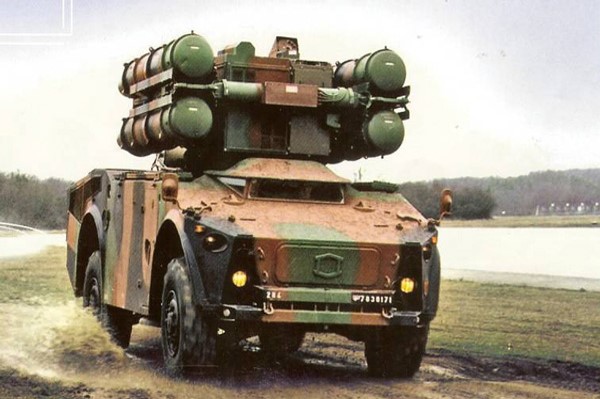
French Short-Range Air Defense Missile System
Spotted an error? Sign in to suggest an edit.
Basic Information
Name
R440 Crotale French 4x4 Short-Range Air Defense Missile System
Designation
R440 Crotale
Alternate Designation
R440 Crotale
Equipment Type
French Short-Range Air Defense Missile System
Manufacturer
Thomson CSF Matra
Date of Introduction
1972
Description

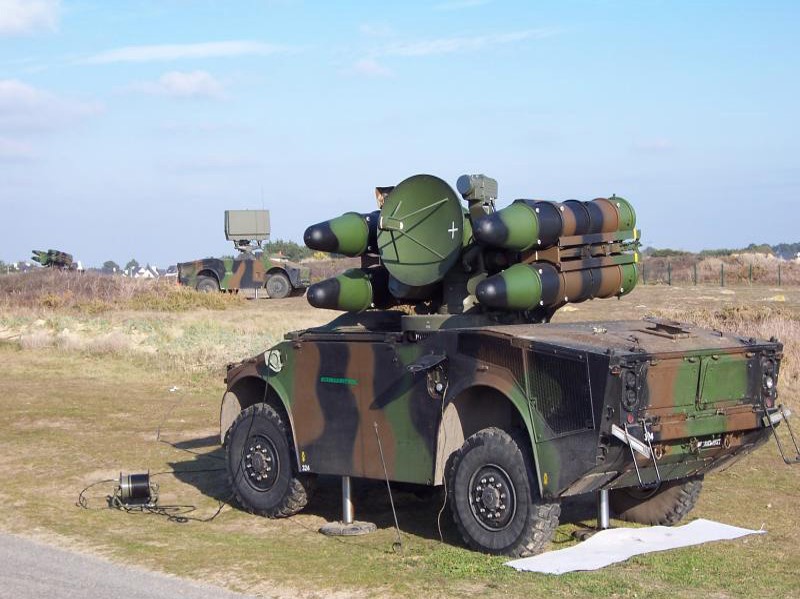
The Crotale EDIR is an all-weather short-range anti-air missile, which can be used to intercept low-flight anti-ship missiles and aircraft. It has been developed by Thomson CSF Matra and exists in two versions, a mobile land-based version and a ship-launched one. Originally the Crotale R440 system was developed by Rockwell International and Thomson-Houston (and Mistral) in France for South Africa, where it was named Cactus. However, the achievements of the system impressed the French Armed Forces, who purchased the system both for the air force and for the navy. The firing system includes the main sensors of the ship, the firing system of the turret, and a central coordination system. The turret holds eight missiles ready for launch in watertight containers. The magazine behind the turret holds 18 missiles. The French army first utilized a 4x4 wheeled vehicle, armed with four launchers. In order to ensure higher mobility, it was decided to mount the system on the chassis of the French AMX-30 main battle tank. At the same time, the number of launchers were increased to six. In Finnish Army service, the Crotale NG system has been mounted on Sisu Pasi vehicles. Here the number of launchers is eight. The Crotale system has also been installed on various military ships. For instance the French Navy La Fayette class frigates have a Crotale 8-tubed launcher near the helicopter flight deck.

Ground Specifications
Crew 3
Mobility Type Wheeled (4x4)
Engine Diesel
Active Protection None
NBC Protection Yes
Variants
R440 Crotale The original Crotale SAM system, with both land and sea (Sea Crotale) systems. Over 330 systems and several thousand missiles were produced and exported to more than 15 countries.
HQ-7 China developed the HQ-7 system partly from reverse-engineering Crotale. An improved version, the HQ-7A/FM-90, is known to exist.
Shahab Thaqeb In 2002 Iran revealed details concerning a domestically produced surface-to-air missile system, named Shahab Thaqeb. The system, mounted on a 4-wheel trailer, closely resemembled the Chinese HQ-7/FM-80/90 series which Iran had already received. It was unclear whether these systems were actually manufactured in Iran, or whether some portion of the assembly had been conducted domestically.
R460 SICA (Shahine) Thomson-CSF (now Thales) developed a specific version of the Crotale known as "Shahine" for Saudi Arabia. The system became operational in 1980. The main visible differences are mainly the carrier (an AMX 30 armoured carrier instead of the non protected classic carrier), and that it carries a six missile firing unit (instead of four). The purpose of the changes was to allow the Shahine firing and acquisition units to follow and protect the armoured units of the Saudi Armed Forces on the battlefield. The Shahine units were among the first vehicles to liberate Kuwait City in February 1991 – a picture taken of the scene was widely publicised by Newsweek magazine.
Liberty Forward Area Air Defense System Developed in conjunction with LTV for the US Army's Line of Sight-Forward Heavy competition, the Liberty air defense system consisted of either 6 R460 SICA or 6 VT-1 missiles mounted on an M1A1 Abrams chassis along with a pair of 25mm cannons
Crotale NG (VT-1) An updated version, New Generation. Finland was the first operator of the system. The cost of the system is roughly 8 million euros (excluding the vehicle). Greece is another user, and paid 1 Billion French Francs in 1998 for 11 systems: 9 for the Hellenic Air Force and 2 for the Hellenic Navy. In 2002 euros, that would have amounted up to 12 million euros per unit.
Crotale Mk.3 (system) In January 2008, France test-fired the new Crotale Mk.3 system at the CELM missile launch test center in Biscarrosse. The Crotale Mk.3 system's VT1 missile successfully intercepted a Banshee target drone at 970 metre altitude and 8 km range in 11 seconds on 15 January 2008. Later, on 31 January 2008, the system successfully intercepted another target drone at a 500-metre altitude and 15 km range in 35 seconds.
System
Alternative Designation R440 Crotale
Type French Short-Range Air Defense Missile System
Family Crotale
Function The Crotale is a point defense system, designed to protect high value targets, such as airfields, military bases, ammunition depots, and so on. The original design aim of the Crotale was to engage supersonic low-flying aircraft.
Chassis Thomson-Hotchkiss P4R 4x4 armored chassis
Crew 3 ea
Displacement Time 5 minutes
Emplacement Time 5 minutes
Fire on the Move No, it takes 5 minutes to launch the missiles from travelling.
Note #1 The Crotale is one of the most successful SAM design ever built. This air defense system still evolves and remains in production for more than 40 years. A wide range of its variants have been built. It is in service with 15 countries.
Note #2 A typical battery of the Crotale consists of two or three TELAR vehicle and one vehicle with acquisition radar. TELARs and acquisition and coordination unit are connected with cables. These are supported by a host of maintenance and support vehicles. It takes 2 minutes to reload all four missiles.
Dimensions
Length INA
Width INA
Height INA
Weight, Combat INA
Ground Pressure INA
Note There is no available information on the dimensions of the Thomson-Hotchkiss P4R 4x4 armored chassis.
Automotive
Engine Name INA
Engine Type Diesel
Engine Power INA
Cruising Range 600 km
Speed, Maximum Road 80 km/h
Speed, Average Cross INA
Speed Maximum Swim Not Amphibious
Gradient 60 %
Side Slope 30 %
Vertical Step 0.5 m
Trench 0.5 m
Fording Depth 0.8 m
Note mobility of this vehicle is rather limited. It was developed as a point defense system, rather than operate alongside land force maneuver elements. It takes about 5 minutes to launch missiles from travelling. There is also a towed variant, that is less mobile.
Communications
Tactical Radio INA
Missile System
Name VT-1
TELAR Thomson-Hotchkiss P4R 4x4 armored chassis
Length 3 m
Diameter 0.55 m
Engine solid-propellant fuel
Missile Weight 84.5 kg
Basic Load 4 ea
Warhead Type HE-FRAG
Warhead Weight 15 kg
Max Elevation INA deg
Min Elevation INA deg
Traverse Range 360 deg
Traverse Left 180 deg
Traverse Right 180 deg
Maximum Range Of Fire up to 12 km
Minimum Range of Fire 500-700 m
Guidance System semi-active radar homing electro-optical sensors Infra-red search and track.
Maximum Altitude of Fire 5.5 km
Detonation Mechansim infrared fuse, radio fuse
Speed 1,200 m/s
Hit Probability, 1 Missile 80 %
Hit Probability, 2 Missile 96 %
Additional Missiles VT-1 or the Mk3 Missiles can be fired from the R440 Crotale
Fire Control
Fire Control System
Name Crotale Acquisition and Coordination Unit (ACU)
Computerized FCS Yes
Direct Fire Yes
Indirect Fire Yes
Optical Aiming System Yes
Radar
Name INA
Type Engagement Radar
Frequency/Band INA
Maximum Detection Range 18.4 km
Maximum Tracking Range 17 km
Number of Targets System can Detect 30
Number of Targets System can Track 12
Note This vehicle detects targets, tracks them, identifies targets, identifies weather it is friend or foe.
Protection
Hull Armor Armor of this vehicle provides protection against small arms fire and artillery shell splinters.
Turret Armor INA
Applique Armor No
Explosive Reactive Armor No
Active Protection System No
Mine Clearing No
Self-Entrenching Blade No
NBC Protection Yes
Smoke Equipment INA
Details
Country of Origin France
Filter Label
R
Classification
Domain
Ground
Equipment Status
Active
Operators (13)
France
South Korea
Iran
Pakistan
South Africa
Bahrain
Egypt
Finland
Greece
Morocco
Oman
Saudi Arabia
United Arab Emirates
Something went wrong. Please reload the page. Reload