9M113 Konkurs (AT-5 Spandrel) Russian Anti-Tank Guided Missile (ATGM)
9M113
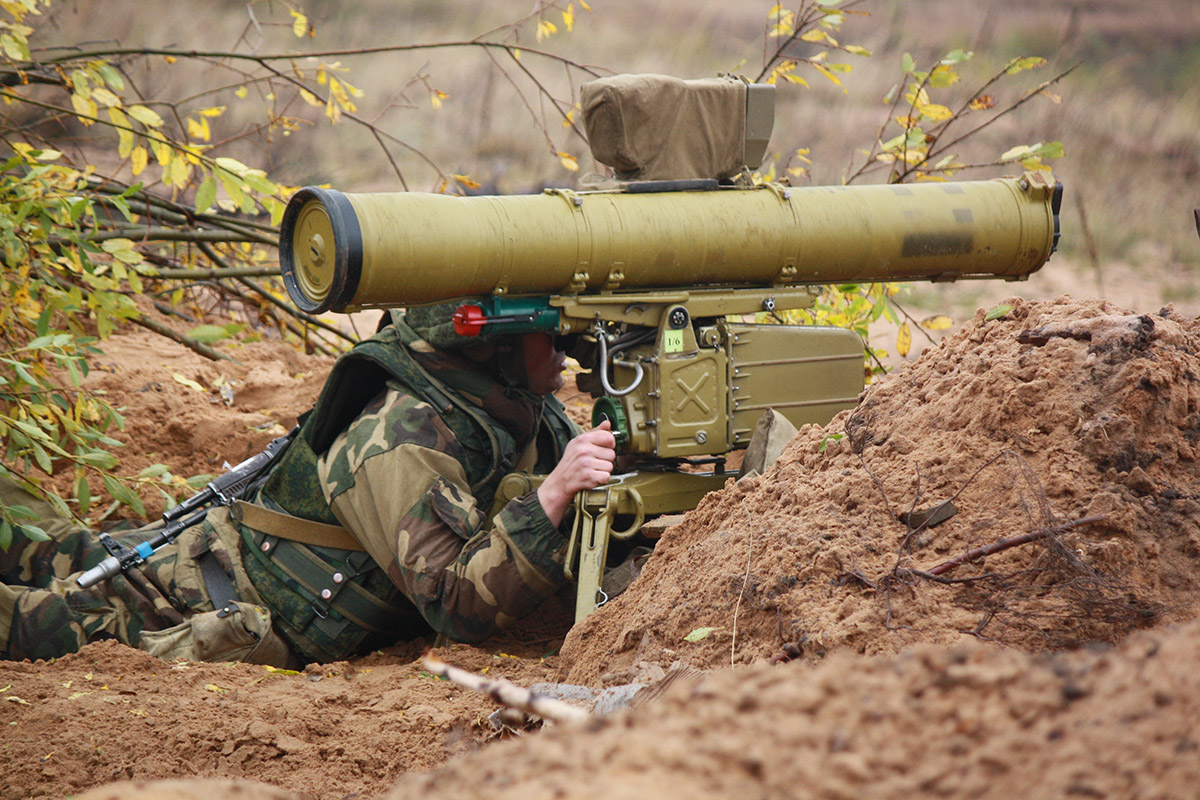
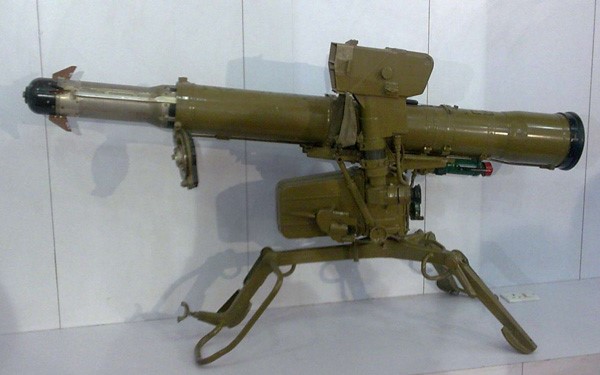
HEZBOLLAH Proliferation. The 9M113 Konkurs (Contest) anti-tank guided missile system entered service in 1974 and was given the NATO codename of AT-5 'Spandrel'. It has been license-produced in various countries. Although production of the 9M113 Konkurs continues, it is assessed that the replacement for the system will be the Kornet laser-guided missile system. The missile is designed to be fired from vehicles, although it can also be fired from the later models of 9M111 launchers. It is an integral part of the BMP-2, BMD-2, and BRDM-2 vehicles. The missile is stored and carried in a fiberglass container/launch tube. The system uses a gas generator to push the missile out of the launch tube. The gas also exits from the rear of the launch tube in a similar manner to a recoilless rifle. The missile leaves the launch tube at 80 meters per second and is quickly accelerated to 200 meters per second by its solid-fuel motor. This initial high speed reduces the missile's dead zone since it can be launched directly at the target, rather than in an upward arc. In flight, the missile spins at between five and seven revolutions per second. The launcher tracks the position of an incandescent infrared bulb on the back of the missile relative to the target and transmits appropriate commands to the missile via a thin wire that trails behind the missile. The system has an alarm that activates when it detects jamming from a system like Shtora. The operator can then take manual control, reducing the missile to MCLOS. The SACLOS guidance system has many benefits over MCLOS. The system's accuracy is quoted in some sources as 90%, though its performance is probably comparable to the BGM-71 TOW or later SACLOS versions of the 9K11 Malyutka.