Rakhsh Iranian 4x4 Armored Personnel Carrier (APC)
Raakhsh
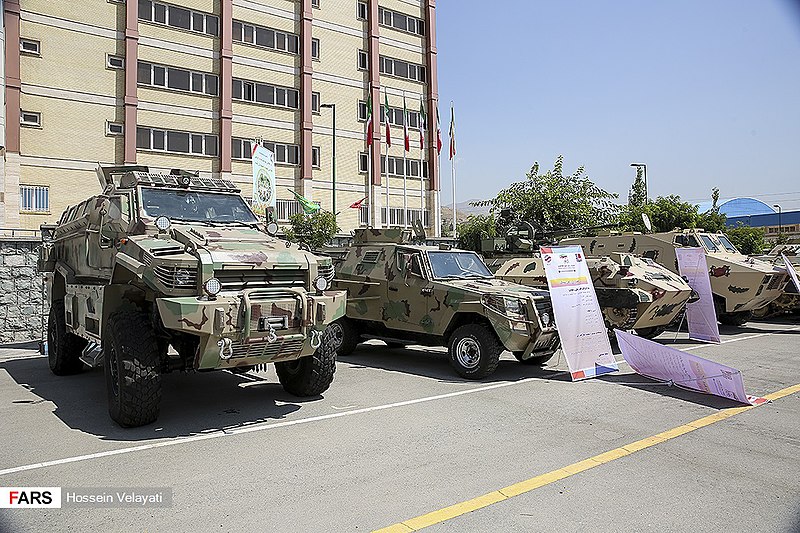
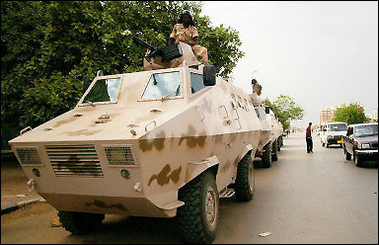
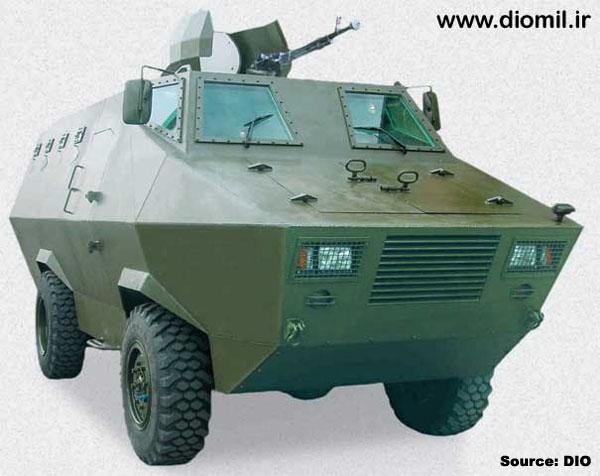
Rakhsh is a lightweight Iranian 4x4 cross-country APC developed and produced by DIO's Shahid Kolah Dooz Industrial Complex and named after Rakhsh, the mythical horse of Rostam in Shahnama. It is probably based on a proven 4 × 4 cross-country chassis present in Iran before and is in service of Iranian Police, Iranian Army, IRGC and Sudan. Characterized by high speed on road and excellent off-road mobility, the Rakhsh can transport 10 men. The vehicle is fitted with a 12.7 mm Automatic Gun and can be fitted with different cupolas for various types of armaments, Such as 7.62 mm machine gun and water spraying gun for civil defense. The crew can see and fire through 10 vision blocks and firing ports and can be quickly embarked or deployed through one rear door and two side doors. The Rakhsh 4x4 light armored personnel carrier is intended more for law enforcement forces than for full-fledged combat operations. It is in service with the Iranian police and the Islamic Revolution Guard Corps (IRGC). This armored personnel carrier is extremely similar to the North Korean BTR M-1992 The Rakhsh BTR comes in two versions: the first experimental model, which, apparently, is still being manufactured, and a later export version, which, due to the sanctions imposed on Iran, is also produced for local police and military. First display in 2006, Rakhsh was probably developed by the Iranian Defense Industries Organization (DIO) Shahid Kolah Dooz Industrial Complex. Rakhsh is based on a proven 4 × 4 cross-country chassis, produced in Iran for a variety of civil and military applications. In 2003 the Russian company Kamaz started cooperation with the company Rakhsh Khodro Diesel by the instrumentality of the RT Ministry of Trade. In addition to being used by Iran, a quantity of these vehicles have been supplied to Sudan. Production of the Rakhsh is undertaken by the DIO on an as required basis and may have been followed in development by a more advanced 4 × 4 or 6 × 6 APC. The Rakhsh hull is of all-welded steel armor providing protection from 7.62 mm small arms fire. The commander and driver are seated at the front of the vehicle being provided with front and side bulletproof windows. In addition to its crew of two, Rakhsh can carry eight fully equipped troops seated in the rear troop compartment. These occupants also have small bulletproof windows and 10 associated firing ports that allow them to fire their weapons from within the vehicle with some level of protection. The crew can rapidly enter and leave the vehicle via a door in either side of the hull and twin doors in the hull rear. The baseline version of the Rakhsh APC is fitted with a roof-mounted protective mount armed with a locally manufactured 12.7 mm Machine Gun (MG). This mount appears to be almost identical to that installed on the locally developed Boraq full-tracked APC that is already in service with Iran. This is very similar to 12.7 mm MG cupolas installed on Chinese tracked APCs. This manually operated mount provides side and rear protection to the gunner. Most often, the first option is a 14.5-mm machine gun in the turret, while a later version can only be seen with a 12.7-mm machine gun in the turret. Although there are no obvious reasons why you can not install other weapons. Although some models installed anti-aircraft installation ZU-23-2. In the early models, the side doors were hinged, while the later model had single door side doors. Other differences between the two options are minor, mostly “aesthetic”, most likely reflecting changes in production technology than any significant improvements. These include the alignment of the roof of the engine compartment, the elimination of certain angles and the movement of air intakes. The hull is welded from sheets of armor steel and has very characteristic massive angular contours. With spaced armor, it provides protection against 7.62-mm bullets. It can also be bolted to fasten armor plates, designed for other combat vehicles. Other features of the machine include a centralized pumping system for wheels, wheels with armor resistant inserts, a winch, an air conditioning system, optional smoke grenade launchers, and a system of protection against weapons of mass destruction. Standard equipment for the Rakhsh includes a central tyre inflation system that allows the driver to adjust the tire pressure to suit the terrain being crossed, tires fitted with run-flats, differential locks and a powered winch. As it will be deployed in high ambient temperatures an air conditioning system is fitted as standard. Rakhsh BTR cannot overcome too complex obstacles, destroy other armored vehicles, or protect the crew and troops from large-caliber ammunition, but it is worth recalling that it is not intended for such things and does not intend to replace Boragh or BMP-2. It is well suited to work as a police car or light armored personnel carrier, but no more.