JZ-8F (Finback-B) Chinese Reconnaissance Fighter Aircraft
JZ-8F
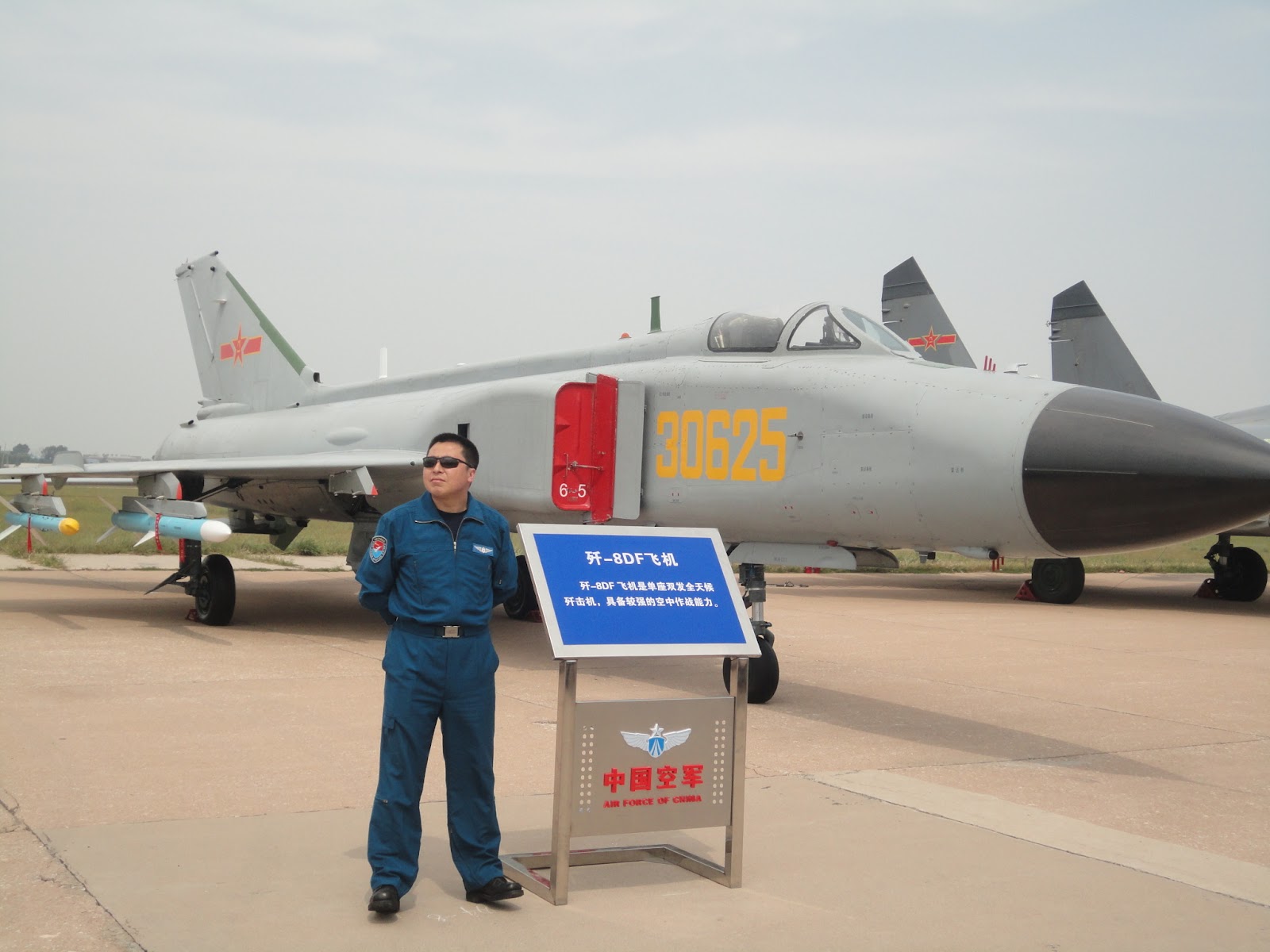
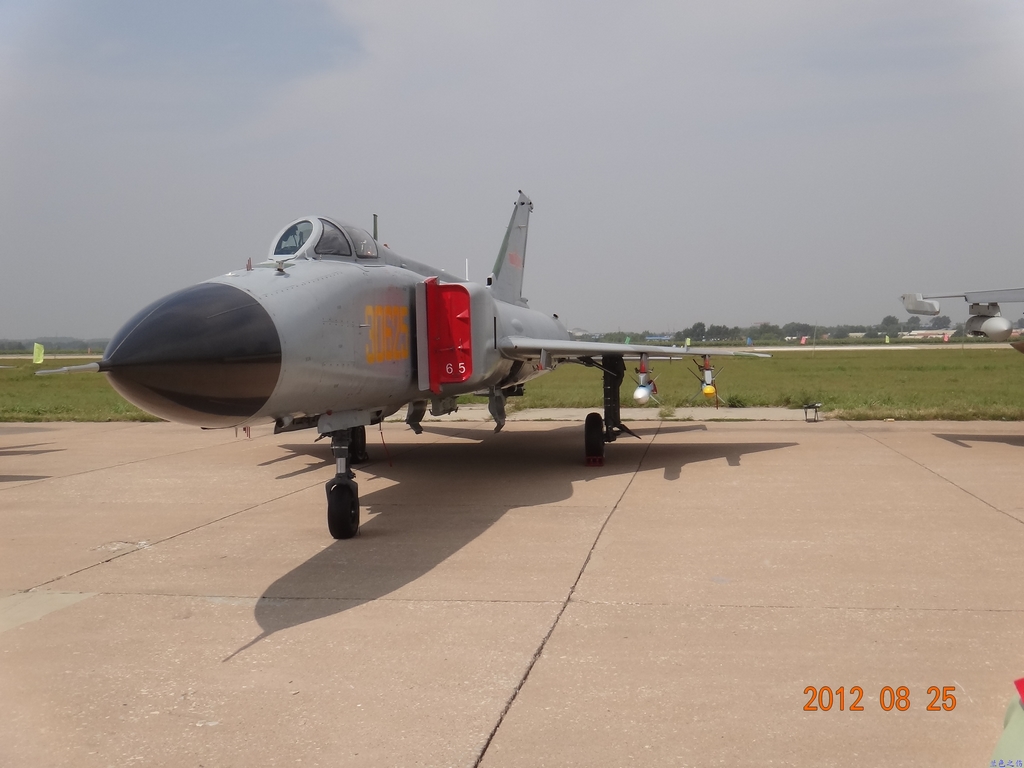

JZ-8F A reconnaissance version of the J-8F with internal camera in the forward fuselage replacing the cannon. The Shenyang J-8 (Chinese: 歼-8; NATO reporting name: Finback) is a high-speed, high-altitude Chinese-built single-seat interceptor fighter aircraft. The effort to develop an all-weather interceptor began in full in 1964 and this produced the first Chinese-designed and built jet fighter to combat new, high altitude threats such as the B-58 Hustler bomber, F-105 Thunderchief fighter-bomber and Lockheed U-2 spy plane. In 1964 the People's Liberation Army Air Force requested an aircraft from Shenyang Aircraft Corporation and the 601 Institute to develop a fighter/interceptor to counter bombers and spy planes as the newly introduced Chengdu J-7 (a reverse-engineered MiG-21) was incapable of doing so. The prototype took its maiden flight in 1969. Despite the mid-1960s origins of the J-8, due to the political turmoil of the Great Proletarian Cultural Revolution, the J-8 was not produced until 1979 and entered service in 1980. Its basic configuration resembles an enlargement of the delta-winged J-7, utilizes two Liyang (LMC) Wopen-7A turbojet engines, and features a maximum speed of Mach 2.2. The twin-engined J-8 competed with rival Chengdu Aircraft Industry Group's single turbofan engine, canard-delta J-9 project and ultimately emerged as the victor largely due to the existing availability of the former's MiG-21 based powerplant and proven layout, while the J-9 project was cancelled in 1980 due to difficulty in creating a suitably powerful engine. In order to house a large radar set, the design called for a solid nose and variable geometry side air intakes. However, the lack of familiarity with this type of intake meant the J-8 had to settle for a MiG-21 style nose intake. The solid nose J-8 was finally realized in the J-8II (Finback-B), which was based on the layout of the J-8I (same improvement is like the J-6 to Q-5). The radar chosen for the J-8 was the Type 204 mono-pulse fire-control radar, a primitive ranging radar for daylight within-visual-range operations. The performance of the radar fell well short of the PLAAF's requirements as research into a more capable fire control radar and power source proved difficult and time-consuming. The aircraft was originally armed with cannons and seven hardpoints for missiles, bombs, rockets or fuel tanks. The original weapons layout of the J-8 was two 30 mm Type 30-1 cannons after initial problems with the 30 mm Type 30-II four-barrel Gatling gun. The J-8 was also planned to be armed with the experimental PL-4 medium ranged missile but technical issues and political upheavals prevented any in-depth development and the project was cancelled in 1985 citing unsatisfactory performance. Therefore, the PL-2 IR-homing short-range air-to-air missile (SRAAM) was used instead. Unguided bombs and rockets can also be carried on the J-8. And nowadays with the development of light-weight military nuclear weaponry, the J-8II will now be able to carry missiles with nuclear warheads. Despite entering service relatively recently, it was comparable to many older Soviet fighter designs, with limited maneuverability. The original combat avionics package was soon replaced with an all-weather capability in aircraft designated J-8I (Finback-A). The J-8I (later redesignated as the J-8A) received a new gun sight, onboard computer, new cockpit design and redesigned ejection escape system and oxygen supply system. The gun armament was also changed from two 30 mm cannons to a single 23 mm twin-barreled cannon and the PL-5 short ranged AAM was also equipped. The later J-8E featured improved electronic warfare systems. The unsatisfactory performance of the J-8I led to a very short production run of 20–50 aircraft and the J-8I has slowly began being phased out as early as the 1990s. A tactical reconnaissance variant of the J-8, known as the JZ-8 was developed in the mid 1980s to take advantage of the J-8s few favourable qualities, most notably its capability of reaching high speeds and altitudes to replace the Shenyang JZ-6 in the tactical reconnaissance role. Using an under-fuselage reconnaissance pod with a KA-112A long focal-length optical camera, the JZ-8 usually operates at heights ranging from ~9,500m-15,000m during reconnaissance missions. By 1982 work began to replace the unimpressive J-8I type with a new design known as the J-8II. The new 1982 requirements from the PLAAF demanded being capable of beyond visual range combat (BVR) with the use medium ranged missiles (MRAAM) and secondary ground attack capabilities. In terms of performance, the aircraft was expected to have better aerodynamic performance at medium to low altitudes and at transonic speeds.