ARMSNET
Military Equipment Database
Initializing 0%

RQ-4A Global Hawk

RQ-4A Global Hawk

Surveillance & Reconnaissance Airplanes
Spotted an error? Sign in to suggest an edit.
Basic Information
Name
RQ-4A Global Hawk
Designation
RQ-4A Global Hawk
Alternate Designation
RQ-4 Block 10 Global Hawk
Equipment Type
Surveillance & Reconnaissance Airplanes
Manufacturer
Northrop Grumman, L-3 Communications, Raytheon
Date of Introduction
2001
Description

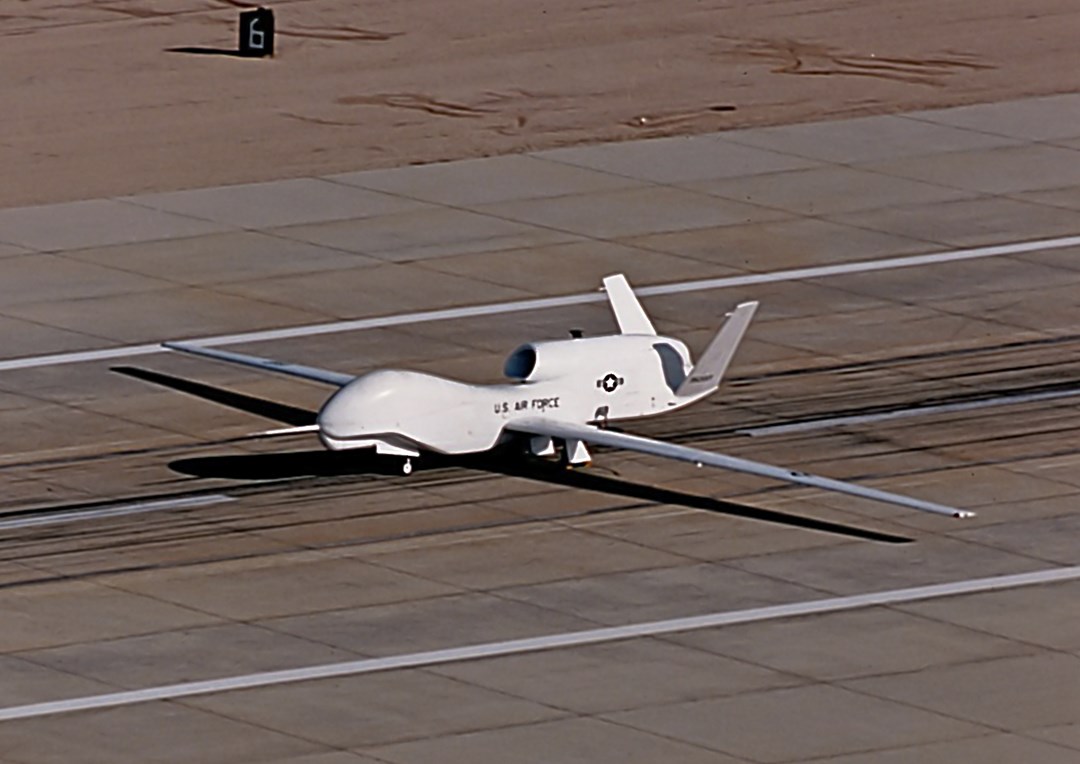
The RQ-4A Global Hawk, or Global Hawk Block 10, is the initial version of the RQ-4 system deployed in November 2001 in support of the Global War on Terror (GWOT). Provides near real-time, high resolution IMINT, through the Integrated Sensor Suite (ISS) payload, of large geographic areas containing information about enemy resources, location and personnel. It is equipped with satellite (beyond-line-of-sight or BLOS) and line-of-sight (LOS) data links for communications with ground control stations. The United States Air Force RQ-4A aircraft was first deployed in November 2001 over Afghanistan during operation Enduring Freedom. The first production RQ-4A Global Hawk unmanned aerial reconnaissance vehicle arrived at the Beale Air Force Base, California, on November 16, 2004. In August 2005, the USAF was confident to have 21 fully operational Global Hawks by 2008 and 51 by 2012 when Global Hawk series production is expected to be complete. In January 2006 the US Air Force deployed its first two production RQ-4A Global Hawk aircraft in support of the Global War on Terrorism. As of April 2011, the US Air Force requirement for Global Hawk aircraft had decreased from 77 to 66 airplanes with an unitary cost of $100.8 million. Mission parameters are pre-programmed into the RQ-4A Global Hawk mission computer before flight. Afterwards, the unmanned aerial vehicle (UAV) can autonomously taxi, take off, fly, remain on station collecting imagery, return and land. The Global Hawk has been deployed in support of joint US military services exercises and missions carried out with Germany and Australia. For enhanced survivability the RQ-4A unmanned aircraft features low observable technologies such as reduced radar cross section.

Air & Air Defense Specifications
Max Speed 629.7 km/h
Range 17594.0 km
Service Ceiling 18288 m
Wingspan 35.36 m
Overview (Deagel)
Group Surveillance & Reconnaissance Airplanes
Status Retired - No Longer Operational
Also Known As RQ-4 Block 10 Global Hawk
Origin United States of America
Contractors Northrop Grumman*, L-3 Communications, Raytheon
Initial Operational Capability (IOC) November 2001
First Flight February 28, 1998
Total Production 16
Unitary Cost USD $38 million
Specifications (Deagel)
Aircrew 3
Crew 0
Number of Engines 1
Dimensions — Height 15.2 foot
Dimensions — Length 44 foot
Dimensions — Wingspan 116 foot
Mass — Empty Weight 11,350 pound
Mass — Fuel Load 15,400 pound
Mass — Max Takeoff Thrust 7,600 pound
Mass — Max Takeoff Weight 26,750 pound
Mass — Payload 2,000 pound
Performance — Ceiling 60,000 foot
Performance — Max Range 9,500 nautical mile
Speed — Top Speed at High Altitude 340 knot
Time — Flight Endurance 36 hour
Gear (Deagel)
Item 1 Combat Management Systems: AN/MSQ-131
Item 2 Communications Devices: AN/APX-100(V) (1)
Item 3 ESM & Warning Systems: AN/ASQ-230 ASIP
Item 4 Jamming Systems: AN/ALR-89
Item 5 Mapping Systems: ISS (1)
Item 6 Turbofan Engines: AE 3007H (1)
Variants
Variant 1 RQ-4A Global Hawk
Variant 2 RQ-4B Global Hawk
Variant 3 RQ-4 Block 30 Global Hawk
Variant 4 Euro Hawk
Variant 5 RQ-4 Block 40 Global Hawk
Variant 6 Block 30M RQ-4B Global Hawk
Variant 7 MQ-4C Triton
Variant 8 Range Hawk
Details
Country of Origin United States
Classification
Domain
Air & Air Defense
Equipment Status
Active
Dimensions
Length
13.41 m
Width
35.36 m
Height
4.63 m
Weight
12133.59 kg
Operators (3)
United States
Germany
Australia
Something went wrong. Please reload the page. Reload