ARMSNET
Military Equipment Database
Initializing 0%

AN/TPQ-37 American Firefinder Radar

AN/TPQ-37
Tripod-Mounted Man-Portable Recoilless Gun
Spotted an error? Sign in to suggest an edit.
Basic Information
Name
AN/TPQ-37 American Firefinder Radar
Designation
AN/TPQ-37
Alternate Designation
AN/TPQ-37; AN/TPQ-37(V)
Equipment Type
Tripod-Mounted Man-Portable Recoilless Gun
Manufacturer
Date of Introduction
1980
Description

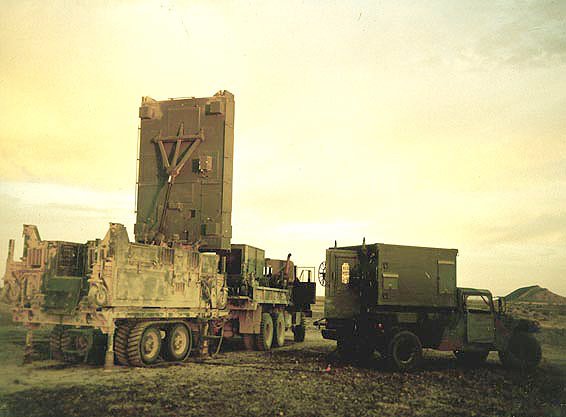
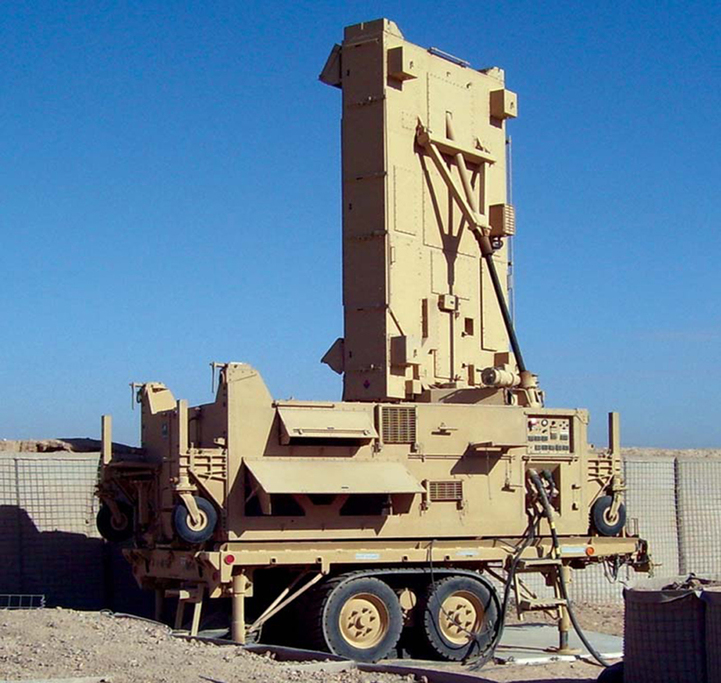
The AN/TPQ-37 Firefinder is a mobile radar system developed in the late 1970s by Hughes Aircraft Company, achieving Initial Operational Capability in 1980 and full deployment in 1984. AN/TPQ-36 radar was used to design and develop the AN/TPQ-37 radar. Thus, the AN/TPQ-37, is considered to be a companion of the AN/TPQ-36. They both comprise the U.S. Firefinder artillery, rocket and mortar-locating radar system. The AN/TPQ-37 (unlike the AN/TPQ-36) is capable of locating artillery and rocket launchers at their normal ranges. Currently manufactured by Thales Raytheon Systems, the system is a long-range version of an artillery locating radar, designed to detect and track incoming artillery and rocket fire to determine the point of origin for counter-battery fire. It is currently in service at brigade and higher levels in the United States Army and by other countries. A typical AN/TPQ-37 system consists of the Antenna-Transceiver Group, Command or operations Shelter and 60 kW Generator. The radar is trailer-mounted and towed by a 5 ton truck. The 60kW generator is mounted on the truck. The AN/TPQ-37 operations shelter can be transported on a 1-1/4 ton vehicle such as a High Mobility Multi-purpose Wheeled Vehicle - HMMWV. The AN/TPQ-37 is an electronically steered radar, meaning the radar does not actually move while in operation. The radar scans a 90-degree sector for incoming rocket, artillery and mortar fire. Upon detecting a possible incoming round, the system verifies the contact before initiating a track sequence, continuing to search for new targets. The incoming round/rocket is tracked during its initial upward/launch trajectory (i.e., the linear portion of its flight path) prior to reaching apogee. A computer program analyzes the track data and then extrapolates the round's point of origin. This calculated point of origin is then reported to the operator with map coordinates, thus allowing friendly artillery to direct counterbattery fire towards the enemy artillery. The system has a reported range of up to 50 kilometers. The system may also be operated in a friendly fire mode to determine the accuracy of counterbattery return fire. The system requires only one operator since most of its functions are performed automatically. However, a crew of eight to 12 is needed for mobile 24-hour operation.

Ground Specifications
Crew 12
Variants
AN/TPQ-47 The AN/TPQ-47 artillery locating radar is an product improved version of the AN/TPQ-37 Firefinder radar. The TPQ-47 provides improved range, faster emplace and displace time, and less manpower to operate and maintain.
System
Alternative Designation AN/TPQ-37; AN/TPQ-37(V)
Type Towed Firefinder Radar
Manufacturers Currently manufactured by Thales Raytheon Systems.
Crew 12
Upgrade The AN/TPQ-37 (V) 9 is a reliability, availability, and maintainability upgrade. The upgrades include a fully digitized operations shelter and a fully air-cooled modular transmitter; with 12 power amplifiers, four of which can be allowed to fail..
Frequency S-band, 15 frequencies
Communications Radio
Power 43kW (115/200 VAC, 3 phase, 400Hz
Minimum Range 3 km
Maximum Range 50 km
Detection Range 10 km (Mortar)
Detection Range 24 km (Artillery))
Detection Range 50 km (Rocket)
Maximum Number of Targets 10
Target Capacity 99
Emplacement Time 30 Minutes
Displacement Time 15 minutes
Radar
Antenna Type Phased Array
Antenna Gain 34.75 dBi
Polarization Vertical
Scan Method Electronic
Mode Search (Both hostile fire and friendly fire modes)
Scan Type Sector
Scan Width 92.4 deg (Hostile fire mode maximum azimuth sector width)
Scan Period 0.54 sec
Scan Width 26 deg (Friendly fire mode)
Scan Period 0.15 sec
Mode Verification (Both hostile and friendly fire modes)
Scan Type Nonscanning
Mode Track (Both hostile and friendly fire modes)
Scan Type Nonscanning
Transmitter
Transmitter Type Traveling Wave Tube (TWT)
Peak Power (at transmitter) 120 kW
RF (minimum) 3.11 GHz
RF maximum) 3.39 GHz
Modulation Type Pulsed
Pulse Duration 10.75 microsec
Receiver
Noise Figure 2.8 dB
Single Pulse Processing Coherent
Multiple Pulse Processing Doppler Filters
Multiple Pulse Processing Moving Target Indicator (MTI)
Display Aural/Visual Indicator
Display B Scope
Display Moving Map
Control Keyboard
ECCM
Transmit ECCM Frequency Management
Transmit ECCM Scan Management
Receive ECCM Jam Strobe
System Dimensions
Length 4,600 mm
Width 2.44 m
Height, in Operation 6.09 m
Height, in Transit INA
Weight, Combat 5,742 kg
Operations Shelter
Length 2,692 mm
Width 2,100 mm
Height 1,800 mm
Weight 1,089 kg
AN/MJQ-25 Generator with Trailer
Length 4,350 mm
Width 2,080 mm
Height 2,490 mm
Weight INA
Details
Country of Origin United States
Category Radars
Land > Radars
Filter Label
A
Classification
Domain
Ground
Equipment Status
Active
Dimensions
Length
Width
Height
Weight
5742 kg
Operators (10)
United States
Israel
South Korea
India
Egypt
Greece
Jordan
Saudi Arabia
Singapore
Hong Kong
Something went wrong. Please reload the page. Reload