MUOS
MUOS
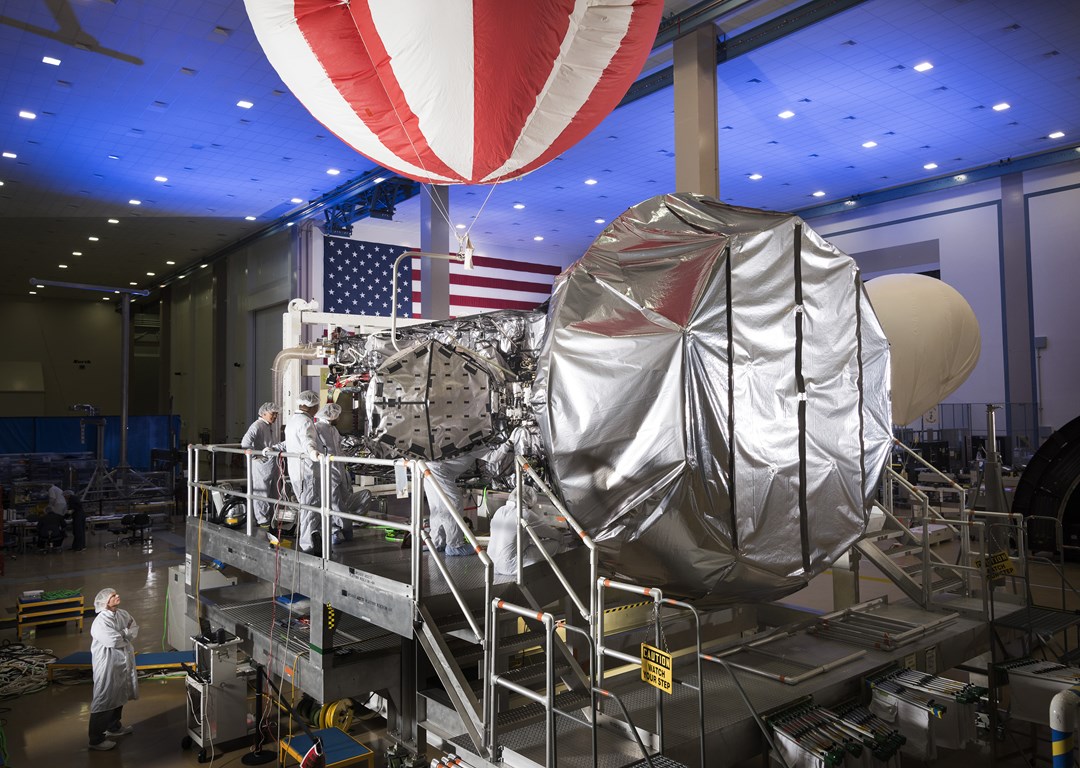
The US Navy awarded a $2.11 billion contract to a Lockheed-Martin lead team on September 24, 2004, for the development of the Mobile User Objective System (MUOS), next generation narrowband military satellite communications. The MUOS slated to replace the current UHF follow-on or UFO will consist of a multi-beam geosynchronous constellation, an orbit spare (satellite), the ground system supporting the satellite and network control, and a common air interface waveform. The contract awarded to Lockheed-Martin led team encompasses development and production of two satellites (one active duty, one spare) as well as associated ground equipment. The contract includes an option on three additional satellites that could increase the contract value to $3.26 billion. The work contracted by Space and Naval Warfare Systems Command (SPAWAR), San Diego, California, is expected to be completed by March 2011. The first launch is anticipated in 2010. If all options are exercised, the contract would be complete in 2015. In addition to Lockheed-Martin Space Systems, the MUOS team also includes General Dynamics C4 Systems; Boeing Satellite Systems; Ericsson; Harris Corporation and Northrop-Grumman. Lockheed-Martin's A2100 bus will serve as the MUOS spacecraft platform. General Dynamics will be responsible for the integrated ground segment and the user-entry. Boeing will provide a significant portion of the UHF payload capability. Harris Corporation will supply the MUOS spacecraft antenna. As of September 2004, the program will require up to five satellites instead of 10 as originally planned. InterDigital, Epsilon and Pinnacle Network System are also involved in this project. In early November 2004, Lockheed-Martin at MILCOM 2004 in Monterey, Califronia, announced that the MUOS satellite will integrate third-generation (3G) commercial cellular technology. Therefore, MUOS system will transmit text, voice, video and multimedia combining 3G Wideband Code Division Multiple Access (WCDMA) waveform and Universal Mobile Telecommunications System (UMTS) infrastructure. The 3G cellullar technology will be fully compatible and will support advanced features of Joint Tactical Radio System (JTRS) terminals now under development. In March 2005, Lockheed-Martin successfully completed the Preliminary Design Review (PDR) ensuring that the system meets or exceeds the US Navy requirements.
deagel.com: https://www.deagel.com/x/x/a000292