GBU-48 Paveway II
GBU-48 Paveway II
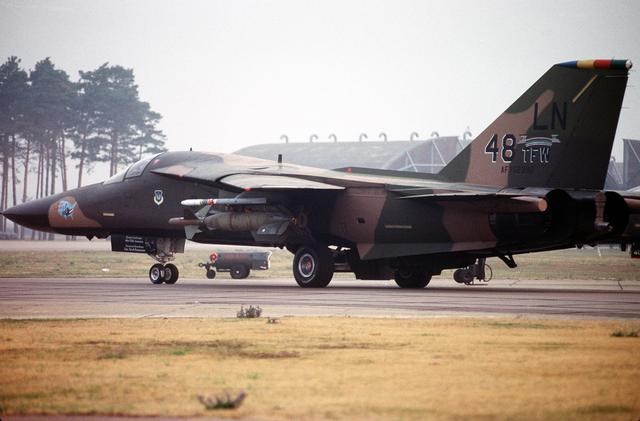
The Laser Guided Bombs (LGB) were introduced in 1968 to meet the requirements for precision guided bombs of the US military. The semi-active LGBs home on reflected laser beam energy directed on the target. The target illumination can be done by the launching aircraft, by a third aircraft or by ground-based troops operating a laser designator. The LGBs are in fact a laser guidance kit applicable to current conventional unguided bombs. The Laser Guided Bombs have reduced the number of weapons requested to destroy a single target while enhancing accuracy, reliability and cost-effectiveness in strike missions. The LGBs were introduced during Vietnam and afterward they have been employed over Panama, Iraq, the former Yugoslavia and Afghanistan. The United States and 31 nations of the world have ordered Paveway bombs and more than 125,000 Paveway II kits have been produced to date. The GBU-16 Paveway II consists of a MK-83 1,000 pound (500 kg) bomb with an added laser guidance package. It can engage the same targets engaged by the GBU-10s but minimizing potential collateral damage. The Enhanced Paveway II EGBU-16 is a dual-mode guided bomb designed to effectively operate in all-weather conditions. Laser-guided GBU-16s can only operate in optimal weather conditions endangers the laser beam which guides the bomb through its intended target. EGBU-16s, which were introduced in 2001 during operation Enduring Freedom in Afghanistan, relies on semi-active laser guidance and Global Positioning System (GPS) aided inertial guidance system to seamlessly hit the target. The GPS guides the bomb in poor weather conditions and laser guidance aides engaging mobile targets of opportunity. The EGBU-16 bomb was employed successfully during military operations in Afghanistan (Enduring Freedom 2001) and Iraq (Iraqi Freedom 2003) by the United States Air Force. The same weapon was selected by the armed forces of Spain. As of May 2005, the EGBU-16 Enhanced Paveway II has been integrated onto the Tornado, Harrier and Super Etendard aircraft. Integration is under way on the F-16, F/A-18, AMX fighter/bomber, F-35 and Eurofighter aircraft. In May 2005, the Enhanced Paveway II bomb was undergoing integration on the F/A-18 aircraft on behalf of the US Navy at China Lake Test Range, California.
deagel.com: https://www.deagel.com/x/x/a001151