ARMSNET
Military Equipment Database
Initializing 0%

L-39 Albatros Czechoslovakian Light-Ground Attack Aircraft

L-39

Light-Ground Attack Aircraft
Spotted an error? Sign in to suggest an edit.
Basic Information
Name
L-39 Albatros Czechoslovakian Light-Ground Attack Aircraft
Designation
L-39
Alternate Designation
Equipment Type
Light-Ground Attack Aircraft
Manufacturer
Aero Vodochody
Date of Introduction
1972
Description

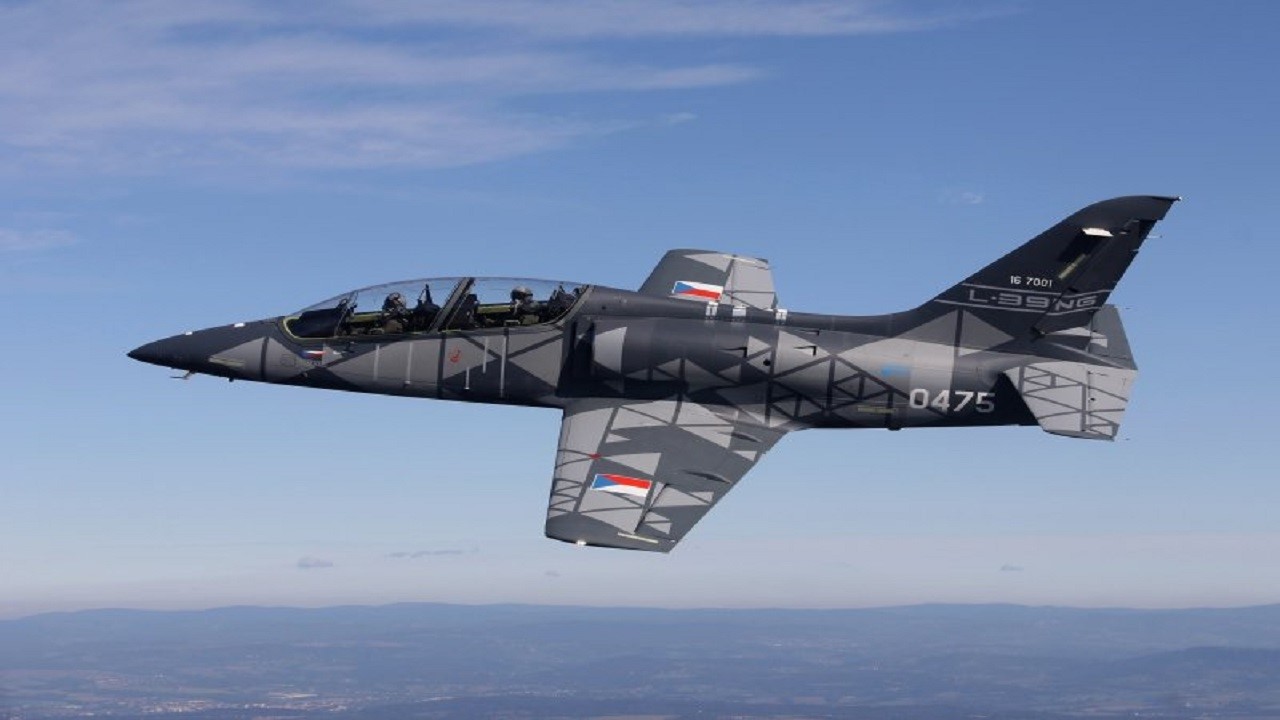
The Aero L-39 Albatros is a high-performance jet trainer developed in Czechoslovakia by Aero Vodochody. It was designed during the 1960s as a replacement for the Aero L-29 Delfín as a principal training aircraft. It was the first trainer aircraft to be equipped with a turbofan powerplant. The type was exported to a wide range of countries as a military trainer. The L-39 Albatros later served as the basis for the updated L-59 Super Albatros, as well as the L-139 (prototype L-39 with Garrett TFE731 engine). A further development of the design, designated as the L-159 ALCA, entered production in 1997. To date, more than 2,800 L-39s have served with over 30 air forces around the world. The Albatros is the most widely used jet trainer in the world; in addition to performing basic and advanced pilot training, it has also flown combat missions in a light-attack role. The design never received a NATO reporting name. At the Farnborough Airshow in July 2014, Aero Vodochody announced the launch of the L-39NG, an upgraded and modernized version of the L-39. The L-39 Albatros was designed to be a cost-effective jet-powered trainer aircraft, which is also capable of performing ground attack missions. For operational flexibility, simplicity, and affordability, the majority of onboard systems have been simplified to avoid incurring high levels of maintenance, as well as to minimize damage caused by mishandling when flown by inexperienced aircrew. It could be readily flown from austere airstrips such as frozen lake beds, enabled through the rugged design of the landing gear and favorable low landing speeds. The aircraft's flying qualities are reportedly simple, which is made easier by way of rapid throttle response, making it easier for students who had never previously flown a jet aircraft before to successfully control. As a training platform, the L-39 itself comprised part of a comprehensive system that also used flight simulators and mobile ground test equipment. The low-set, the straight wing has a double-taper planform, 2½-deg dihedral from the roots, a relatively low aspect ratio, and 100 liters (26 US gal; 22 imp gal) fuel tanks permanently attached to the wingtips. The trailing edge has double-slotted trailing edge flaps inboard of mass-balanced ailerons; the flaps are separated from the ailerons by small wing fences. An automatic trimming system was present, the flaps and the trim system being connected in order to counteract the potentially large pitch changes that would otherwise be generated by vigorous movements of the flaps. The tall swept vertical tail has an inset rudder. Variable-incidence horizontal stabilizers with inset elevators are mounted at the base of the rudder and over the exhaust nozzle. Side-by-side airbrakes are located under the fuselage ahead of the wing's leading edge. The flaps, landing gear, wheel brakes, and air brakes are powered by a hydraulic system. Controls are pushrod-actuated and have electrically powered servo tabs on the ailerons and rudder. Operational g-force limits at 4,200 kilograms (9,300 lb) are +8/-4 g. A long, pointed nose leads back to the tandem cockpit, in which the student and instructor sit on Czech-built VS-1 ejection seats under individual canopies, which are opened manually and are hinged on the right. The rear seat, typically used by the instructor, is elevated slightly to readily enable observation and guidance of the student's actions in the forward position. The design of the cockpit, panel layout and many of its fittings resemble or are identical in function to those of other commonly-used Soviet aircraft; for example, the procedure for deploying the ejection seat is exactly the same as for the Mikoyan MiG-29. The cockpit is highly pressurized, requiring the aircrew to wear oxygen masks only when flying in excess of 23,000 feet. A gyro gunsight for weapon-aiming purposes is typically present in the forward position only. A single turbofan engine, an Ivchenko AI-25TL (made in the Soviet Union) is positioned in the rear fuselage, fed through shoulder-mounted, semi-circular air intakes (fitted with splitter plates) just behind the cockpit and the tailpipe below the horizontal tailplane. The engine has a time between overhaul (TBO) of 1,000 flight hours; however, it is allegedly cheaper than the majority of turbine engines to overhaul. Five rubber bag fuel tanks are located in the fuselage behind the cockpit. Several heavy radio units are typically installed in an aft avionics bay; these are often removed on civilian-operated aircraft and replaced with a 70-gallon fuel tank. Additional fuel tanks can be fitted in the rear cockpit position and externally underneath the wings; the tip-tanks can also be expanded for a greater fuel capacity. The aircraft is fitted with a hydraulically-actuated retractable nosewheel undercarriage which is designed to allow operation from grass airfields. The main landing gear legs retract inward into wing bays while the nose gear retracts forward. The basic L-39C trainer has provision for two underwing pylons for drop tanks or practice weapons, but these are not usually fitted. It can be armed with a pair of K-13 missiles to provide a basic air defense capability. Light-attack variants have four underwing hardpoints for ground attack stores, while the ZA variant also has an under-fuselage gun pod. Mock UB-16 rocket pods can also be installed for visual appearance only.

Air & Air Defense Specifications
Crew 2
Engine Turbofan (16 hp)
Max Speed 750.0 km/h
Range 1100.0 km
Endurance 2.00 hrs
Service Ceiling 11000 m
Variants
L-39X-01 – X-07 Five prototypes plus two static test airframes.
L-39C (C for Cvičná – training) Standard basic trainer for Soviet Union, Czechoslovakia and export. Originally designated L-39, but renamed L-39C when later variants appeared. Two pylons under wing. Approximately 2,260 built.
L-39CM (CM for Cvičná modernizovaná – modernised training) Slovak upgraded C version.
L-39M1 Ukrainian upgraded C version with AI-25TLSh engines. The conversion is carried out by Odesaviaremservis and the first plane was ready in 2009. The upgrade of a further 7 L-39C's was planned. Only six L-39C were converted into L-39M1 by 2014.
L-39V (V for Vlečná – tug) Single-seat target tug version for Czechoslovakia. Equipped to tow KT-04 target on 1,700 m (5,600 ft) cable. Prototype plus eight production aircraft built.
L-39ZO (Z for Zbraně – weapons) Interim weapon trainer variant for export. Four pylons stressed for 500 kg (1,100 lb) (inboard) and 250 kg (550 lb) (outboard), with total external load of 1,150 kg (2,500 lb).[21] First flew 25 June 1975, with initial deliveries to Iraq in 1977. 337 built.
L-39ZA Significantly upgraded L-39ZO for armed training and light attack, employing sturdier landing gear, a higher payload (total 1,290 kg (2,844 lb)) and notably provision for a GSh-23L 23-millimeter twin-barreled cannon attached in a conformal pod under the pilots' compartment, having a 150-round magazine within the airframe. Outer pylons wired to carry K-13 or R-60 air-to-air missiles. Two prototypes, with first flying on 29 September 1976. 208 aircraft delivered.
L-39ZAM Slovak upgraded ZA version.
L-39ZA/ART Thai version of L-39ZA with Elbit avionics. 40 built.
L-39MS/L-59 The Aero L-39MS is a second generation military trainer aircraft developed from the firm's earlier L-39. Compared to its predecessor, it featured a strengthened fuselage, longer nose, a vastly updated cockpit, and a more powerful (21.6 kN (4,850 lbf)) Lotarev DV-2 engine, allowing operation at higher weights and speeds (max speed 872 km/h (542 mph)). First flight on 30 September 1986. It was later designated as the Aero L-59.[
L-139 Albatros 2000 Revised version with western avionics and 17.99 kN (4,045 lbf) Garrett TFE731-4-1T engine. Single prototype built.
L-159 Further modernized advanced trainer/combat aircraft with more modern, western avionics and Honeywell/ITEC F124 engine.
L-39NG Modernised and upgraded version with Williams FJ44 engine, improved fuel system and avionics, planned to be introduced in 2018.
Skyleader UL-39 Albi A carbon-fibre ducted-fan powered scale variant first flown in the Czech Republic on 4 April 2016.
System
Alternate Designation(s) Aero L-39 Albatros
Type Light-Ground Attack Aircraft
Manufacturer Aero Vodochody
In Service Still in Service. Afghanistan Algeria Angola Armenia Azerbaijan Bangladesh Belarus Bulgaria 12 L-39ZA Cambodia Cuba Czech Republic East Germany Withdrawn from use in 1990. Egypt Equatorial Guinea Estonia Ethiopia France (The Breitling Jet Team currently uses nine L-39s) Georgia Ghana Iraq Kazakhstan Kyrgyzstan Libya Lithuania Latvia (The Baltic Bees Jet Team currently uses six L-39s) Mozambique Nigeria North Korea Romania Russia Slovakia South Sudan Syria Tajikistan Thailand L-39ZA/ART (Westernized version, equipped with Israeli avionics Tunisia Turkmenistan Uganda Ukraine United States (The Patriots Jet Team currently uses six L-39s; The Black Diamond Jet Team currently uses six L-39s) Uzbekistan Vietnam Yemen
Crew 2 ea
Number of Engines 1 ea
Day/Night Capable Yes
All Weather Capable Yes
Number of Hard Points 2 ea
Note The L-39 Albatros was designed to be a cost-effective jet-powered trainer aircraft, which is also capable of performing ground attack missions. For operational flexibility, simplicity, and affordability, the majority of onboard systems have been simplified to avoid incurring high levels of maintenance, as well as to minimize damage caused by mishandling when flown by inexperienced air crew.
Dimensions
Length 12.13 m
Width (Wing Span) 9.46 m
Height 4.77 m
Wing Area 18.8 m2
Empty Weight 3,455 kg
Maximum Takeoff Weight 4,700 kg
Automotive
Engine Name 1 x Ivchenko AI-25TL
Engine Type Turbofan
Engine Power 16.87 kN (3,790 lbf) thrust
Maximum Range 1,100 km
Ferry Range 1,750 km
Maximum Speed 750 km/h
Service Ceiling 11,000 m
Endurance 2 hours 30 minutes (internal fuel), 3 hours 50 minutes (internal and external fuel)
Rate of Climb 21 m/s
Time to Altitude 5,000 m in 5 minutes
Take-Off Roll 530 m
Landing Roll 650 m
Armament
Note Up to 284 kg (626 lb) of stores on two external hardpoints
Fire Control / Avionics
Fire Control System Type INA
Fire Control Radar INA
Laser Desingator INA
Protection
Stealth Properties No
Heat Signature Reduction No
Add on Armor INA
NBC Protection Yes
EW Counter Measures INA
Chaffs/Flares INA
Details
Country of Origin Czech Republic
Category Fixed Wing Aircraft
Air > Fixed Wing Aircraft
Filter Label
L
Classification
Domain
Air & Air Defense
Equipment Status
Active
Dimensions
Length
12.13 m
Width
9.46 m
Height
4.77 m
Weight
4700 kg
Operators (41)
Russia
United States
France
Germany
Ukraine
Belarus
Afghanistan
Algeria
Angola
Armenia
Azerbaijan
Bangladesh
Bulgaria
Cambodia
Cuba
Egypt
Equatorial Guinea
Estonia
Ethiopia
Georgia
Ghana
Iraq
Kazakhstan
Latvia
Libya
Lithuania
Mozambique
Nigeria
Romania
Slovakia
South Sudan
Syria
Tajikistan
Thailand
Tunisia
Turkmenistan
Uganda
Uzbekistan
Vietnam
Yemen
CFE Treaty
Something went wrong. Please reload the page. Reload