ARMSNET
Military Equipment Database
Initializing 0%

LMUR (Izdeliye 305) Russian Light Multipurpose Guided Missile

LMUR
Anti-Tank Guided Missile (ATGM)
Spotted an error? Sign in to suggest an edit.
Basic Information
Name
LMUR (Izdeliye 305) Russian Light Multipurpose Guided Missile
Designation
LMUR
Alternate Designation
LMUR; Izdeliye 305; Product no. 305; 9A-7755
Equipment Type
Anti-Tank Guided Missile (ATGM)
Manufacturer
KB Mashinostroyeniya (KBM); Rostec (export agency)
Date of Introduction
2022
Description

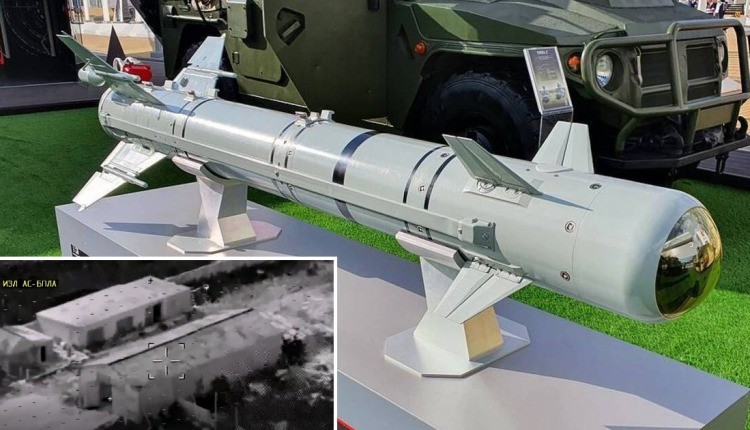
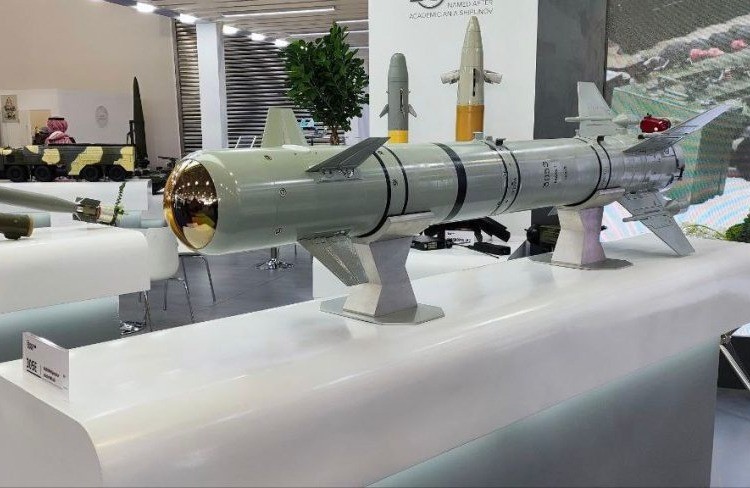
The LMUR (Izdeliye 305) is an advanced version of the Izdeliye 79 missile, designed for use by the Russian military. While it retains the basic design of the Izdeliye 79, the LMUR features an upgraded two-way communication system. This missile has a cylindrical shape and is equipped with a guidance system, along with four trapezoidal split control fins located at the front. The middle section houses the warhead and propulsion units, while the rear section contains four foldable wings and a datalink integrated into two of the wings. The rear wings fold during transportation. The LMUR is particularly notable for being the first "fire-and-forget" helicopter-launched missile to enter service with the Russian military. It can operate in a temperature range of -50°C to +50°C. The missile is launched from specially designed helicopter launchers developed by Vympel. These include the APU-305, a single-launcher configuration, and the APU-L, a twin-launcher configuration. The Mi-8MNP-2 and Ka-52M helicopters are equipped with APU-305 launch rails, while the Mi-28NE/NM helicopters use the APU-L twin-launchers. Each helicopter platform has the capacity to carry different numbers of missiles: the Ka-52M can carry a maximum of four missiles, the Mi-8MNP-2 and Mi-8AMTS-VN can carry six, and the Mi-28NE and Mi-28NM can carry up to eight.

Air & Air Defense Specifications
Max Speed 828.0 km/h
Range 25.0 km
Variants
Izdeliye 305 Original variant.
UR-305UD Rostec is currently working on an upgraded version of the Izdeliye 305 missile, expected to be named the UR-305UD, which stands for the enhanced Light Multi-purpose Guided Missile (LMUR). This new variant is projected to offer significantly better performance, including a longer operational range and a larger warhead, making it more effective against a wider variety of targets. Key enhancements are anticipated to include a more advanced propulsion system, possibly featuring a dual-thrust solid-propellant motor with a higher specific impulse. This improvement would boost the missile's range and flight efficiency. Additionally, the missile is expected to be equipped with a thermal imaging seeker, enhancing its targeting capabilities in low visibility or nighttime conditions.
Izdeliye 305E The Izdeliye 305E is an export variant of the helicopter-launched air-to-surface missile, based on the baseline Izdeliye 305. It features a range of 14.5 km, shorter than the domestic version's 25 km.
Izdeliye 305UL The Izdeliye 305UL (Uchebno-Lyotnaya, flying training) is a training variant. It has an identical external form and fit configuration but without a warhead and smaller non-folding wings at the rear (instead of the larger foldable wings of the combat versions).
System
Alternate Designation LMUR; Izdeliye 305; Product no. 305; 9A-7755
Type Light Multipurpose Guided Missile
Manufacturer KB Mashinostroyeniya (KBM); Rostec (export agency)
Propulsion Solid propellant
Control The missile uses four foldable wings for flight stabilization. It is controlled via four control fins fitted at the nose section.
Fuze Impact, proximity
Seeker The missile features an MNITI institute-developed 9B-7755 imaging infrared radar (IIR) seeker, also known as thermal imaging seeker.
Warhead 25 kg HE fragmentation
Guidance System The missile has a seeker that uses infrared technology in its nose. It navigates with an inertial navigation system (INS) during the first part of its flight, and it also uses satellite navigation. In the final part, the helicopter crew can send corrections to the missile using a datalink. The navigation unit has a satellite receiver, a radio altimeter, and an autopilot. There are two ways to operate the missile: 1. **Fire-and-Forget** – This method works for targets that can be seen. Before firing, the missile locks onto the target. Once launched, the launch platform can move away since the missile will find the target by itself. 2. **Datalink** – This method is for targets that are not visible. The missile is guided toward the target zone using satellite navigation. The crew can select the target through a two-way communication channel. The missile can get targeting information from its own sensors or from other reconnaissance sources. The pilot can also change or cancel the missile's path during the final flight stage.
Maximum Speed 230 m/s
Maximum Range 25 km
Dimensions
Length 1.945 m
Diameter 200 mm
Weight 105 kg
Details
Country of Origin Russia
Category Air-to-Surface Missiles
Air > Air-to-Surface Missiles
Filter Label
L
Classification
Domain
Air & Air Defense
Equipment Status
Active
Dimensions
Length
1.95 m
Width
0.2 m
Height
Weight
105 kg
Operators (1)
Russia
Something went wrong. Please reload the page. Reload