ARMSNET
Military Equipment Database
Initializing 0%

VIKING Italian 6x6 Unmanned Ground Vehicle (UGV)

VIKING
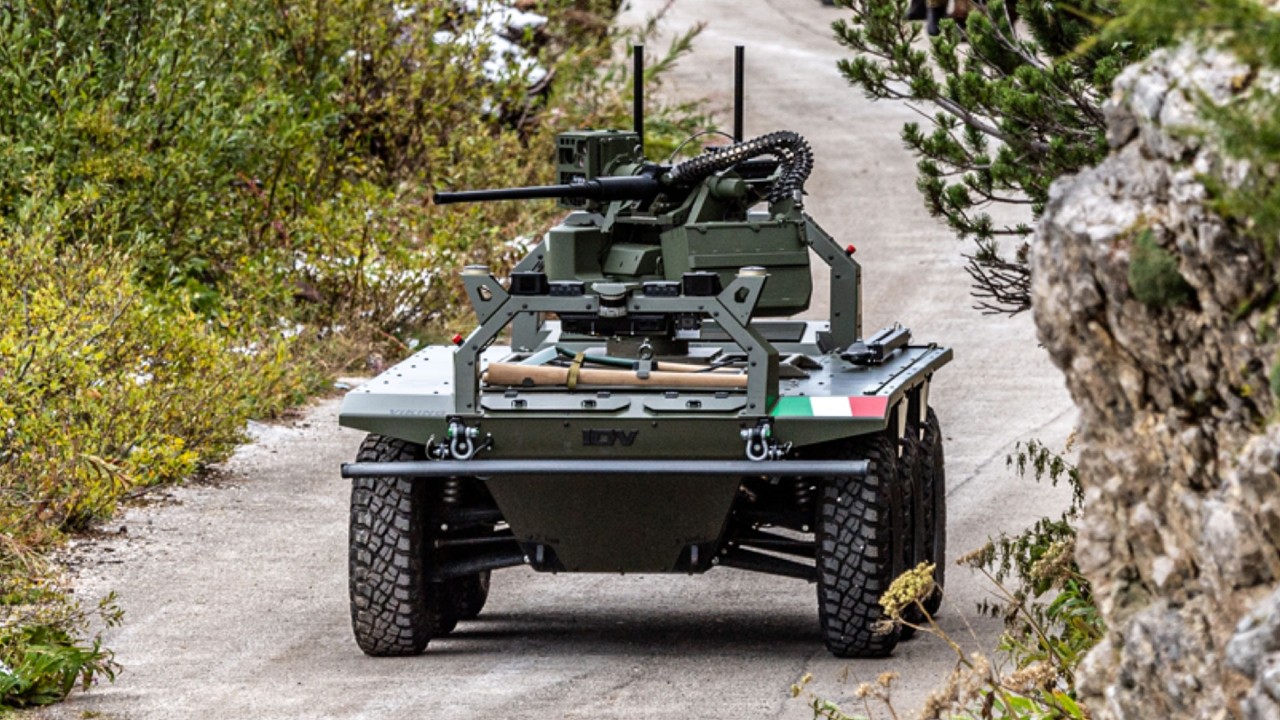
Unmanned Ground Vehicle (UGV)
Spotted an error? Sign in to suggest an edit.
Basic Information
Name
VIKING Italian 6x6 Unmanned Ground Vehicle (UGV)
Designation
VIKING
Alternate Designation
VIKING
Equipment Type
Unmanned Ground Vehicle (UGV)
Manufacturer
Iveco Defense Vehicles
Date of Introduction
2024
Description

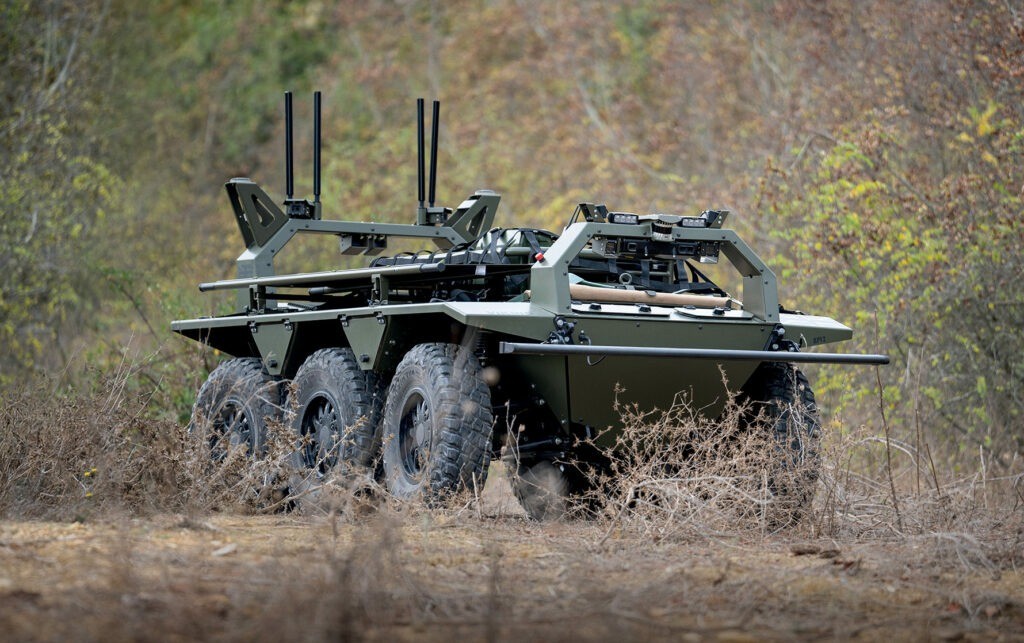
The VIKING Italian 6x6 Unmanned Ground Vehicle (UGV) was specifically engineered as a highly mobile, desert-capable platform to support modern military operations across diverse terrains and mission profiles. The VIKING represents a significant evolution in military autonomous vehicle capability, particularly regarding contested environment operations. Its combination of low acoustic and thermal signatures, GNSS-denied navigation, modular payload flexibility, and hybrid powertrain addresses key operational requirements for modern militaries. Extended electric-only range with silent operation reduces detection and targeting risk to supporting personnel. Rapid payload reconfiguration enables single platform to execute multiple mission types without returning to base. ATLAS GNSS-denied navigation and optional zero-RF-emission blackout mode ensure mission completion despite electronic attack. Autonomous and semi-autonomous modes reduce operator workload and enable single personnel to supervise multiple vehicles. Open MACE architecture and standardized Command and Control integration enable rapid coalition operations. The VIKING's proven performance in multiple international trials, adoption by NATO member states, and selection for NATO integrated RAS development programs indicate substantial confidence in its technical maturity and operational effectiveness. Its ongoing deployment in active exercises and trials alongside advanced NATO systems suggests it will play a central role in future autonomous-enabled operations across the alliance.

Ground Specifications
Mobility Type Wheeled (6x6)
Engine The VIKING employs a sophisticated parallel-hybrid diesel-electric powertrain that provides operational flexibility unmatched by conventional single-energy-source platforms. The hybrid configuration includes: 20 kW Kohler diesel engine mounted at the rear; 120 kW Yasa axial-flux electric motor-generator positioned forward of the engine via a transfer gearbox; 400V battery pack (in-house designed and assembled) mounted forward in the chassis. (140 hp)
Max Speed 45.0 km/h
Variants
Logistics and Support Missions Last-mile autonomous resupply to forward-deployed units; Casualty evacuation (configured with stretchers on each side and space for medical personnel and supplies); Supply transport and ammunition resupply; Medical evacuation (CASEVAC) and forward medical support.
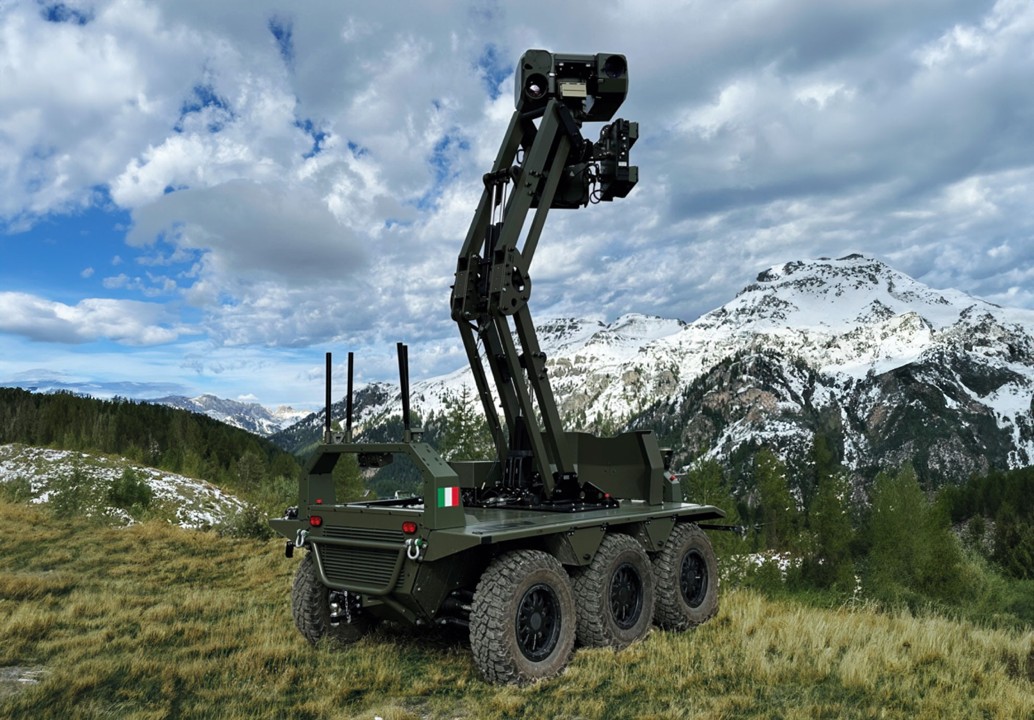
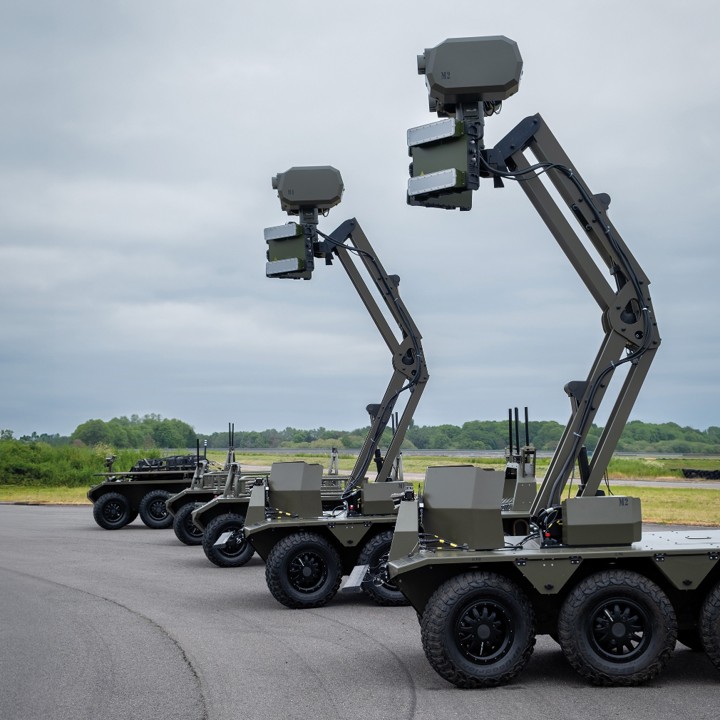
Intelligence and Reconnaissance ISTAR operations (Intelligence, Surveillance, Target Acquisition, and Reconnaissance); Route reconnaissance and mapping; Terrain analysis and obstacle mapping; Battlefield surveillance with various sensor suites.
CBRN Detection and Response Chemical, Biological, Radiological, and Nuclear (CBRN) hazard detection and mapping; Radiological contamination surveys; Chemical agent identification.
Combat Support Remote weapon station mounting for fire support; Fire support delivery; Tactical overwatch capabilities; Equipment recovery missions.
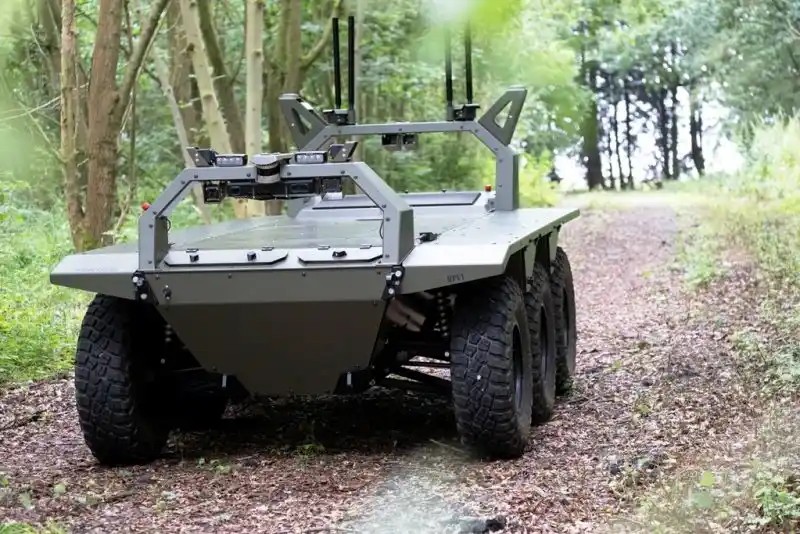
Communications and Network Support Relay node for extending communication networks; Multi-platform data exchange; Soldier system integration. The flat payload bed at waist height significantly reduces loading effort and personnel fatigue during field operations, particularly important for casualty evacuation where soldiers must rapidly load casualties while maintaining tactical awareness.
System
Alternative Designation VIKING
Type Unmanned Ground Vehicle (UGV)
Manufacturer Iveco Defense Vehicles
Configuration 6x6
Crew Unmanned
Autonomy Systems and Navigation The VIKING's autonomy capabilities are provided through MACE (Modular Autonomous Control Equipment), an in-house designed autonomy stack that operates as an open-architecture solution adaptable to various platforms. MACE includes: Main autonomy computer designed and engineered in-house to military standards for ruggedness and power conditioning; Modular architecture configurable in various form factors, with standardization planned for a two-box configuration managing basic and complex autonomous functions; Multiple control options supporting remote control, teleoperation, and full autonomous operation. The critical enabling technology for autonomous operations in contested environments is ATLAS, an AI-based GNSS-denied navigation system developed by IDV Robotics with funding from the UK Defense and Security Accelerator. ATLAS represents a significant advancement in autonomous vehicle navigation: Uses neural networks and landmark recognition trained on NVidia Jetson embedded-AI processors; Identifies and classifies environmental landmarks (track edges, roads, trees, buildings) using onboard perception; Compares landmark range and bearing against stored map database spatial information; Achieves localization accuracy approaching 10 centimeters with adequate environmental landmarks; Operates reliably in GPS-denied and jammed environments, as validated during AUKUS trials at Cultana Training Area in South Australia; Uses aerial photography for route detection and autonomous route planning.
Sensor Configuration Central stereo camera for 3D perception ahead of the vehicle; Lidar (front-mounted) for active range sensing, with optional disable capability for "blackout mode" operations that emit zero RF signals; GPS/GNSS receivers available in civil or full military configurations; Multiple camera arrays for low-latency teleoperation and peripheral vision; Optional safety radio for controlled operations; Mesh radio antennas for networked communications.
Operating Temperature Range -20°C to +39°C
Dimensions
Length 3.0 m
Width 1.8 m
Height 0.9 m
Payload Area 2.2m x 1.8 m
Weight, Combat 2.0 tons
Automotive
Engine Name INA
Engine Type The VIKING employs a sophisticated parallel-hybrid diesel-electric powertrain that provides operational flexibility unmatched by conventional single-energy-source platforms. The hybrid configuration includes: 20 kW Kohler diesel engine mounted at the rear; 120 kW Yasa axial-flux electric motor-generator positioned forward of the engine via a transfer gearbox; 400V battery pack (in-house designed and assembled) mounted forward in the chassis.
Engine Power 140 kilowatts (187 horsepower)
Power-to-Weight Ratio 75 kW/ton
Operational Modes This architecture enables three operational modes: pure electric for stealth operations, hybrid mode for extended range, and series-charging mode for energy security. The power system can also function as a generator, providing mains power to soldier equipment and other devices external to the vehicle. The hybrid configuration allows operators to select operational modes based on mission requirements—silent electric operation for stealth-sensitive missions or extended hybrid range for logistics and long-distance support operations. The ability to operate without generating acoustic, thermal, or active sensor signatures significantly enhances survivability in hostile environments.
Electric-Only Range 20 km
Hybrid Range 250 km
Maximum Speed 45 km/h
Amphibious No
Gradient 60 deg
Side Slope INA
Obstacle Crossing 350 mm
Trench INA
Fording 600 mm
Ground Clearance 300 ,mm
Silent Watch Endurance 24 hours
Two-Wheel Steer Turning Radius 12 m
Four-Wheel Steer Turning Radius 7 m
Main Weapon System
Note The vehicle often features a Remote Weapon Station (RWS) like the Kongsberg RS4 for anti-tank missiles, heavy machine guns (e.g., .50 cal), and even Thales 70mm laser-guided rockets for fire support, acting as a force multiplier for infantry by carrying heavy loads and providing autonomous mobile firepower/recon.
Protection
Armor INA
Applique Armor INA
NBC Protection No
Smoke Equipment INA
Details
Country of Origin Italy
Category Unmanned Ground Vehicles (UGV)
Land > Unmanned Ground Vehicles (UGV)
Filter Label
V
Classification
Domain
Ground
Equipment Status
Active
Dimensions
Length
3 m
Width
1.8 m
Height
0.9 m
Weight
2000 kg
Operators (3)
United Kingdom
Italy
Sweden
Something went wrong. Please reload the page. Reload