Rooivalk (Ah-2) South African Attack Helicopter
AH-2 Rooivalk Attack Helicopter
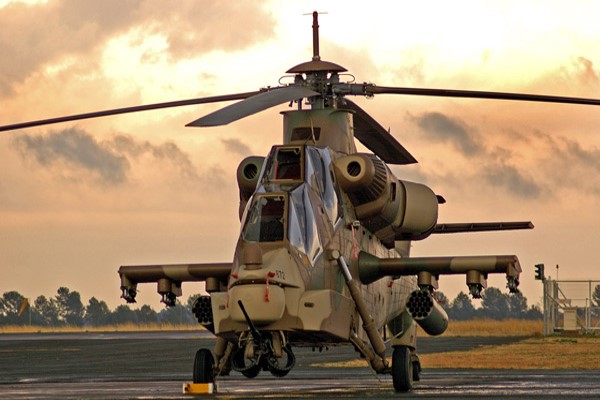
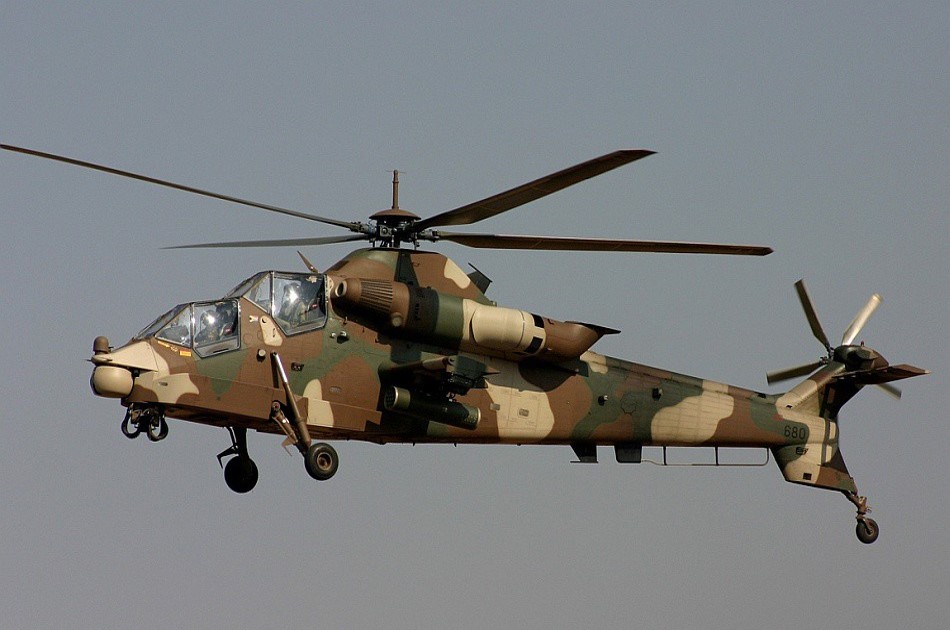
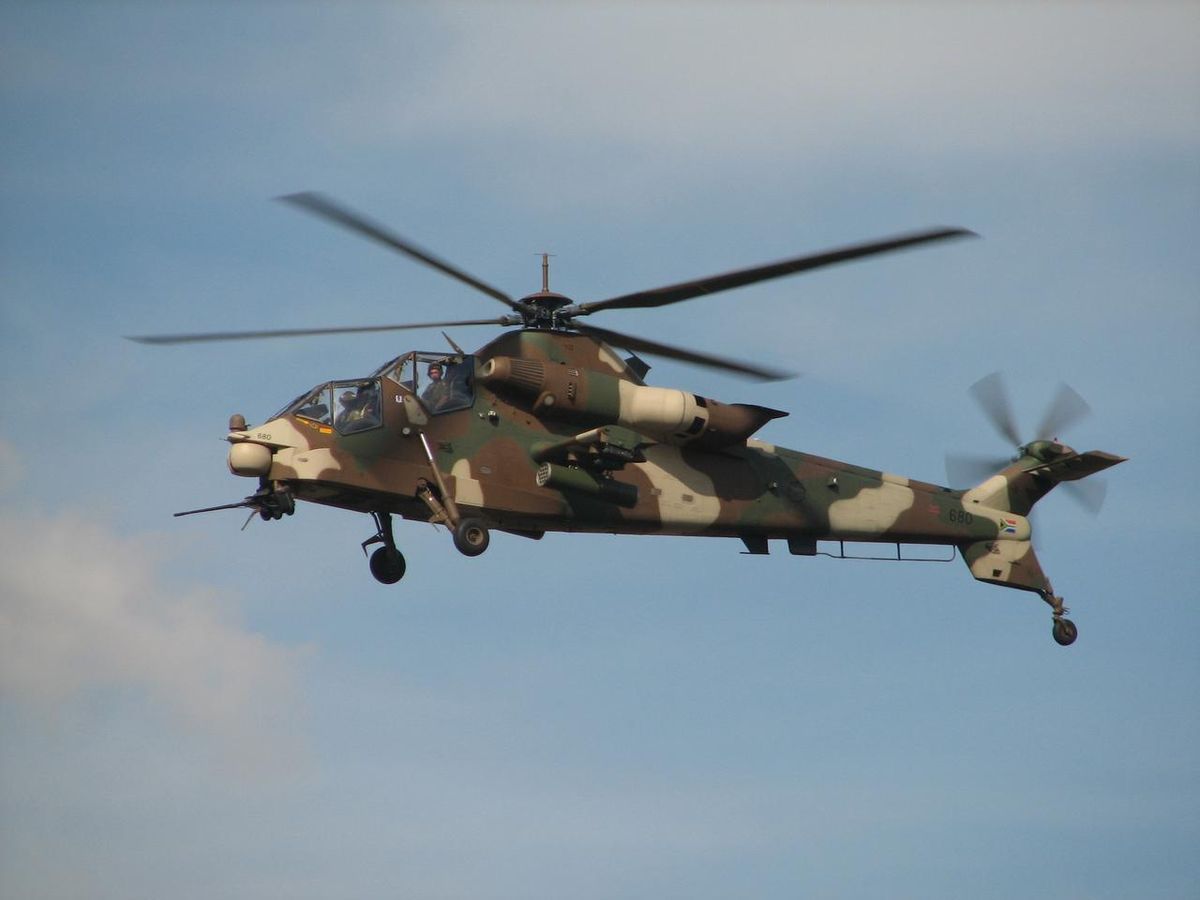
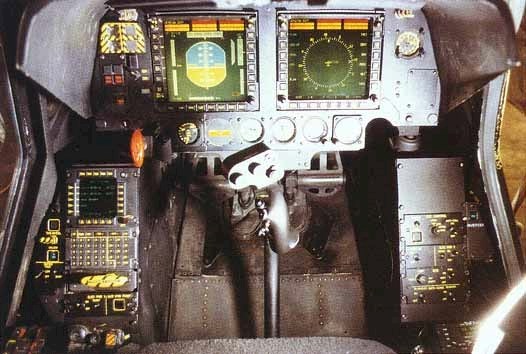
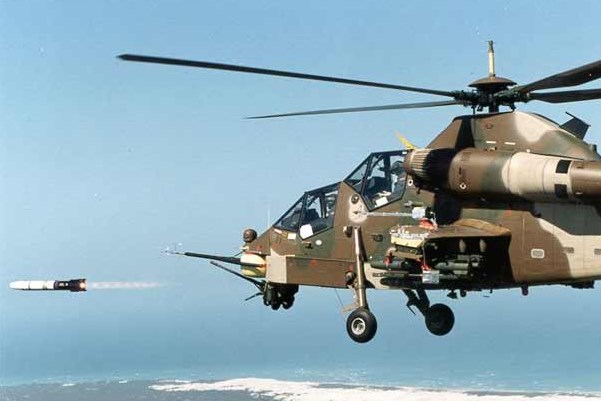
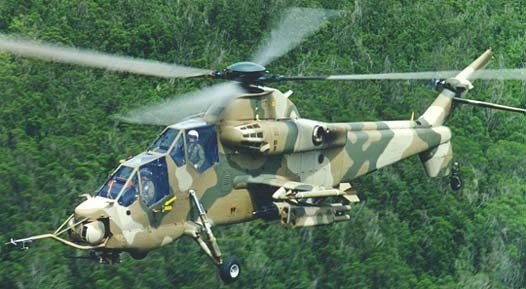
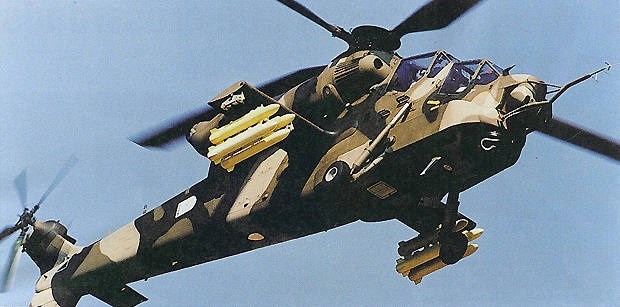
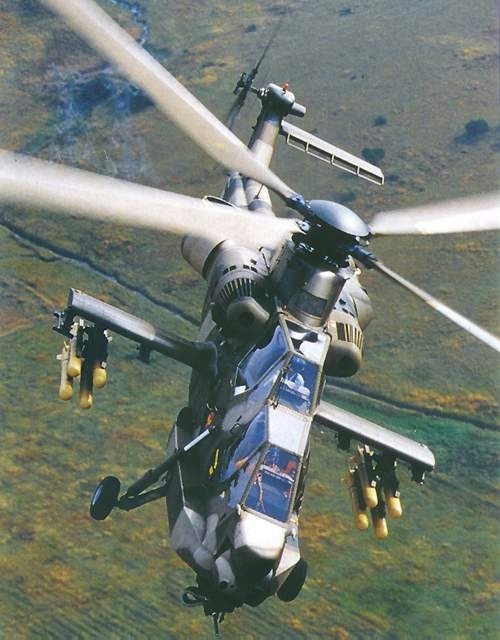
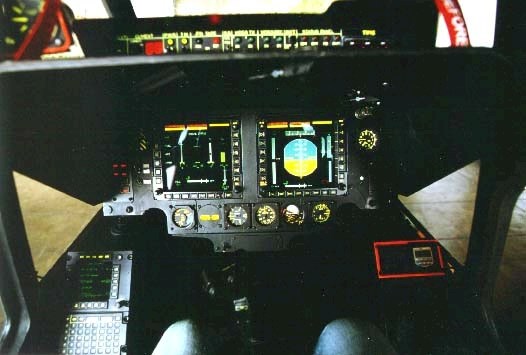
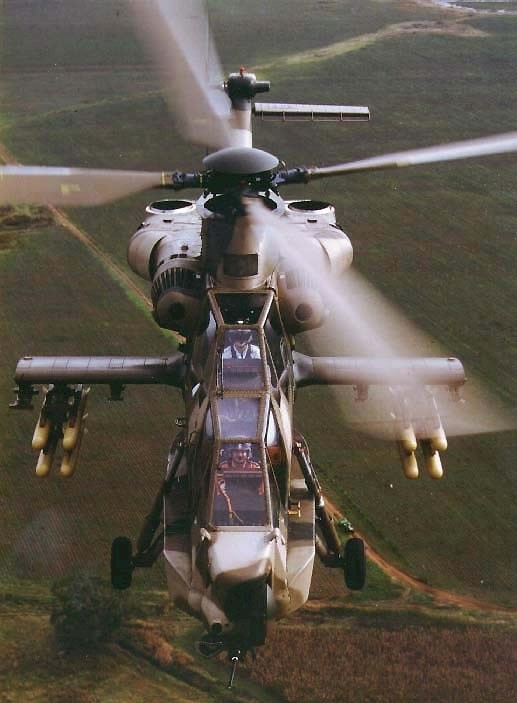
The Denel Rooivalk (previously designated AH-2 and CSH-2) is an attack helicopter manufactured by Denel Aviation of South Africa. Rooivalk is Afrikaans for "Red Falcon". Development of the type began in 1984 by the Atlas Aircraft Corporation, its development is closely connected to the Atlas Oryx transport helicopter, both aircraft being based on the Aérospatiale SA 330 Puma and having started development at the same time. Development of the Rooivalk was protracted due to the impact of limited budgets during the 1990s, and a desire to produce a highly advanced attack helicopter. The South African Air Force (SAAF) ordered 12 Rooivalk, designated the Rooivalk Mk 1 in SAAF service, the first of was officially handed over in April 2011. The helicopters are flown by 16 Squadron, based at AFB Bloemspruit near Bloemfontein. Due to the SAAF's decades of helicopter experience in the harsh African environment, the Rooivalk has been designed to operate for prolonged periods without sophisticated support. All that is needed to keep the Rooivalk flying is a medium transport helicopter equipped with a basic spares supply plus four ground crew. The Rooivalk carries a range of weapons depending on the mission profile. It is generally fitted with a nose-mounted 20 mm cannon and can also carry air-to-air missiles, anti-armour missiles and unguided rockets. The Rooivalk has a fire control system for target acquisition and tracking as well as an advanced navigation system using Doppler radar and GPS. Also incorporated is an electronic countermeasures suite coupled with chaff and flare dispensers. Notable features include a tandem cockpit, starboard tail rotor with a port tailplane, a fixed wheeled undercarriage as well as wire cutters above and below the cockpit and on the undercarriage. The Rooivalk is capable of doing a loop and thus momentarily "flying upside down". The first manned helicopter to do a loop was the Sikorsky S-52 flown by Harold E. Thompson on May 9th, 1949. The following types of missions are foreseen for the Rooivalk: reconnaissance, heliborne escort, close air support, deep penetration, and anti-armour. In 2016, Denel was reportedly proceeding with a Mk 1.1 upgrade program for the existing Rooivalk fleet; prospective improvements include the addition of a missile approach warning system and enhancements to the rotorcraft avionics. On 15 September 2016, it was announced that Airbus Helicopters and Denel had signed a memorandum of understanding to cooperate on the SAAF modernisation program; further details on the changes included reliability and survivability improvements, an increased payload, and the replacement of obsolete targeting systems and armaments. In September 2014, Denel Group chief executive Riaz Saloojee stated that the firm were currently studying the feasibility of reopening the Rooivalk production line, which had been mothballed in 2007 after the production of the initial 12 SAAF aircraft. Saloojee stated that talks were under way; it was mooted that new production aircraft conforming to an entirely new platform that used Rooivalk technology could be produced. In September 2016, the South African government authorised government-to-government negotiations on the topic of restarting production of the Rooivalk. According to Victor Xaba, deputy chief executive of Denel Aerostructures, the company would need commitments for at least 70 rotorcraft for the re-establishment of the assembly line to be viable.[8] The production of a prospective Rooivalk Mk 2 has been periodically mooted.[5] In July 2015, Saloojee spoke on the company's efforts to gain support for a Rooivalk Mk 2 programme which would involve a large proportion of new systems and for which the firm had already produced a roadmap. In late 2016, Denel stated that it was conducting a series of talks with various nations on the Rooivalk Mk 2, including Egypt, Brazil, Nigeria, Poland, and India.
Ammunition. Chin Mounted Gun
Rocket System #1
Air-to-Air Missile System
Anti-Tank Guided Missile System #1
deagel.com: https://www.deagel.com/x/x/a000570