Be-200 Altair Russian Amphibious Aircraft
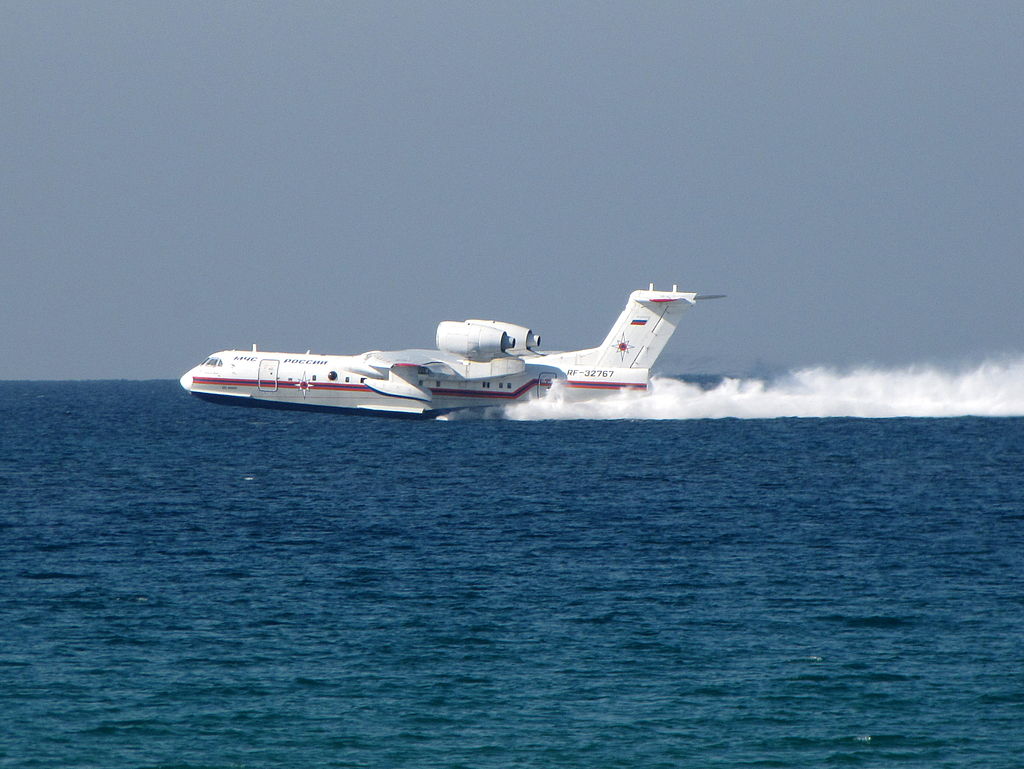
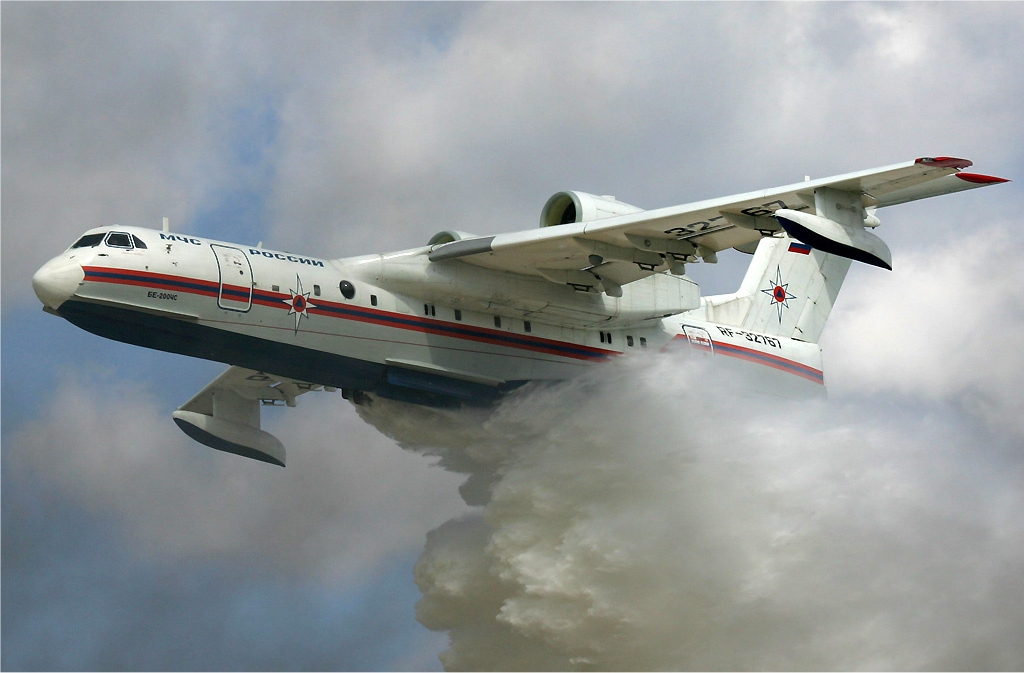
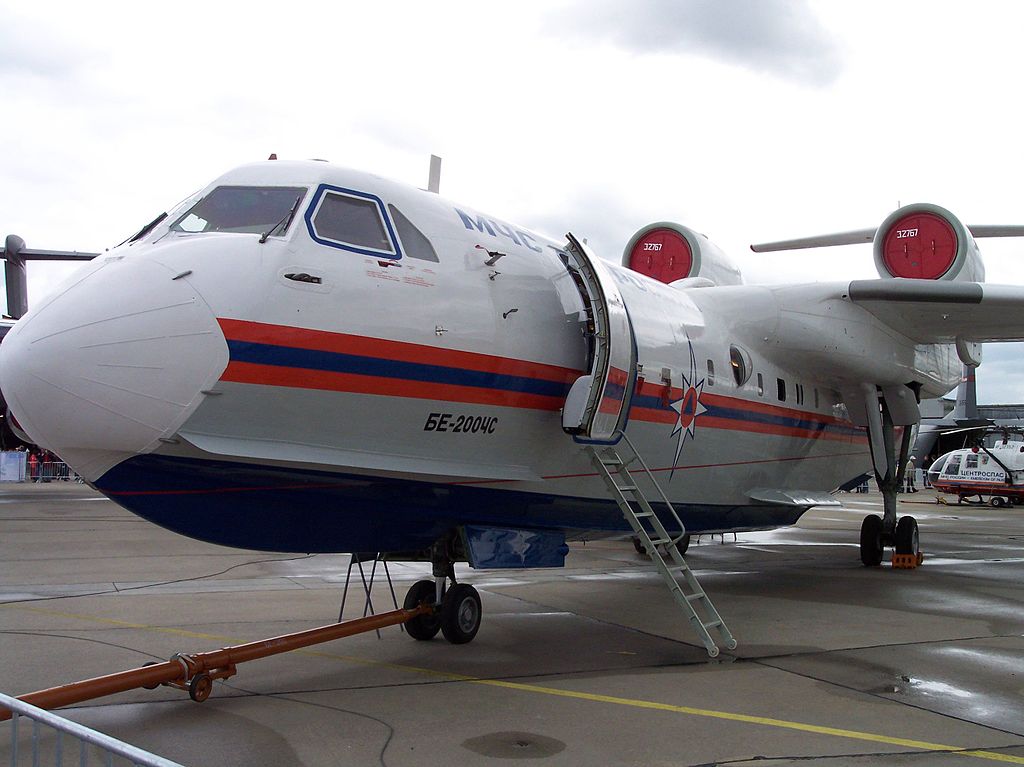

The Be-200 Altair Russian Amphibious Aircraft is a utility amphibious aircraft designed and built by the Beriev Aircraft Company. Marketed as being designed for fire fighting, search and rescue, maritime patrol, cargo, and passenger transportation, it has a capacity of 12,000 liters (3,200 US gal) of water or up to 72 passengers. The name Altair was chosen after a competition amongst Beriev and Irkut staff in 2002—2003, as a reference to the name of the alpha star in the Eagle constellation and because "Al" is the first part of the name of the Beriev A-40 Albatross amphibious aircraft, whose layout was the development basis for the creation of the Be-200; "ta" stands for Taganrog, and "ir" stands for Irkutsk. The Be-200 is a high-wing T-tail monoplane. The hull is of single-step design with a high length-to-beam ratio, which contributes to stability and controllability in water. The Be-200 airframe is constructed of aluminum alloys with corrosion-protection treatments. Selective use is made of titanium, composites, and other corrosion-free materials. The wings are fitted with underwing stabilizer floats. The hydraulically operated retractable landing gear units all retract rearward, and each unit is twin-wheeled. A water rudder provides steering when in the water. It can operate from either a 1,800 m long runway or an area of open water not less than 2,300 m long and 2.5 m deep, with waves of up to 1.3 m high. The aircraft is powered by two, over the fuselage, pylon-mounted Progress D-436TP engines. The D-436TP is a specific "maritime" corrosion-resistant version of the D-436 three-shaft turbofan engine, designed especially for the Be-200 amphibian, by Ivchenko Progress ZMKB and manufactured by Motor Sich in Ukraine. These are mounted above the wing root pods on the landing gear fairings to prevent water spraying into the engines during take-off and landing. The Digital Flight Control (Fly-by-wire) cockpit is fitted with modern navigation systems such as satellite navigation, FMS, autopilot, and weather radar. The ARIA 200-M all-weather integrated avionics system, developed by Honeywell with the Moscow Research Institute of Aircraft Equipment, uses six 152 x 203 mm (6 x 8 in) LCDs to display information to the crew of two. The multirole Be-200 can be configured as an amphibious water drop fire-fighting aircraft, a freighter, or as a passenger aircraft—the pressurized and air-conditioned cabin allowing the transportation of up to 72 passengers. The Be-200 can also be equipped for special missions. When configured as an air ambulance, the aircraft can carry up to 30 stretcher patients and seven seated patients or medical crew. In the search and rescue role, the aircraft can be equipped with searchlights and sensors, an inflatable boat, thermal and optical surveillance systems, and medical equipment. The search and rescue variant can accommodate up to 45 people. The aircraft is also capable of being configured for anti-submarine warfare duties. The Be-200 in amphibious water drop fire-fighter configuration suppresses fires by dropping water contained in eight ferric aluminum alloy water tanks, located under the cabin floor in the center fuselage section. Four retractable water scoops, two forward and two aft of the fuselage step, can be used to scoop a total of 12 tonnes of water in 14 seconds. Alternatively, the tanks can be filled from a hydrant or a water cistern on the ground. The water tanks can be removed quickly for carrying cargo. Water can be dropped in a single salvo, or in up to eight consecutive drops. The aircraft also carries six auxiliary tanks for fire-retarding chemical agents, with a total capacity of 1.2 m³. The aircraft can empty its water tanks over the site of a fire in 0.8 to 1.0 seconds when flying above the minimum drop speed of 220 km/h (135 mph, 120 kn)