DriX 0-16 French Autonomous Surface Vehicle (ASV)
DriX 0-16
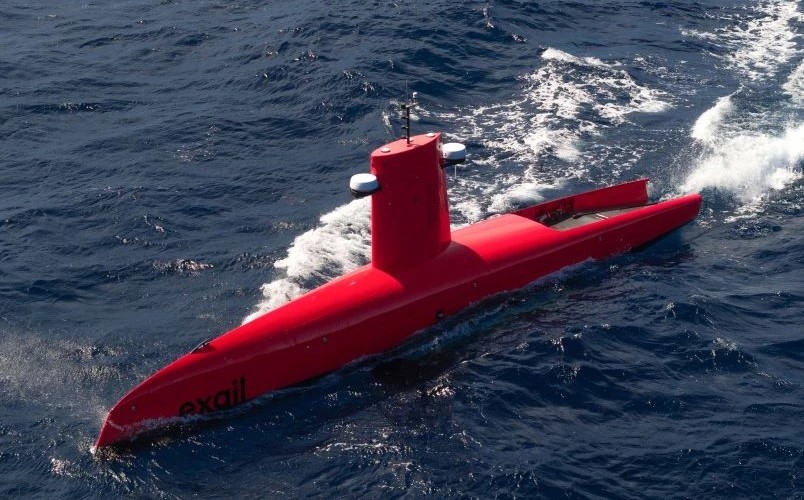
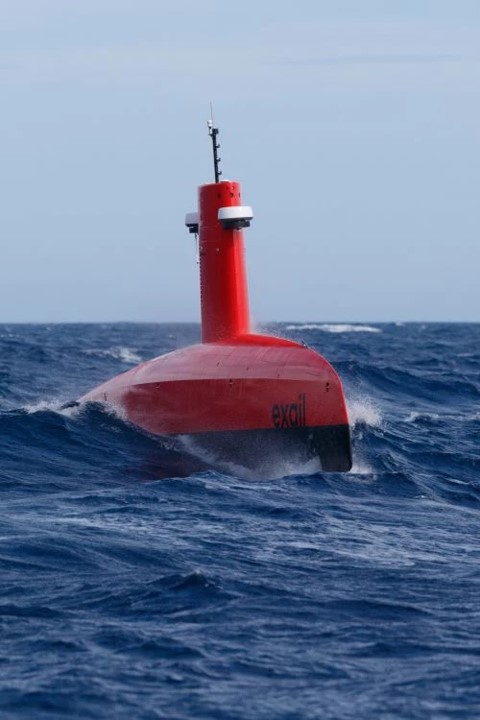

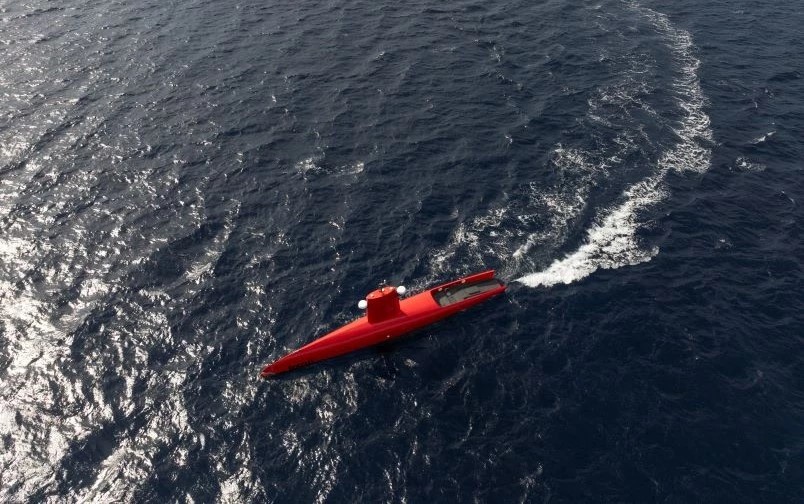
The DriX 0-16 French Autonomous Surface Vehicle (ASV) is Exail’s latest transoceanic Unmanned Surface Vehicle (USV), specifically designed for unrestricted navigation and long-duration missions that can last up to 30 days. This versatile platform supports a broad range of payloads and multi-vehicle operations, making it well-suited for addressing even the most challenging applications. The DriX O-16 sets a new standard for transoceanic surveys and surface-to-subsurface operations. Built for endurance, it offers 30 days of autonomous operation, making it ideal for extended, long-range missions. With a range of 3,500 nautical miles, this USV is engineered to conduct transoceanic surveys and missions in demanding environments. Its robust autonomy enables continuous operations in remote areas, ensuring reliable performance over vast distances, making it a pioneering asset for long-duration exploration and monitoring. Equipped with a redundant and dual hybrid propulsion system, the DriX O-16 provides exceptional robustness and operational safety. By combining electric and diesel power, it ensures energy efficiency and serves as a backup power source for prolonged missions, guaranteeing reliable performance, even in the most demanding maritime conditions. Moreover, the DriX O-16 is designed with sustainability and cost-efficiency in mind. Its autonomous capabilities reduce the need for large support vessels, which significantly lowers fuel consumption and carbon emissions during missions. Additionally, its long endurance and capacity to carry a variety of payloads in a single deployment minimize operational costs, making it an environmentally friendly and economical solution for extended maritime operations. **Versatile Sensors for Multiple Missions** The DriX O-16 is engineered for versatility and supports a wide range of payloads and systems, including: - Multi-Beam Echo Sounders (MBES) for shallow to ocean depths - Sub-Bottom Profiler - Ultra-Short Base Line (USBL) systems - Single and Multi-Beam Echosounders for monitoring fish stock and biomass - Scientific payloads, such as DNA pumps In addition to its underwater capabilities, the DriX O-16 features a spacious aft deck that allows for the installation of surface payloads, including winches and oceanographic sensors. The Unmanned Surface Vehicle (USV) can also be equipped with a launch and recovery system for deploying various underwater robots, such as: - Remotely Operated Tethered Vehicles (ROTVs) - Remotely Operated Vehicles (ROVs) - Autonomous Underwater Vehicles (AUVs) This functionality enables complex multi-vehicle operations that combine surface and underwater autonomy, supporting new operational concepts for subsea asset inspection and scientific exploration. **Advanced Autonomy with CortiX** The DriX O-16 is equipped with the CortiX system—Exail's advanced autonomy solution designed to provide high-level autonomy for maritime surface platforms. Originally integrated with the DriX H-8, CortiX has evolved into a versatile solution that can be adapted to various vessels. With over 100,000 hours of operational experience at sea, it has demonstrated reliability in both Line-of-Sight and Over-the-Horizon missions. For maritime security, the DriX O-16 includes the CortiX Obstacle Avoidance System (OAS), which enhances safety during operations. **Obstacle Detection** The DriX O-16 utilizes multiple sensors for surface obstacle detection, including video and infrared cameras, LiDAR, radar, and AIS. Additionally, it features a Forward-Looking Sonar (FLS 5) for detecting underwater obstacles. The CortiX OAS combines data from these sensors to automatically calculate avoidance routes, aiding the remote supervisor in ensuring safe and precise navigation, even in restricted or congested areas. **Redundant Communication Infrastructure** Designed for unrestricted navigation, the DriX O-16 is equipped with a redundant multi-channel communication infrastructure that combines Starlink, Iridium Certus satellite communication, and 4G for Over-the-Horizon (OTH) operations. The CortiX system autonomously selects the optimal communication mode (satellite or 4G) based on environmental conditions. **Efficient Data Transfer** The system enhances bandwidth usage, reduces operational costs, and prioritizes critical data with minimal bandwidth requirements. **Global Remote Monitoring** Using secure, encrypted connections to the CortiX cloud platform, OTH operations can be supervised from anywhere with high-speed internet. The cloud deployment provides a high level of flexibility in managing the locations of Remote Operation Centers (ROCs).