Y-7-100 (Yunshuji-7-100) Chinese Cargo Transport Aircraft
Y-7-100
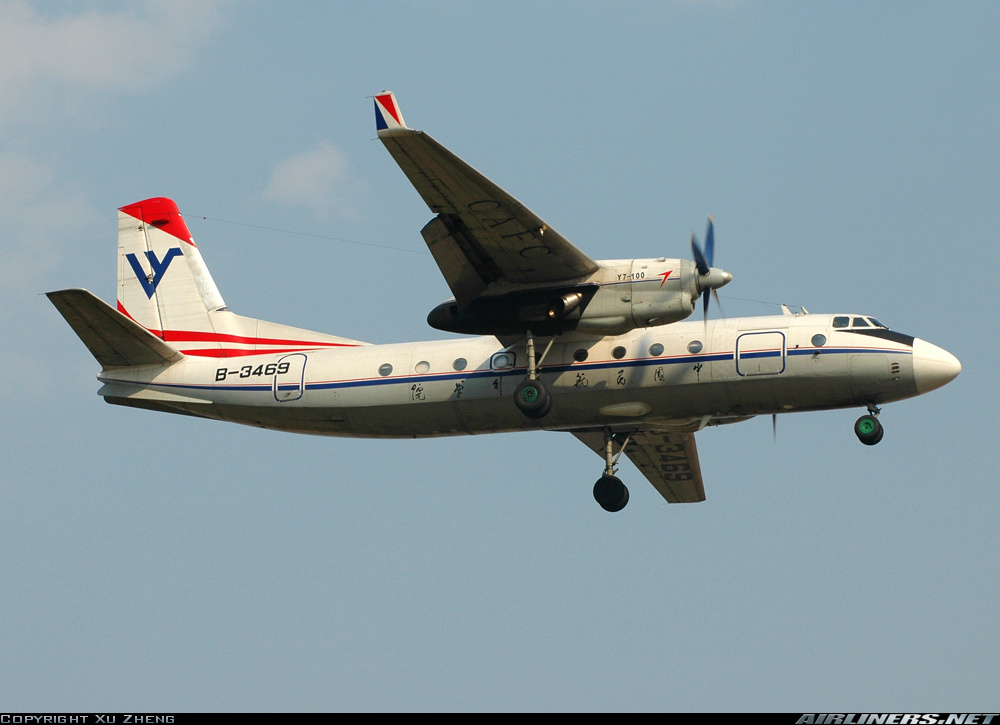
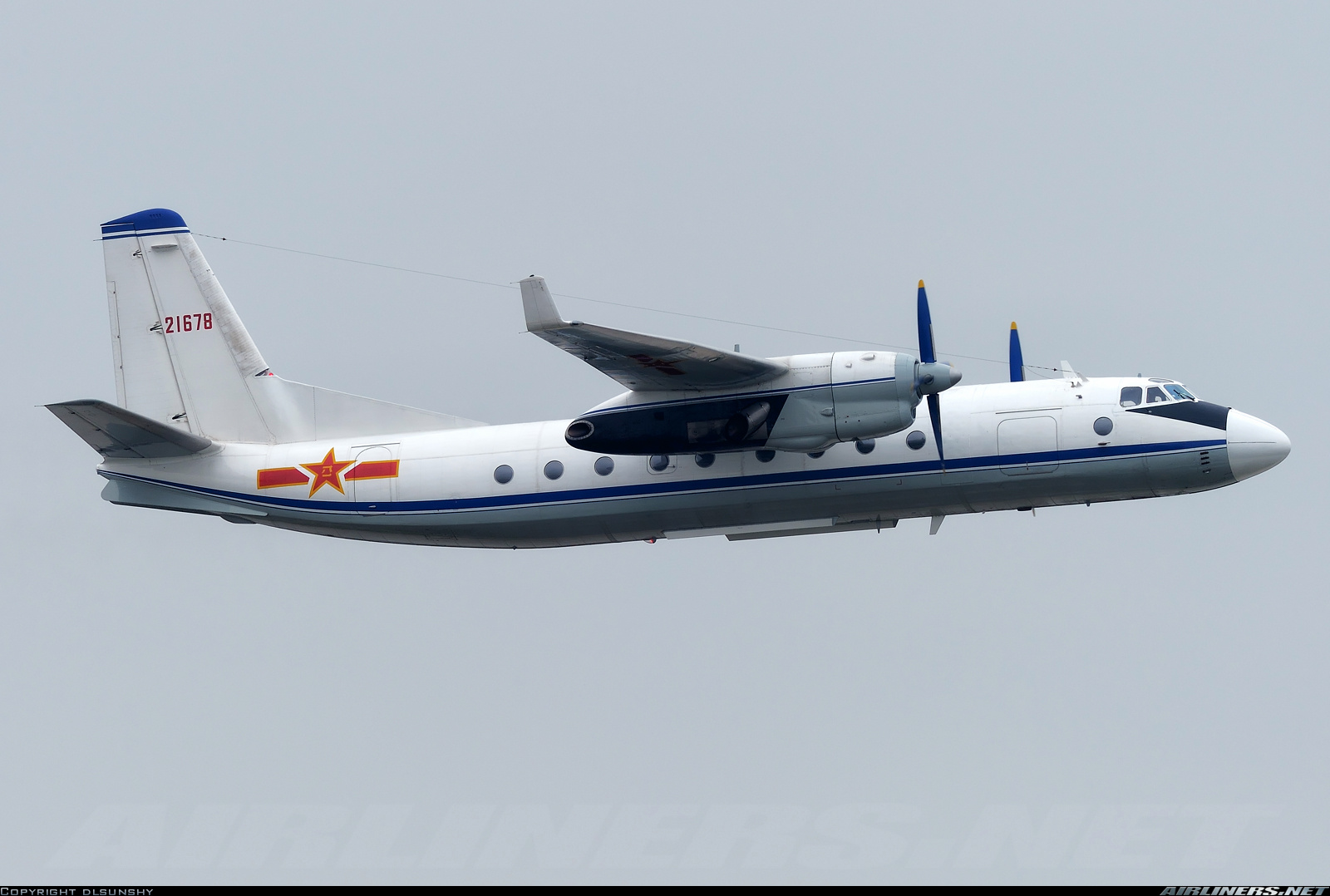
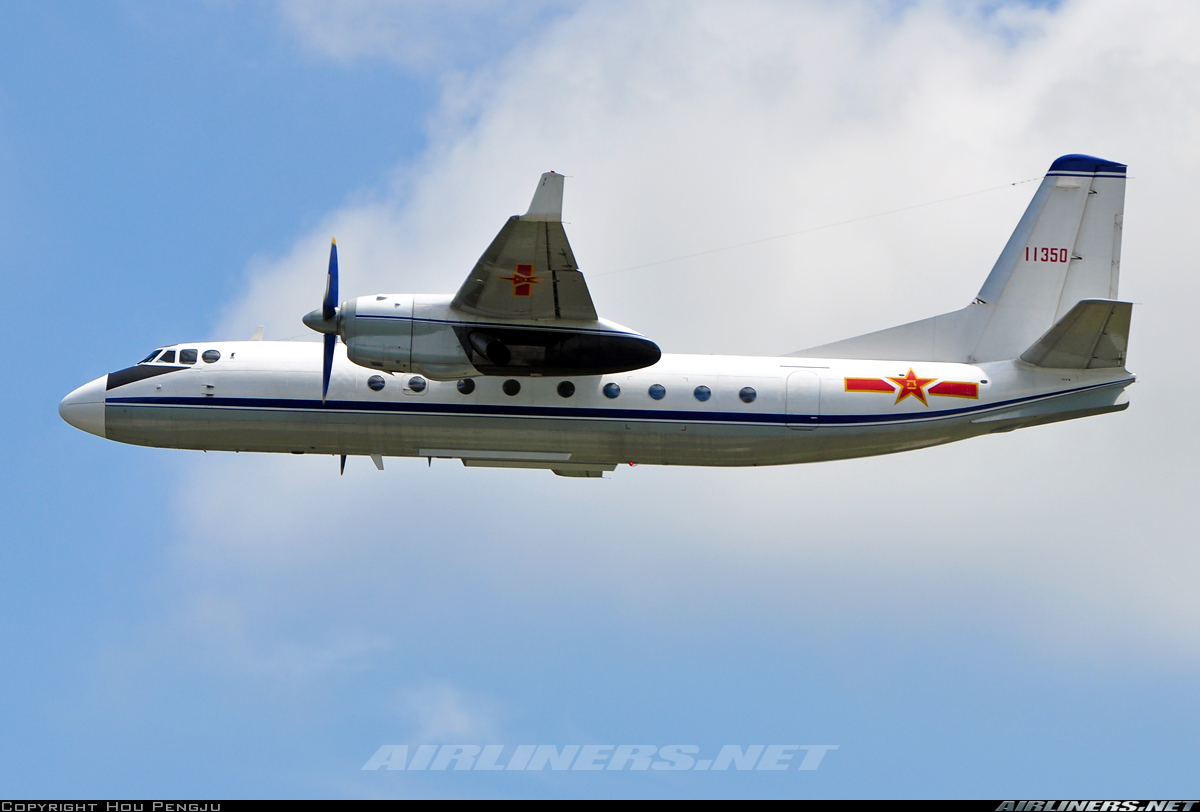
Y-7-100 This is an improved version developed with the assistance of the Hong Kong Aircraft Engineering Co. (HAECO). This version has greater wing span and winglets, Hamilton Standard environmental control system, three-man flight deck, updated avionics and revised Noordam cabin layout with reclining seats. The Xian Y-7 (Chinese: 运-7; pinyin: Yùn-qī) is a transport/passenger aircraft built in China. It is based on the Soviet-designed Antonov An-24 series. China imported the Antonov An-24 from early in its production run and also negotiated licences for production of the aircraft and its engines. In 1966, Xi'an aircraft factory started the project of local production of An-24. The first Chinese-assembled An-24T had its maiden flight on 25 December 1970. Production was launched in 1977 at the Xi'an aircraft factory but progress was slow due to the deleterious effects of the Cultural Revolution, with a pre-production aircraft displayed to the public at Nanyuan air base, near Beijing, on 17 April 1982. The WJ-5A1 turboprop engine was chosen as the Y-7's power source. The first production aircraft was not flown until February 1984, illustrating the slow progress (eighteen years from licence to production). The Chinese aircraft equated to the An-24RV, having a full complement of windows and the booster jet engine. The majority of early deliveries were to the People's Liberation Army Air Force (PLAAF), mostly as transports, with a few in 52-seat airliner configuration for the Civil Aviation Administration of China (CAAC). After the initial licensed production run, the Y-7 was developed separately from the An-24 with a succession of upgrades culminating in the Xian MA60 (Modern Ark) series. A tactical transport derivative was copied, unlicensed, from the Antonov An-26 and emerged as the Y-7H, incorporating the cargo ramp door and military equipment of the An-26.