Collins-Class (Type 471 Class) Australian Diesel-Electric Submarine
Collins-Class
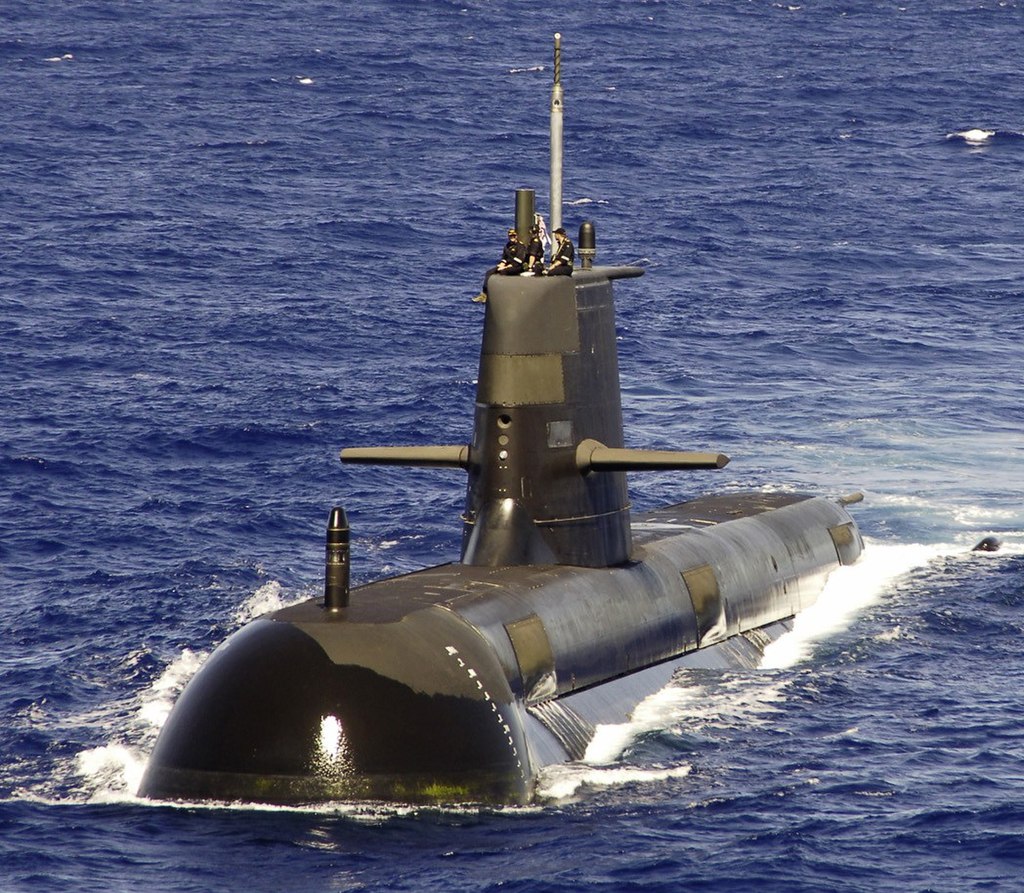

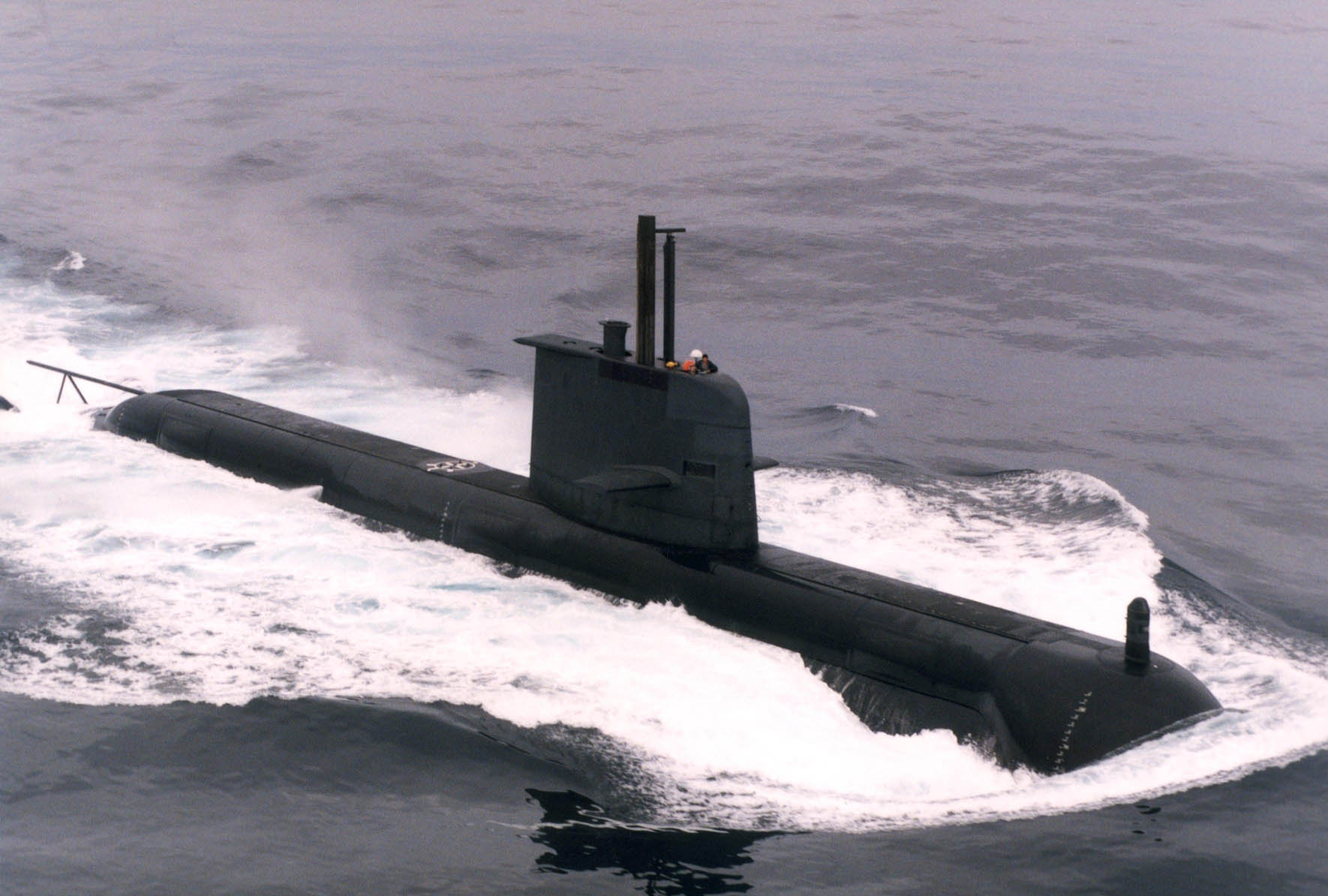
The Collins class of six Australian-built diesel-electric submarines is operated by the Royal Australian Navy (RAN). The Collins class takes its name from Australian Vice Admiral John Augustine Collins; all six submarines are named after significant RAN personnel who distinguished themselves in action during World War II. The boats were the first submarines to be constructed in Australia, prompting widespread improvements in Australian industry and delivering a sovereign (Australian controlled) sustainment/maintenance capability. Planning for a new design to replace the RAN's Oberon-class submarines began in the late 1970s and early 1980s. Proposals were received from seven companies; two were selected for a funded study to determine the winning design, which was announced in mid-1987. The submarines, enlarged versions of Swedish shipbuilder Kockums' Västergötland class and originally referred to as the Type 471 were constructed between 1990 and 2003 in South Australia by the Australian Submarine Corporation (ASC). The submarines have been the subject of many incidents and technical problems since the design phase, including accusations of foul play and bias during the design selection, improper handling of design changes during construction, major capability deficiencies in the first submarines, and ongoing technical problems throughout the early life of the class. These problems have been compounded by the inability of the RAN to retain sufficient personnel to operate the submarines—by 2008, only three could be manned, and between 2009 and 2012, on average two or fewer were fully operational. The resulting negative press has led to a poor public perception of the Collins class. After 20 years of service issues, the boats have finally provided high availability to the RAN since 2016. The Collins class was expected to be retired about 2026, however, the 2016 Defence White Paper extended this into the 2030s. The Collins class life will now be extended and will receive an unplanned capability upgrade, including but not limited to sonar and communications. The Collins class will be replaced by the Future Submarine Program (SEA 1000) that is scheduled, according to the 2016 Defence White Paper, to begin entering service in the early 2030s with construction extending to 2050. The Future Submarine Program will be based on the Shortfin Barracuda, a nuclear attack submarine designed by French company DCNS; twelve submarines will be acquired, all built-in Australia. The Australian Submarine Corporation construction facility was established on previously undeveloped land on the bank of the Port River, at Osborne, South Australia. Work on the site began on 29 June 1987, and it was opened in November 1989. South Australia was selected as the site of the construction facility based on the proposed location of the facility and promises by the State Government to help minimize any problems caused by workers' unions. The state's bid was aided by careful promotion to both Kockums and IKL/HDW during early in the project, and problems with the other states' proposals: Tasmania and Western Australia lacked the necessary industrial base, New South Wales could not decide on the location of the construction facility, Victoria's proposed site was poorly sited, and building in Liberal-led Queensland would have been politically unwise for the project when Labor was in power both federally and in all other states. Each submarine was constructed in six sections, each consisting of several sub-sections. One of the main criteria of the project was that Australian industries contribute to at least 60% of the work; by the conclusion of the project, 70% of the construction and 45% of the software preparation had been completed by Australian-owned companies. Work was sub-contracted out to 426 companies across twelve countries, plus numerous sub-sub-contractors. In many cases, components for the first submarine were constructed by companies outside Australia, while those for the following five boats were replicated by an Australian-owned partner or subsidiary. The project prompted major increases in quality control standards across Australian industries: in 1980, only 35 Australian companies possessed the appropriate quality control certifications for Defence projects, but by 1998 this had increased to over 1,500. Although the acquisition project organizers originally planned for the first submarine to be constructed overseas, the Cabinet decided as part of the project's approval that all six submarines would be built in Australia; the increases in construction time and cost from not building the lead ship in the winning designer's home shipyard was considered to be offset by the additional experience provided to Australian industries. Even so, two sections of the first submarine were constructed by Kockums' shipyard in Malmo, Sweden. By the end of 1990, Chicago Bridge & Iron and Wormald International had both sold their shares in ASC. The shares were bought up by Kockums and the Australian Industry Development Corporation, with some of Kockums' shares then sold to James Hardie Industries to maintain Australian majority ownership of the company. On 5 April 2000, the shares in ASC held by Kockums were bought out and the company was nationalized, despite a trend at the time to privatize government-owned companies. At the end of 2003, a contract to maintain the Collins class worth $3.5 billion over 25 years was awarded to ASC. As of April 1996, the option to order the seventh and eighth submarines was still under consideration but was looked on unfavorably by the Department of Defence at the time, as the additional cost would require the diversion of funding from the Australian Army and Royal Australian Air Force, resulting in an imbalance in the capabilities of the Australian Defence Force. The option was canceled outright by late 2001.