ARMSNET
Military Equipment Database
Initializing 0%

Mi-26 (Halo) Russian Heavy Transport Helicopter

Mil Mi-26
Spotted an error? Sign in to suggest an edit.
Basic Information
Name
Mi-26 (Halo) Russian Heavy Transport Helicopter
Designation
Mil Mi-26
Alternate Designation
Mil Mi-26; Halo
Equipment Type
Manufacturer
Rostvertol
Date of Introduction
1983
Description

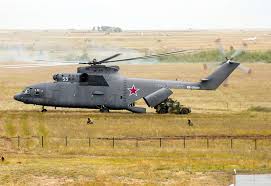
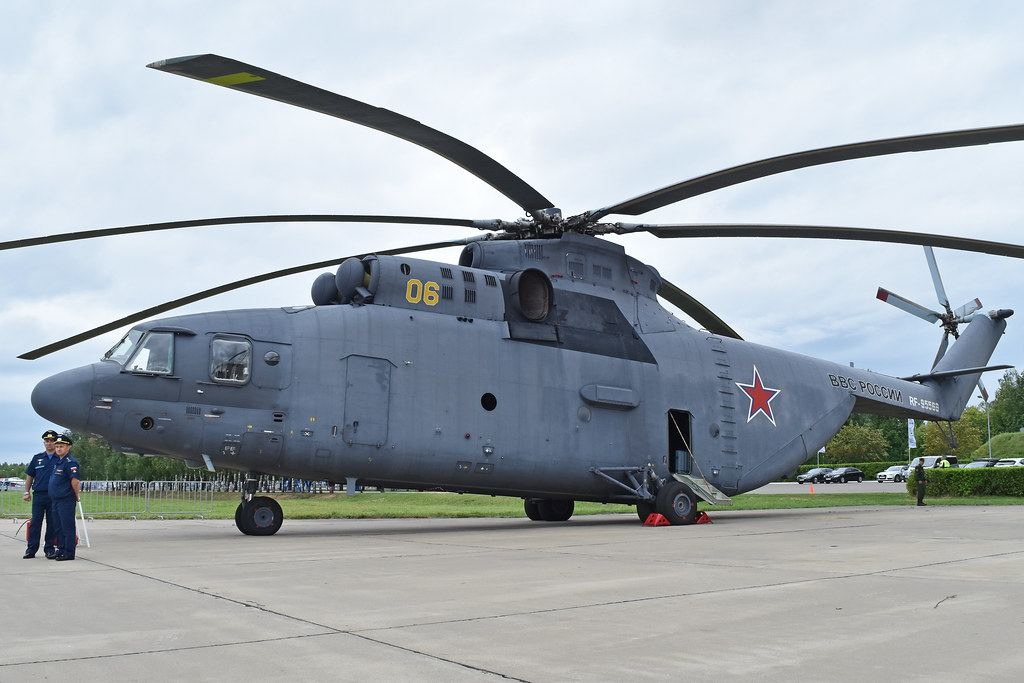
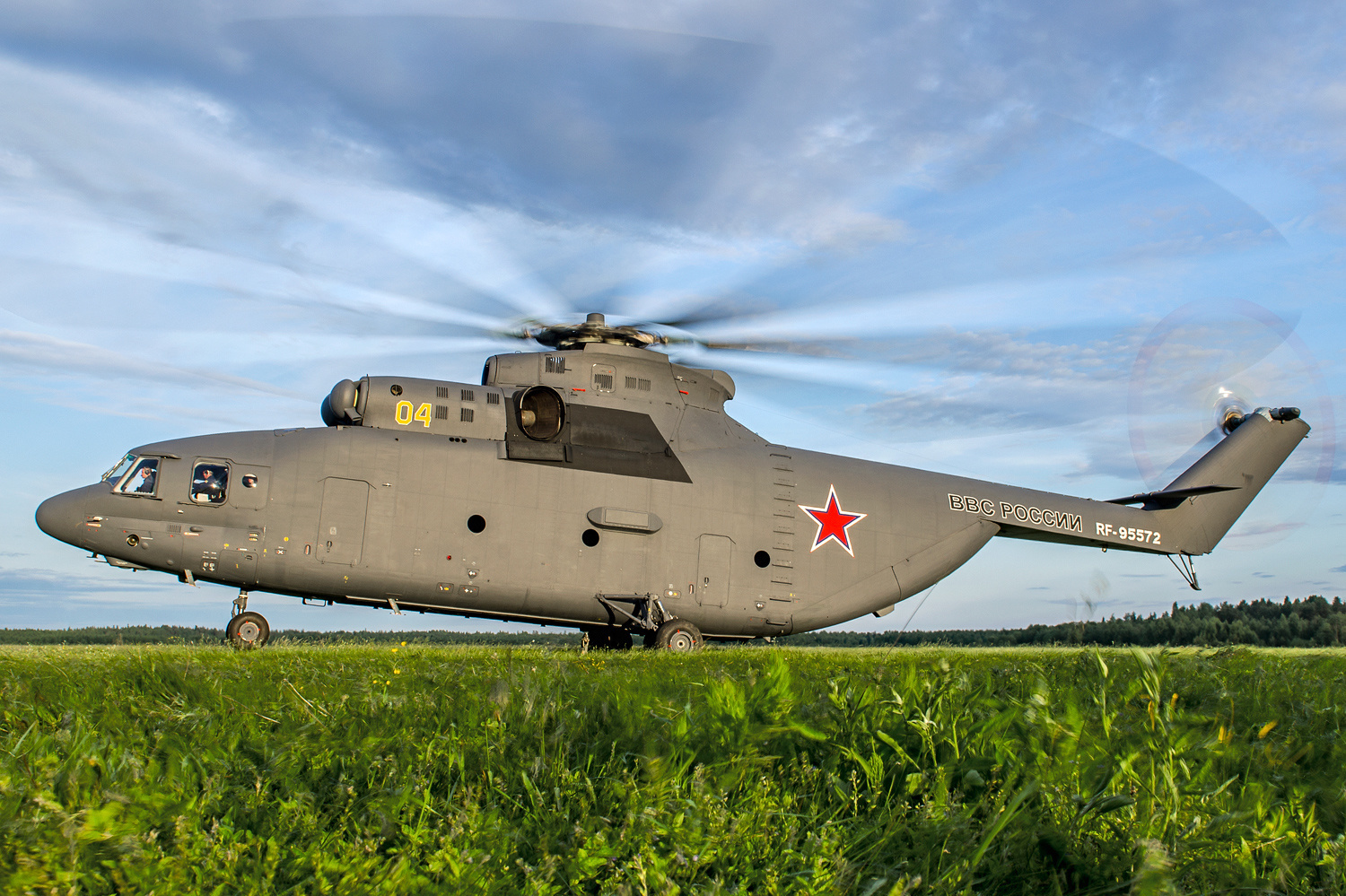
The Mil Mi-26 (Russian: Миль Ми-26, NATO reporting name: Halo) is a Soviet/Russian heavy transport helicopter. Its product code is izdeliye 90. Operated by both military and civilian operators, it is the largest and most powerful helicopter to have gone into series production. The Mi-26 helicopter, the heaviest and most powerful helicopter in the world, was designed for carrying large-sized cargoes weighing up to 20 tons. It is the result of an early 1970s specification for a transport helicopter whose empty weight, without fuel, was not to exceed half of its maximum take-off weight. It can be used for construction projects ranging from bridges to power transmission lines. The combination of high load-carrying capacity and high cruise speed makes the use of the helicopter economically efficient. The helicopter is loaded through the cargo hatch in the tail of the fuselage with lowered ladder and sub ladders. The cargo cabin is equipped with two electric hoists and lifting and loading devices ensuring loading and carrying along with the cabin of cargoes weighing up to 5 tons. Mil Moscow helicopter plant joint-stock company is the major designer and producer of military transport, civil transport, heavy-lift,multi-role helicopters. Mil is associated with the Rostov and Kazan production enterprises. Rostov makes the Mi-26 heavy-lift helicopters.

Air & Air Defense Specifications
Crew 5
Max Speed 295.0 km/h
Range 800.0 km
Variants
Mi-26A Upgraded military version with a new flight/navigation system. Flown in 1985 but no production
Mi-26M Upgraded version of the Mi-26 for better performance.
Mi-26S Disaster response version developed in response to nuclear accident at Chernobyl
Mi-26T Basic civil cargo/freight transport version. Production from 1985.[
Mi-26TS Civil cargo transport version, also marketed as Mi-26TC.
Mi-26TM Flying crane version with under-nose gondola for pilot/crane operator.
Mi-26TP Firefighting version with internal 15,000 litres (4,000 US gal; 3,300 imp gal) fire retardant tank.
Mi-26MS Medical evacuation version of Mi-26T. Up to 60 stretcher cases in field ambulance role, or can be equipped for intensive care or as field hospital.[
Mi-26P 63 seat passenger version.
Mi-26PK Flying crane derivative of Mi-26P
Mi-26T2 Improved version of the Mi-26T equipped with BREO-26 airborne electronic system, allowing it to fly any time, day or night, under good and bad weather conditions. Serial production began on May 22, 2015.[
Mi-26T2V Newest modernization variant intended for the Russian military, equipped with new NPK90-2V avionics suite allowing it to fly routes in automatic mode, airborne defense complex "Vitebsk", anti-blast seats and new navigation and satellite communication systems. The cockpit is fitted with multifunctional displays with provision for use of night-vision goggles during night ops. The Mi-26T2V made its maiden flight in August 2018
Mi-27 Proposed airborne command post variant; two prototypes bui
System
Alternative Designation Mil Mi-26; Halo
Primary Function Heavy Transport Helicopter
In Service 1983-Present
Manufacturer Rostvertol
Crew 5 (pilot, co-pilot, navigator, flight engineer,loadmaster) ea
Passengers 85 passengers; or 60 paratroopers
Blades, Main Rotor 8
Blades, Tail Rotor 5 ea
Number of Engines 2 ea
Day/Night Capable Yes
All Weather Capable INA
Number of Hard Points INA
Dimensions
Length 33.73 m
Width INA m
Height 8.15 m
Main Rotor Diameter 32.0 m
Disc Area 804.25 sq m m
Cabin, Length 12.00 m
Cabin, Width 3.25 m
Cabin, Height 2.95 m to 3.17 m
Cabin, Volume 120 cu m
Weight, Empty 28,200 kg
Weight, Normal Takeoff 49,500 kg
Weight, Maximum Takeoff 56,000 kg
Maximum Payload 20,000 kg
External Payload, out of Ground Effect 14,515 kg
External Payload, in Ground Effect 18,144 kg
Automotive
Engine Name 2 x Lotarev D-136 (Mi-26)
Engine Type INA
Engine Power 11,094 shp ( 8,729 kW) each
Internal Fuel Capacity 11,900 liters
Speed, Maximum 295 km/h
Speed, Cruise 255 km/h
Range w/Maximum Internal Fuel and Maximum Payload 800 km
Range, Ferry 1,920 km
Ceiling 4,600 m
Ceiling, Hovering in Ground Effect 4,500 m
Ceiling, Hovering out of Ground Effect 1,800 m
Main Weapon System
Note There are no weapon systems associated with the Mi-26.
Fire Control and Avionics
Fire Control System Type INA
Fire Control Radar INA
Digital or Analog Cockpit INA
Direct Fire Control No
Laser Designator INA
Sensor Suite(s) Available INA
Position Location System Yes
Radar 1 x Doppler/weather radar in nose
Protection
Fuselage INA
Cockpit Glass INA
Stealth Properties No
Heat Signature Reduction INA
Add on Armor INA
NBC Protection Yes
EW INA
EW Counter Measures/CCM INA
Counter Measures (Chaff/Flares) INA
Details
Country of Origin Russia
Category Transport Helicopter
Air > Transport Helicopter
Filter Label
M
Classification
Domain
Air & Air Defense
Equipment Status
Active
Dimensions
Length
33.73 m
Width
Height
8.15 m
Weight
49500 kg
Operators (14)
Russia
China
India
North Korea
Belarus
Algeria
Cambodia
Equatorial Guinea
Jordan
Kazakhstan
Mexico
Peru
Venezuela
CFE Treaty
Something went wrong. Please reload the page. Reload