ARMSNET
Military Equipment Database
Initializing 0%

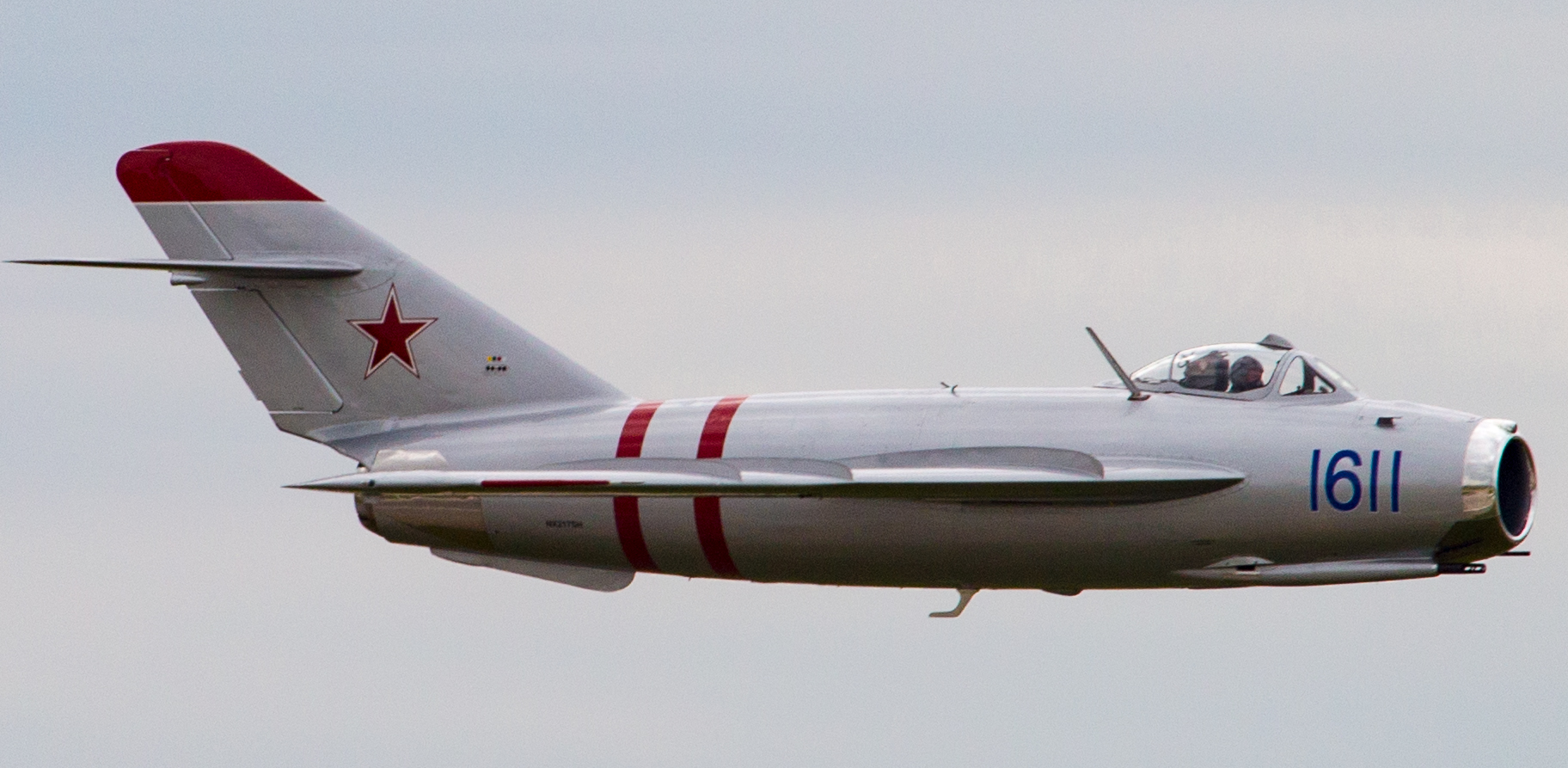
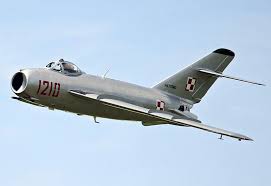
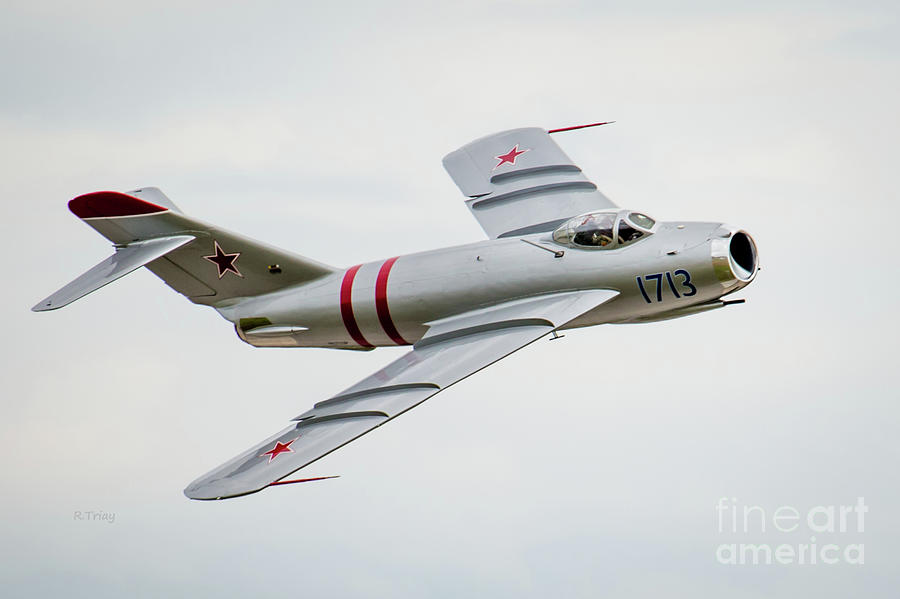
MiG-17 (Fresco) Russian Fighter Aircraft
Spotted an error? Sign in to suggest an edit.
Basic Information
Name
MiG-17 (Fresco) Russian Fighter Aircraft
Designation
Alternate Designation
Equipment Type
Manufacturer
Mikoyan
Date of Introduction
1952
Description

The design of the MiG-17 was undertaken to correct the deficiencies that the earlier MiG-15 had at higher speeds. It was the first Soviet fighter to have an afterburning engine, the Klimov VK-1. In 1949, the Mikoyan-Gurevich (MiG) design bureau began work on a new fighter to replace the MiG-15. Two features of the aircraft were a thinner wing of greater sweep and a redesigned tail that improved stability and handling at speeds approaching Mach 1 (speed of sound). Although similar in appearance to the MiG-15, the MiG-17 has more sharply swept wings, an afterburner, better speed and handling characteristics and is about three feet longer. The wings of the aircraft are mid-mounted, swept-back, and tapered with blunt tips. They have wide wing roots. The engine is one turbojet inside the body and has a round air intake in the nose. It has a single, small exhaust. The fuselage is short, thick, cigar-shaped and tapered to the rear. It has a blunt nose and bubble canopy. The tail fin is swept-back and tapered with rounded tip. Flats are high-mounted on the tail fin, swept-back, and tapered. Flats and fin overhang the exhaust. The prototype MiG-17 (NATO code name Fresco) first flew in January 1950 and was reported to have exceeded Mach 1 in level flight. Production began in late 1951, but the aircraft were not available in sufficient quantities to take part in the Korean War. Deliveries to the Soviet Air Force began in 1952. Five versions of the aircraft eventually were produced. Early production MiG-17s were fitted with the VK-1 engine, a Soviet copy of the Rolls-Royce Nene. The VK-1F, an improved version with a simple afterburner and variable nozzle, was developed for the main production version, the MiG-17F (Fresco C). In 1955 the radar equipped MiG-17PF (Fresco D) entered service as a limited all-weather interceptor. The MiG-17PFU was armed with four AA-1 "Alkali" radar-guided missiles, making it the Soviet Union's first missile armed interceptor. Even though it was considered obsolete by the mid-1960s, the MiG-17 gave a good account over Vietnam, being flown by most of the top North Vietnamese pilots, including the leading ace, Colonel Tomb. The MiG-17 served with nearly 30 air forces worldwide, including the Soviet Union, Warsaw Pact countries, China, Afghanistan, North Korea, Sri Lanka, Syria, Morocco, Cuba, Indonesia, and Cambodia. Though smaller than the USAF F-86 Sabre of Korean War fame, its weight and performance favorably compared to that aircraft. Soviet production of the MiG-17 ended in 1958 with over 6,000 produced. It continued to be built under license in Poland as the Lim-5P and in China as the J-5/F-4. China's first reproduced jet fighter plane, the J-5, successfully flew in Shenyang for the first time on 19 July 1956, and General Nie Rongzhen went in person to Shenyang to offer congratulations.

Air & Air Defense Specifications
Crew 1
Engine Turbojet
Max Speed 1100.0 km/h
Range 2020.0 km
Service Ceiling 16600 m
Wingspan 9.63 m
System
Alternate Designation(s) MiG-17; NATO: Fresco
Primary Function / Type Fighter Aircraft
Manufacturer Mikoyan-Gurevich
Crew 1
Number of Engines 1
Number of Hard Points 2 pylons with a capacity of up to 500 kg (1,100 lb) of stores
Dimensions
Length 11.36 m
Height 3.36 m
Wingspan 9.63 m
Wing Area 22.60 sq m
Weight, Empty 3,930 kg
Weight, Maximum Takeoff 6,700 kg
Automotive
Engine Name Klimov VK-1A
Number of Engines 1
Engine Type Turbojet
Maximum Power, Dry 2,700 kg
Maximum Power with Afterburner 3,380 kg
Internal Fuel Capacity 1,410 liters
Maximum Speed 1,100 km/h
Maximum Range 2,020 km
Service Ceiling 16,600 m
G Limits +8
Rate of Climb 65 m/s
Main Gun System
Gun System #1
Name Nudelman-Rikhter NR-23
Type Autocannon
Caliber 23mm
Quantity 2 × 23 mm (0.906 in) Nudelman-Rikhter NR-23 autocannon
Length 1,980 mm
Barrel Length 1,450 mm
Width 165 mm
Height 136 mm
Weight 39 kg
Barrels 1
Action Short recoil
Rate of Fire 800–850 rpm
Muzzle Velocity 690 m/s
Gun System #1 Ammunition
Type Rifle
Caliber 23mm
Cartridge 23×115 mm
Basic Load 80 rounds per gun, 160 rounds total
Gun System #2
Name Nudelman N-37
Type Autocannon
Caliber 37mm
Length 2,455mm
Barrel Length INA
Weight 103 kg
Barrels 1
Action Short recoil
Rate of Fire 400 rounds per minute
Muzzle Velocity 690 m/s
Gun System #2 Ammunition
Type Rifle
Caliber 37mm
Cartridge 37x155mm
Basic Load 40 rounds total
Main Missile Systems
Note 6 x wing pylons for two external fuel tanks and four eight-round rocket pods or two 551-lb (250-kg) bombs
Main Missile System #1
Name K-5; NATO: AA-1 Alkali
Type Air-to-Air Missile
Manufacturer Kaliningrad Series Production Plant
Length 2.49 m
Diameter 200 mm
Weight 82.7 kg
Warhead Type High explosive
Warhead Weight 13 kg
Engine Rocket
Operational Range 2-6 km
Maximum Speed 2,880 km/h
Guidance System beam riding
Rocket Weapon Systems
Note 2 × UB-16-57 rocket pods for S-5 rockets
Bomb Weapon Systems
Bomb Capacity 2 × 250 kg (550 lb) bombs
Fire Control / Avionics
Fire Control System Type INA
Fire Control Radar INA
Laser Desingator INA
Protection
Stealth Properties No
Heat Signature Reduction INA
Add on Armor INA
NBC Protection INA
EW Counter Measures INA
Chaffs/Flares INA
Details
Country of Origin Russia
Category Fixed Wing Aircraft
Air > Fixed Wing Aircraft
Filter Label
M
Classification
Domain
Air & Air Defense
Equipment Status
Active
Dimensions
Length
11.36 m
Width
Height
3.36 m
Weight
6700 kg
Operators (3)
North Korea
Cuba
Tanzania
Something went wrong. Please reload the page. Reload