Yak-130 (Mitten) Russian Light Combat Aircraft
Light Combat Aircraft/ Trainer
Spotted an error? Sign in to suggest an edit.
Other
Basic Information
Name
Yak-130 (Mitten) Russian Light Combat Aircraft
Designation
—
Alternate Designation
—
Equipment Type
Light Combat Aircraft/ Trainer
Manufacturer
Irkut Corporation Sokol Aircraft Plant
Date of Introduction
1996
Description
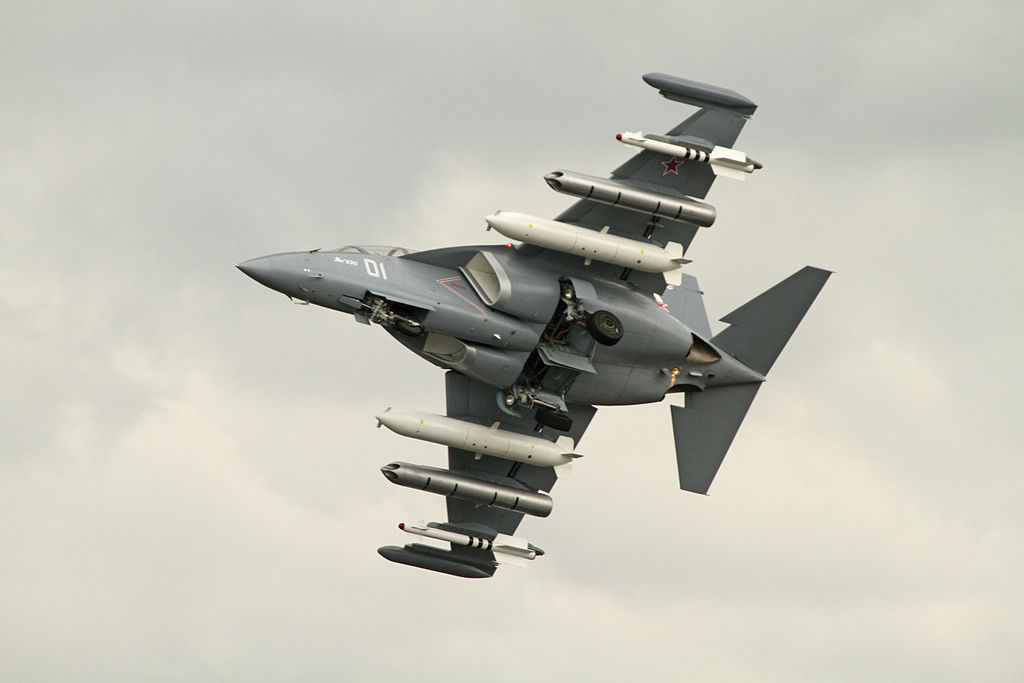
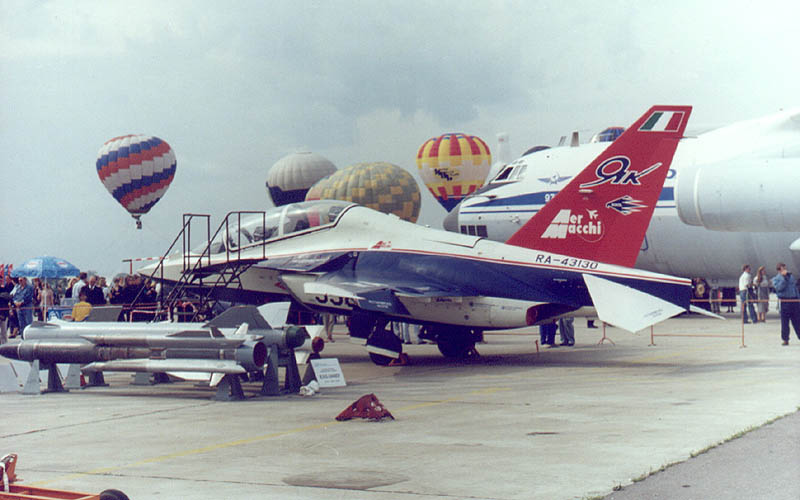
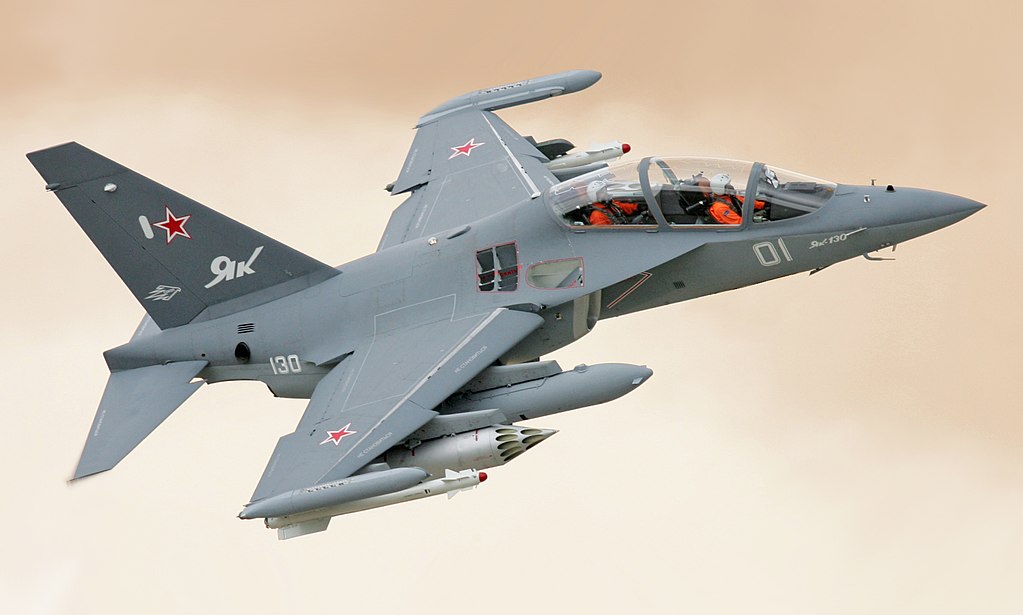
Yak-130 (Mitten) Russian Light Combat Aircraft is a subsonic two-seat advanced jet trainer and light combat aircraft originally developed by Yakovlev and Aermacchi as the "Yak/AEM-130". It has also been marketed as a potential light attack aircraft. Development of the aircraft began in 1991 and the maiden flight was conducted on 25 April 1996. In 2002, it won a Russian government tender for training aircraft and in 2009 the aircraft entered service with the Russian Air Force. As an advanced training aircraft, the Yak-130 is able to replicate the characteristics of several 4+ generation fighters as well as the fifth-generation Sukhoi Su-57. It can also perform light-attack and reconnaissance duties, carrying a combat load of 3,000 kg.
Air & Air Defense Specifications
Crew
2
Engine
Turbofan (2500 hp)
Max Speed
1000.0 km/h
Range
1000.0 km
Service Ceiling
12500 m
Wingspan
10.60 m
Payload Capacity
3000 kg
Variants
Yakovlev Yak-130
Basic dual seat advanced trainer.
Yakovlev Yak-131
Light attack aircraft as the Su-25 replacement. This version will have cockpit and engine armour, a GSh-30-1 autocannon, and either the Phazotron Kopyo radar with mechanical or electronic beam scanning, or the Tikhomirov NIIP Osa passive phased array radar.
Yakovlev Yak-133
Light Strike Aircraft for LUS. The project was canceled in the early 1990.
Yak-133IB
Fighter bomber.
Yak-133PP
Electronic countermeasure platform.
Yak-133R
Tactical reconnaissance variant.
Yakovlev Yak-135
Four seat VIP transport.
System
Alternate Designation(s)
Yak-130; NATO: Mitten
Type
Light Combat Aircraft
Manufacturer
Irkut Corporation
Sokol Aircraft Plant
Crew
2 (pilot/trainer, co-pilot/trainee)
Number of Engines
2 ea
Number of Hard Points
9 (1 on each wingtip, 3 under each wing, and 1 under the fuselage) with a capacity of up to 3,000 kg
Dimensions
Length
11.3 m
Wingspan
10.6 m
Wing Area
23.5 sq m
Height
4.8 m
Maximum Takeoff Weight
5,700 kg
Normal Takeoff Weight
9,000 kg
Payload Capacity
3,000 kg
Automotive
Engine Name
2 x AI-222-25
Engine Type
Turbofan
Engine Power
2,500 kg each
Internal Fuel Capacity
1,750 kg
External Fuel Capacity
450 kg tanks
Maximum Speed
1,000 km/h
Landing Speed
195 km/h
Operational Range
1,000 km Radius
Ferry Range
2,400 km
Service Ceiling
12,500 m
Takeoff Run
380 m
Landing Run
670 m
Service Life
10,000 hours
Main Gun System
Note
The aircraft is fitted with a 30mm GSh-301 cannon or a podded GSh-23 cannon installed under the fuselage.
Main Missile Systems
Note
An open architecture avionics suite installed on the Yak-130 allows a wide range of western weapon systems and guided missiles to be integrated including the AIM-9L Sidewinder, Magic 2, and the AGM-65 Maverick.
Weapons fit to include the Vikhr laser-guided missile, R-73 infrared-guided air-to-air missiles (Nato designation AA-11 Archer), and the Kh-25 ML (Nato designation AS-10 Karen) air-to-surface laser-guided missile.
Rocket Weapon Systems
Note
The Aircraft can also deploy unguided B-8M and B-18 rockets.
Bomb Weapon Systems
Note
A Platan electro-optical guidance pod is installed under the fuselage for the deployment of the KAB-500Kr guided bomb. 250kg and 50kg bombs and cluster bombs can also be installed.
Fire Control / Avionics
Fire Control System
The Avionica fly-by-wire flight control system is used to adjust the stability and controllability characteristics and flight safety systems to simulate a number of aircraft such as the MiG-29, Su-27, Su-30, F-15, F-16, F-18, Mirage 2000, Rafale, Typhoon and future fighters such as the F-35.
Navigation Suite
The open architecture avionics suite includes two computers and a three-channel information exchange multiplexer. The navigation suite includes laser gyroscopes and GLONASS / NAVSTAR global positioning.
Navigation Radar
The Yak-130 is fitted with the 8GHz to 12.5GHz Osa or Oca (Wasp) radar developed by NIIP Zhukovsky. The radar has the capacity to track eight airborne targets simultaneously, simultaneously engage four targets at all angles and simultaneously track two ground targets. The detection range against 5m² cross-section targets is 40km in the rear direction and 85km in the forward direction. The lock-on range for operation in automatic tracking mode is 65km.
The radar, which has adaptive waveforms and sidelobes, has a surface mapping mode that includes image freezing and zooming on areas of interest.
An alternative radar fit is the Kopyo (Spear) radar. The aircraft can also be fitted with a podded Platan (Palm Tree) infrared search and track targeting system.
Protection
Cockpit
The aircraft has an air-conditioned and pressurised two-seat tandem cockpit fitted with NPO Zvezda K-36LT3.5 zero-zero ejection seats. The pilots have all-round view through a blister canopy. The forward pilot has a view over the nose to -16°. The rear pilot has a view to -6°.
Stealth Properties
No
Heat Signature Reduction
INA
NBC Protection
INA
EW Counter Measures
The electronic warfare suite includes a chaff and flare dispenser, a radar warning receiver, and active jammers.
Chaffs/Flares
Yes
Details
Country of Origin
Russia
Category
Fixed Wing Aircraft
Air > Fixed Wing Aircraft
Filter Label
Y
Classification
Domain
Air & Air Defense
Equipment Status
Active
Dimensions
Length
11.3 m
Width
10.6 m
Height
4.8 m
Weight
5700 kg
Operators (9)
Russia
Belarus
Algeria
Bangladesh
Laos
Myanmar
Syria
Vietnam
CFE Treaty
Something went wrong. Please reload the page.
Reload