Leopard 1A5 German Main Battle Tank (MBT)
Leopard 1A5
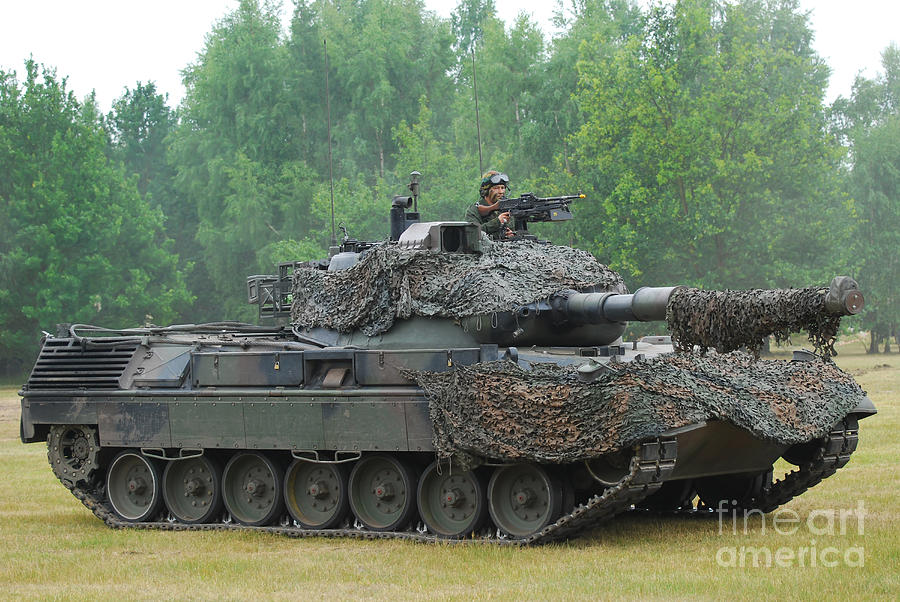
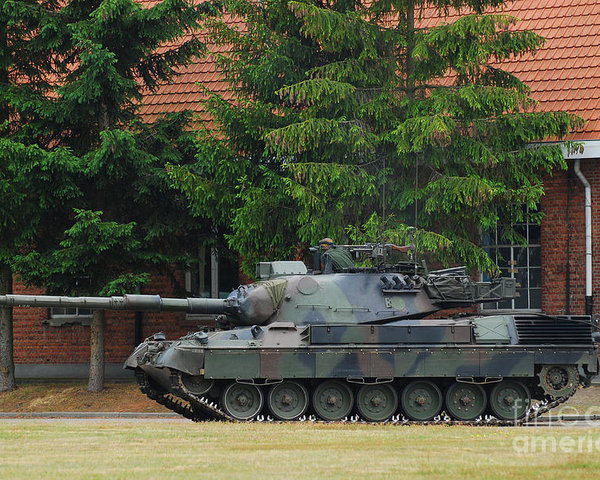
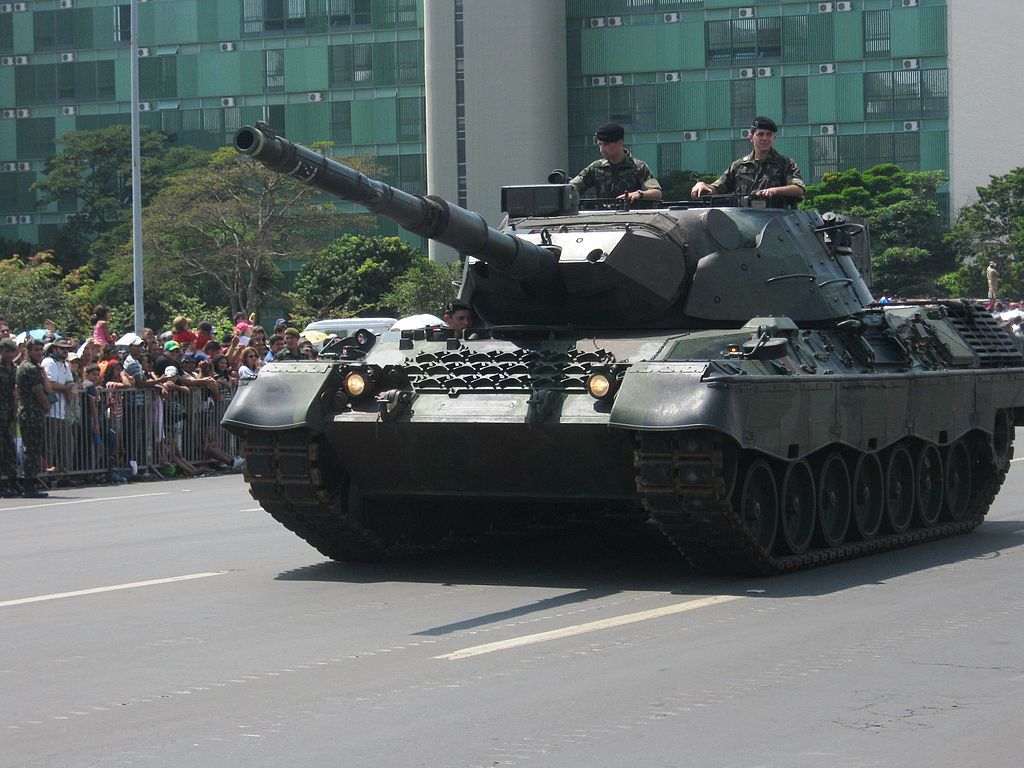
The Leopard (or Leopard 1) is a main battle tank designed and produced by Porsche in West Germany that first entered service in 1965. Developed in an era when HEAT warheads were thought to make conventional heavy armour of limited value, the Leopard focused on firepower in the form of the German-built version of the British L7 105-mm gun, and improved cross-country performance that was unmatched by other designs of the era. The design started as a collaborative project during the 1950s between West Germany and France, and later joined by Italy, but the partnership ended shortly after and the final design was ordered by the Bundeswehr, with full-scale production starting in 1965. In total, 6,485 Leopard tanks have been built, of which 4,744 were battle tanks and 1,741 were utility and anti-aircraft variants, not including 80 prototypes and pre-series vehicles. The Leopard quickly became a standard of European forces, and eventually served as the main battle tank in over a dozen countries worldwide, with West Germany, Italy and the Netherlands being the largest operators until their retirement. Since 1990, the Leopard 1 has gradually been relegated to secondary roles in most armies. In the German Army, the Leopard 1 was completely phased out in 2003 by the Leopard 2, while Leopard 1-based vehicles are still widely used in utility roles. The Leopard 2 has replaced the Leopard 1 in service with many other nations as well, with derived vehicles using the Leopard 1 hull still seeing service. Currently, the largest operators are Greece, with 520 vehicles, Turkey, with 397 vehicles and Brazil with 378 vehicles. Most of these vehicles have been upgraded with various improvements to armor, firepower and sensors to maintain their ability to engage modern threats. Leopard 1A5 In 1980, a research program was undertaken to study further improvements to the Leopard 1, providing it with a completely modern fire control system and fully effective night/bad-weather vision system. The decision was made to base the upgrades on the earlier models, which were no longer competitive. The resulting Leopard 1A5 was based on 1,225 vehicles of the Leopard 1A1A1 model. The turrets were again modified for the 1A5, both in order to store all of the new equipment, as well as to move more of the ammunition into the rear of the turret, as opposed to the left side of the driver where it had previously been stored. The new turret was also able to mount the newer 120 mm gun from the Leopard 2 if desired, although this option has not been used. After trials, the Krupp-Atlas Elektronik EMES 18 fire control system, which was developed from the EMES 15 used on the Leopard 2, was selected in December 1983. The EMES 18 included two new sights on the top of the turret, and no longer required the "bumps" as did the earlier optical systems. A crucial part of the upgrade was the introduction of more effective ammunition, including new APFSDS rounds. The Leopard tank could also be fitted with bolt-on polycarbonate (Lexan) armour panels, which have increased the effectiveness of the armor. The first modified vehicle was delivered in early 1987. Since then, almost all users of the Leopard 1 have also applied similar changes to their own vehicles, and in most ways the 1A5 be considered the "standard" Leopard 1 today. In the Netherlands, an improved version equivalent to the A5 called "Leopard 1 Verbeterd" (improved) was developed, the same version is used by the Chilean Army.