ARMSNET
Military Equipment Database
Initializing 0%

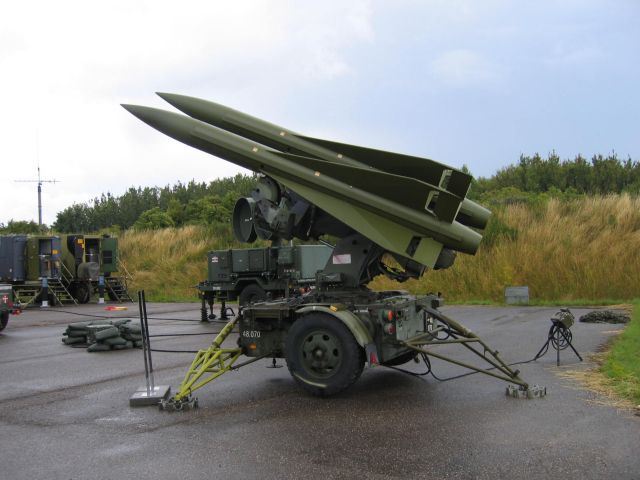
MIM-23A Hawk American Surface-to-Air Missile (SAM) System

MIM-23A Hawk
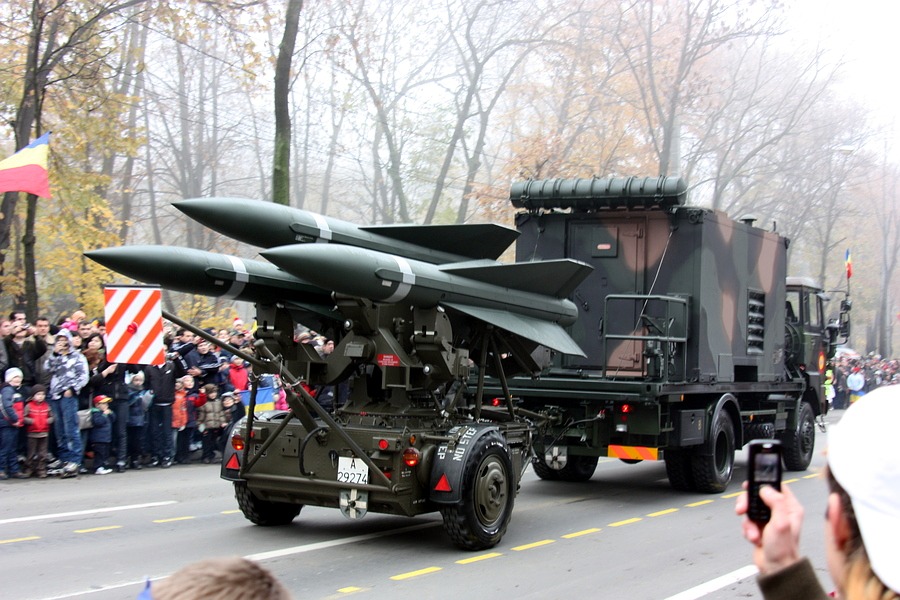
Medium-Range Surface-to-Air Missile System
Spotted an error? Sign in to suggest an edit.
Basic Information
Name
MIM-23A Hawk American Surface-to-Air Missile (SAM) System
Designation
MIM-23A Hawk
Alternate Designation
MIM-23A Hawk
Equipment Type
Medium-Range Surface-to-Air Missile System
Manufacturer
Raytheon
Date of Introduction
1960
Description

The Raytheon MIM-23 Hawk (or HAWK: Homing All the Way Killer) is an American medium-range surface-to-air missile. It was designed to be a much more mobile counterpart to the MIM-14 Nike Hercules, trading off range and altitude capability for a much smaller size and weight. Its low-level performance was greatly improved over Nike through the adoption of new radars and a continuous wave semi-active radar homing guidance system. Hawk was originally intended to attack aircraft, especially those flying at medium and low altitudes. It entered service with the Army in this role in 1959. In 1971 it underwent a major improvement program as the Improved Hawk, or I-Hawk, which made several improvements to the missile and replaced all of the radar systems with new models. Improvements continued throughout the next twenty years, adding improved ECCM, a potential home-on-jam feature, and in 1995, a new warhead that made it capable against short-range tactical missiles. Jane's reported that the original system's single shot kill probability was 0.56; I-Hawk improved this to 0.85. A typical Basic Hawk battery consists of: 1 × PAR: Pulse Acquisition Radar—a search radar with a 20 rpm rotation, for high/medium altitude target detection. 1 × CWAR: Continuous Wave Acquisition Radar—a search doppler radar with a 20 rpm rotation, for low altitude target detection. 2 × HPIR: High Power Illuminator doppler Radar—target tracking, illumination and missile guidance. 1 × ROR: Range Only Radar—K-band pulse radar which provides range information when the other systems are jammed or unavailable. 1 × ICC: Information Coordination Central 1 × BCC: Battery Control Central 1 × AFCC: Assault Fire Command Console—miniature battery control central for remote control of one firing section of the battery. The AFCC controls one CWAR, one HPI, and three launchers with a total of nine missiles. 1 × PCP: Platoon Command Post 2 × LCS: Launcher Section Controls 6 × M-192: Launchers with 18 missiles. 6 × SEA: Generators 56 kVA (400 Hz) each. 12 × M-390: Missile transport pallets with 36 missiles 3 × M-501: Missile loading tractors. 1 × [bucket loader] 1 × Missile test shop AN/MSM-43.

Ground Specifications
Mobility Type Towed
Engine Solid-Fuel Rocket
NBC Protection Yes
Max Speed 3087.0 km/h
Range 25.0 km
Variants
I-Hawk (Improved Hawk /Hawk B/MIM-23B) This variant reached initial operating capability (IOC) in 1972. Upgrades from the original Hawk included solid-state electronics, factory certified and sealed missile round, all-altitude capability, digital automatic data processor for the information coordination central (ICC), improved solid-propellant rocket motor and a larger warhead.
Hawk Mobility Enhancement (HME) This was jointly developed by Raytheon and the Dutch air force. It reduced number of vehicles in a Hawk firing unit from 14 trucks and trailers to seven, updated the Hawk launcher and simplified reloading.
Patriot /Hawk Interoperability This is a software upgrade to permitting Hawk missile platoons to receive targeting data from Patriot information coordination center (ICC). An April 1988 test simulated an interception of a short-range tactical missile by shooting down a missile traveling at Mach 2 and at an altitude of more than 25,000 ft (7,620 m).
Sparrow /Hawk Demonstration Program In 1985, Raytheon combined elements of two of its missile products into one system. The Sparrow /Hawk system replaced the three I-Hawks on the M192 launcher with eight AIM-7 Sparrow missiles (the original launcher had nine missiles).
NOAH (Norwegian Adapted Hawk ) INA
Iran MIM-23 Hawk variant Iran reportedly made several upgrades to MIM-23 missiles for the carriages of its F-14 Tomcats. Some were displayed in Tehran in September 1998.
Danish Enhanced Hawk (DEHAWK) Introduced in December 2002, the Danish Enhanced Hawk (DEHAWK) was developed by Terma and Thales. After several years of delays, the program was handed over to the Danish Air Materiel Command.
System
Alternative Designation MIM-23A Hawk
Type Medium-range surface-to-air missile.
Family MIM-23 Hawk Family
Manufacturer Raytheon Company
In Service 1960-Present
Crew INA
Displacement Time INA
Emplacement Time INA
Fire on the Move No
Note The original Hawk has been phased out of NATO and U.S. service, although several countries have missiles in storage. All active Hawk missiles are the I-Hawk variant.
Dimensions
Length 5.08 m
Diameter 0.37 m
Wingspan 1.21 m
Weight, Combat 590 kg
Warhead Weight 45 kg
Automotive
Engine Name 1 x Aerojet dual-thrust solid-fuel rocket (M22E8 motor)
Engine Type Solid-fuel rocket engine
Speed Mach 2.5
Transporter The Hawk missile is transported and launched from the M192 towed triple-missile launcher.
M22E8 Motor Burn Rate 25-32 seconds
Missile System
Name MIM-23A
Type Semi-active Radar Homing Missile
Launcher The M192 (LCHR) supports up to three ready-to-fire missiles and is activated only on the initiation of the fire cycle.
Guidance Semi-active Radar Homing
Length INA
Maximum Effective Range 25 km
Minimum Effective Range 2 km
Maximum Altitude 14 km
Minimum Altitude 30 m
Max Rate of Fire INA
Reflector parabolic reflector
Warhead Type Conventional high-explosive blast fragmentation
Warhead Weight 45 kg
Warhead Fragments Arc 18 deg
Warhead Fragments Speed 2,000 meters per second
Warhead Fragments 4,000 8-gram (0.28 oz) fragments
Fuze Type w/proximity and contact fuzes
Speed Mach 2.5
Guidance System Semi-active radar homing
Kill Probability 0.56
Fire Control
Note The original Hawk system used 4 or in some models 6 radars: to detect (PAR and CWAR), to track (CWAR and HPIR) and to engage (HPIR and ROR) targets.
Fire Control System
Name INA
Computerized FCS Yes
Direct Fire Yes
Indirect Fire Yes
Fire Control Sensors Yes
IADS Integration INA
Radar #1
Name AN/MPQ-35 (Basic Hawk)
Type PAR Pulse Acquisition Radar
Radar Pulse Power 450 kW
Pusle Length 3 µs
Pulse Repetition Frequency 800 and 667 Hz alternately
Radar Ghz Range 1.25 to 1.35 GHz range
Antenna Dimensions 6.7 m × 1.4 m
Rotation Rate 20 rpm
Note The BCC – Battery Control Central and the CWAR are synchronized by the PAR revolutions and the PAR system trigger.
Radar #2
Name AN/MPQ-34 (Basic Hawk)
Type CWAR Continuous Wave Acquisition Radar
Power Rating 200 Watts
Frequency 10 GHz (X-Band)
Radar #3
Name AN/MPQ-33/39 (Basic Hawk)
Type HPIR High Power Illuminating Radar
Power Output 125 Watts
Operating Ghz Band 10–10.25 GHz band
Note The unit comes mounted on its own mobile trailer. Unit automatically acquires and tracks designated targets in azimuth elevation and range rate.
Radar #4
Name AN/MPQ-37 (Basic Hawk)
Type ROR Range Only Radar
Radar Type Pulse Radar
Ku Band Frequency 15.5-17.5 GHz
Power Output 120 kW
Pusle Length 0.6 µs
Pulse Repetition Frequency 1600 Hz
Antenna 1.2m dish
Range 83 km (52 mi) versus 3 m2 (32 sq ft) target.
Protection
Hull Armor INA
Turret Armor INA
Applique Armor No
Explosive Reactive Armor No
Active Protection System INA
Mine Clearing No
Self-Entrenching Blade INA
NBC Protection Yes
Smoke Equipment No
Details
Country of Origin United States
Filter Label
M
Classification
Domain
Ground
Equipment Status
Active
Dimensions
Length
5.08 m
Width
0.37 m
Height
Weight
590 kg
Operators (17)
United States
Israel
Italy
South Korea
Sweden
Iran
Spain
Bahrain
Egypt
Greece
Jordan
Kuwait
Morocco
Saudi Arabia
Singapore
United Arab Emirates
Kurdistan
Something went wrong. Please reload the page. Reload