Tulper Turkish Infantry Fighting Vehicle (IFV)
Tulper


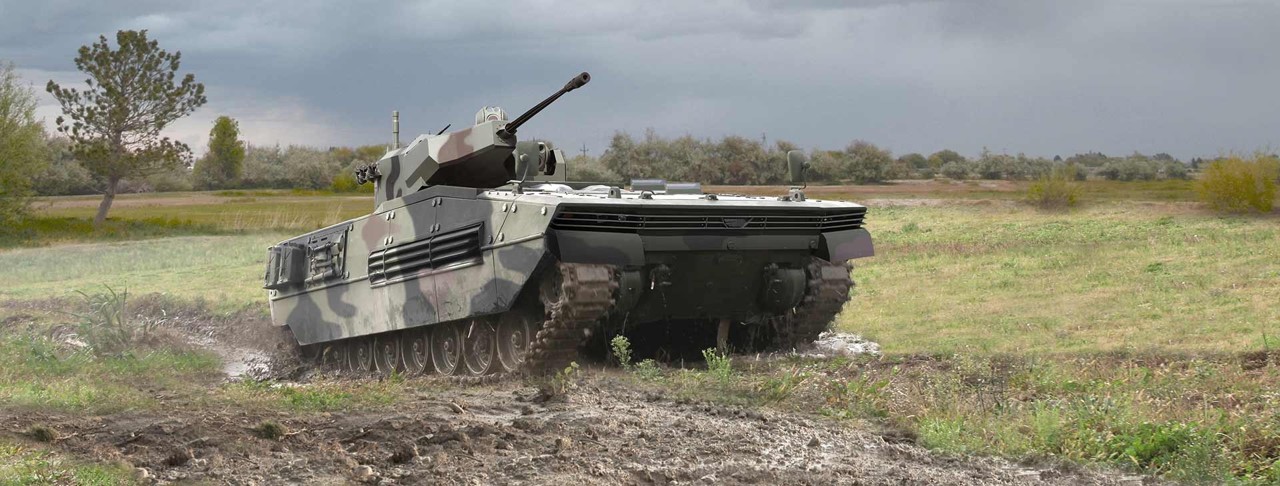
The Tulpar Turkish Infantry Fighting Vehicle (IFV) is a modern, modular heavy IFV developed by OTOKAR (Otokar Otomotiv ve Savunma Sanayi) and was first unveiled at the International Defence Industry Fair (IDEF) in May 2013. Developed in parallel with Turkey's indigenous Altay main battle tank, the Tulpar marks a significant advancement in Turkish armored vehicle manufacturing and operational doctrine. The platform achieves a strategic balance among firepower, protection, and mobility, establishing itself as a credible asset for supporting combined arms operations and delivering advanced fire support across diverse terrain and threat environments. The Tulpar utilizes a conventional tracked IFV layout designed to optimize crew survivability and modularity. The driver is located at the front-left of the hull, the gunner and commander are situated in the centrally mounted turret, and the troop compartment accommodates nine dismounts in the rear. This arrangement maintains a low silhouette while preserving sufficient internal volume for sustained ground operations and rapid troop deployment. The vehicle features a front engine compartment on the driver's right, enabling effective compartmentalization of power and control systems and enhancing maintenance accessibility. The modular design philosophy, central to the Tulpar concept, permits rapid reconfiguration of armor panels, turret systems, and mission equipment without requiring structural modifications to the main hull. The OTOKAR Tulpar exemplifies a mature and technically advanced stage in Turkish armored vehicle development. Its modular architecture, advanced fire control systems, and scalable protection provide operational flexibility across a range of threat environments and mission profiles. The recent integration of Leonardo's 120mm turret and Kazakhstan's commitment to licensed production further highlight the platform's strategic importance and export potential. While the Tulpar remains in nascent operational service within Turkish forces, the combination of proven mobility, competitive firepower, and modular design positions it favorably for export markets, particularly among emerging defense forces and regional partners seeking alternatives to established Western or Russian systems. Success in international markets—facilitated by technology transfer arrangements and localized production—could establish the Tulpar family as a significant force multiplier across multiple defense ecosystems and contribute substantively to Turkish defense industrial autonomy and export revenue over the coming decade.