ARMSNET
Military Equipment Database
Initializing 0%

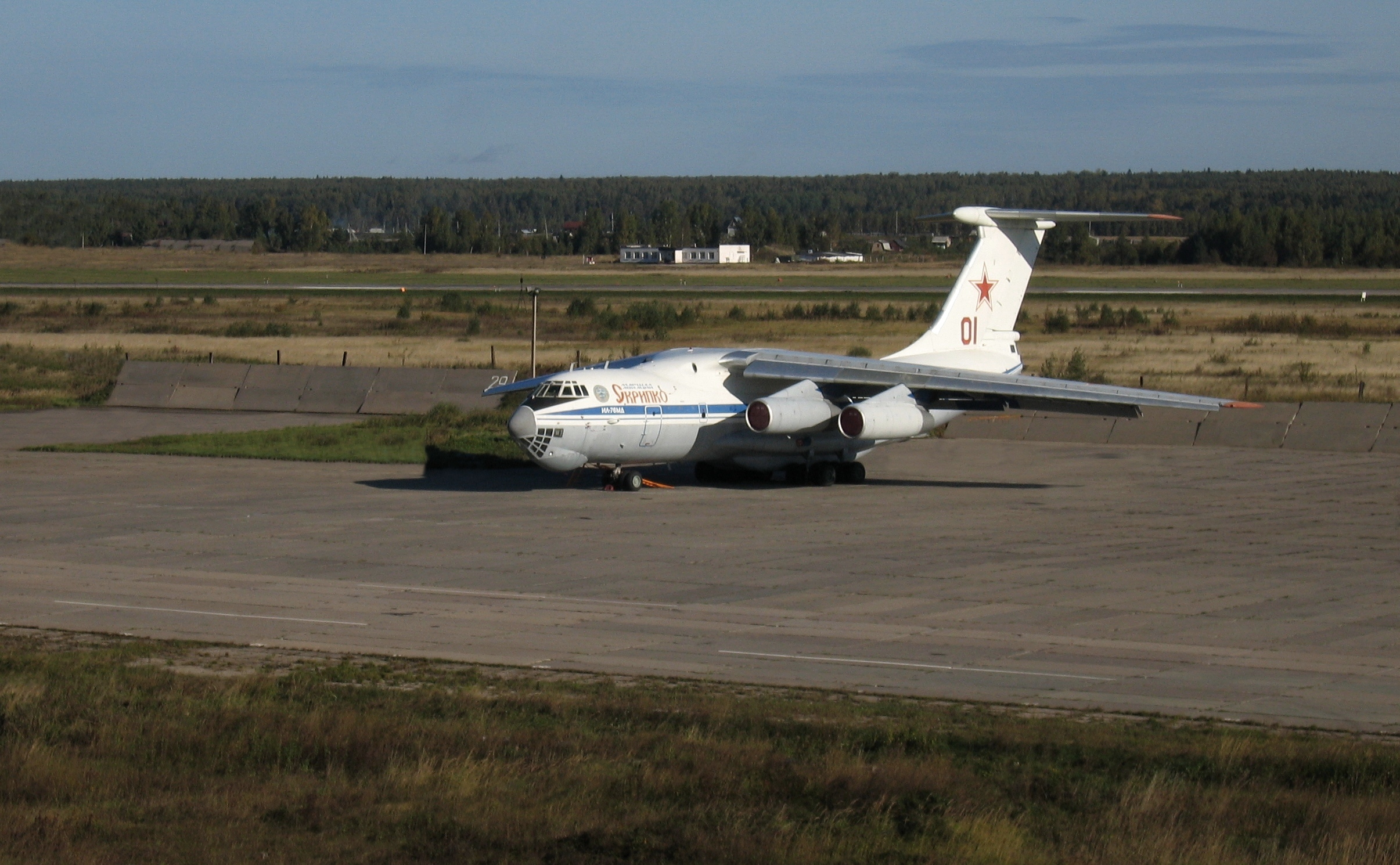
II-76MD (Candid-B) Russian Multi-Purpose Strategic Airlifter

II-76MD
Spotted an error? Sign in to suggest an edit.
Basic Information
Name
II-76MD (Candid-B) Russian Multi-Purpose Strategic Airlifter
Designation
II-76MD
Alternate Designation
Equipment Type
Manufacturer
Tashkent Aviation Production Association Aviastar-SP
Date of Introduction
1994
Description

Il-76MD Candid-B This is the military version of the Il-76TD. The additional D designation stands for dal'niy, or long-range. It is covered in the main entry, above. Its max takeoff weight is increased from 170 tons to 190 tons when operating from concrete runways. The Ilyushin Il-76 (Russian: Илью́шин Ил-76; NATO reporting name: Candid) is a multi-purpose four-engine turbofan strategic airlifter designed by the Soviet Union's Ilyushin design bureau. It was first planned as a commercial freighter in 1967, as a replacement for the Antonov An-12. It was designed to deliver heavy machinery to remote, poorly served areas. Military versions of the Il-76 have been widely used in Europe, Asia and Africa, including use as an aerial refueling tanker or command center. The Il-76 has seen extensive service as a commercial freighter for ramp-delivered cargo, especially for outsized or heavy items unable to be otherwise carried. It has also been used as an emergency response transport for civilian evacuations as well as for humanitarian aid and disaster relief around the world. Because of its ability to operate from unpaved runways, it has been useful in undeveloped areas. Specialized models have also been produced for aerial firefighting and zero-G training. The aircraft was first conceived by Ilyushin in 1967 to meet a requirement for a freighter able to carry a payload of 40 tons (88,000 lb) over a range of 5,000 km (2,700 nmi; 3,100 mi) in less than six hours, able to operate from short and unprepared airstrips, and capable of coping with the worst weather conditions likely to be experienced in Siberia and the Soviet Union's Arctic regions. It was intended to replace the Antonov An-12. Another intended version was a double-decked 250-passenger airliner but that project was cancelled. The Il-76 first flew in March 1971. Production of Il-76s was allocated to the Tashkent Aviation Production Association in Tashkent, Uzbekistan, then a republic of the Soviet Union. Some 860 of the basic transport variants were manufactured. In the 1990s, modernized variants also equipped with Soloviev D-30 turbofan engines were developed (MF, TF), with a cargo compartment 20 m (66 ft) long by 3.4 m (11 ft) wide by 3.4 m (11 ft) tall; these larger variants were not produced in significant quantity due to the financial difficulties being experienced by the Russian Air Force, which was the primary operator of the type. The prototype of the Il-76MF, conducted its first flight on 1 August 1995. From 2004 onwards, a number of aircraft in commercial service were modernized to the Il-76TD-90VD version; this involved the adoption of the newly developed PS-90 engine to comply with European noise limitations. In 2005, the People's Republic of China placed an order for 34 new Il-76MDs and four Il-78 tankers. In June 2013, Russian military export agency Rosoboronexport announced an order by China for 12 Il-76MD aircraft. The Il-76 has also been modified into an airborne refuelling tanker, designated the Il-78, around 50 aircraft having been produced. A variant of the Il-76 also serves as a firefighting water bomber. Its airframe was used as a base for the Beriev A-50 'Mainstay' AEW&C (airborne early warning and control) aircraft; around 25 aircraft were made. Another application for the type was found in Antarctic support flights and for conducting simulated weightlessness training for cosmonauts (akin to the "Vomit Comet" used by NASA). Beriev and NPO Almaz also developed an airborne laser flying laboratory designated A-60, of which two were built, much of this project's details remaining classified.

Air & Air Defense Specifications
Crew 7
Engine Turbofan (26455 hp)
Max Speed 496.0 km/h
Cruise Speed 421.0 km/h
Variants
Prototypes and developmental variants Il-76TD-90 / Il-76MD-90 Engine upgrades to Perm PS-90s. Il-76 fire bomber Firefighting aircraft to drop exploding capsules filled with fire retardant. Il-76PSD SAR version of Il-76MF Il-96 Early development of convertible passenger/cargo aircraft, (project only, designation re-used later) Il-150 proposed Beriev A-50 with Perm PS-90 engines. Beriev A-60 Airborne laser weapon testbed. (Il-76 version 1A)
Special purpose / research variants Il-76LL with reinforced wing (at least 3 aircraft) to be used as test-bed aeroplane for engine prototypes flight testing in Gromov Flight Research Institute. Izdeliye-176 prototype Il-76PP. Izdeliye-576 Izdeliye-676 Telemetry and communications relay aircraft, for use during trial programmes (prototype). Izdeliye-776 Telemetry and communications relay aircraft, for use during trial programmes (prototype). Izdeliye-976 ("SKIP", Il-976, or Il-76SK) – (СКИП – Самолетный Контрольно-Измерительный Пункт, Airborne Check-Measure-and-Control Center) Il-76/A-50 based Range Control and Missile tracking platform. Initially built to support Raduga Kh-55 cruise missile tests. Izdeliye-1076 Special mission aircraft for unknown duties. Izdeliye-1176 ELINT electronic intelligence aircraft, or Il-76-11
Military variants Il-76-Tu160 tailplane transporter One-off temporary conversion to support Tu-160 emergency modification programme. Il-76D ('D' for "Desantnyi", Десантный – "Paratrooper transport") has a gun turret in the tail for defensive purposes. Il-76K/Il-76MDK/Il-76MDK-II Zero-g cosmonaut trainer (dlya podgotovki kosmonavtov), for Yuri Gagarin Cosmonauts Training Center. Il-76LL Engine testbed, (ooniversahl'naya letayuschchaya laboratoriya). Il-76M Military transport version, (modifitseerovannyy – modified). Il-76MD Improved military transport version, (modifitseerovannyy Dahl'ny – modified, long-range). Il-76MD Skal'pel-MT Mobile Hospital Il-76M / Il-76MD Built without military equipment but designated as Ms and MDs (Gordon – 'Falsies') Il-76MD-90 An Il-76MD with quieter and more economical Aviadvigatel PS-90 high-bypass turbofan engines. Il-76MF Stretched military version with a 6.6 m longer fuselage, PS-90A-76 engines, maximum takeoff weight of 210 tonnes and a lift capability of 60 tonnes. First flew in 1995, not built in series so far just built for Jordan. Il-76PP ECM aircraft, major problems with ECM equipment on the Izdeliye-176 only. Il-76MD-M Modernized Il-76MD for the Russian Air Force. Il-76MD-90A An upgraded version with a new glass cockpit, upgraded avionics, new internal wing structure and Aviadvigatel PS-90A-76 engines. It was also known as Il-476 while in development. Il-76T/Il-76TD Built as military aircraft but given civilian designations. (Gordon – 'Falsie') Ilyushin Il-78/Il-78M/Il-78MD-90A Aerial refuelling tanker. Il-78 MKI A customized version of the Il-78 developed for the Indian Air Force. Il-82 Airborne Command Post/communications relay aircraft, (alternative designation – Il-76VKP-'version65S'). Il-84 Maritime Search and Rescue aircraft, (alternative designation – Il-76PS-poiskovo-spasahtel'nyy), not produced. Beriev A-50/Beriev A-50M/Beriev A-50I/Beriev A-50E Airborne Early Warning & Control aircraft. Beriev given control over the program. Beriev A-100 An AEW&C version of the Il-76MD-90A.
Civil variants Il-76MGA Initial Commercial freighter. (two prototypes and 12 production) equipped with Soloviev D-30 Turbofan engines. Il-76MD to Il-76TD conversions Complete removal of military equipment, identified by crude cover over OBIGGS inlet in Starboard Sponson. Il-76P / Il-76TP / Il-76TDP / Il-76MDP Firefighting aircraft. The Il-76 waterbomber is a VAP-2 1.5-hour install/removal tanking kit conversion. The Il-76 can carry up to 13,000 U.S. gallons (49,000 liters) of water; 3.5 times the capacity of the C-130 Hercules. Since this kit can be installed on any Il-76, the designation Il-76TP, Il-76TDP are also used when those versions of the Il-76 are converted into water bombers. The Il-76P was first unveiled in 1990. Il-76T ('T' for Transport, Транспортный) unarmed civil cargo transport version. NATO code-name "Candid-A". It first flew on November 4, 1978. Il-76TD The civil equivalent of the Il-76MD, first flew in 1982, equipped with Soloviev D-30 Turbofan engines. Il-76TD-90 An Il-76TD with Aviadvigatel PS-90 engines and a partial glass cockpit. Il-76TD-90VD An Il-76TD with Aviadvigatel PS-90 engines and a partial glass cockpit. It was developed specially for Volga-Dnepr cargo company, which operates four aircraft as of 2012. Il-76TD-S Civilian mobile Hospital, similar to Il-76MD Skal'pel-MT. Il-76TF Civil transport stretched version with Aviadvigatel PS-90 engines. It is the civil version of the Il-76MF (none produced).
Foreign variants Beriev A-50E/I For the Indian Air Force. Hosts Israeli Phalcon radar for AEW&C and Aviadvigatel PS-90 engines. Il-76MD tanker Iraqi Air Force tanker conversions. KJ-2000 Domestic Chinese airborne early warning and control conversion of Il-76, developed after A-50I was cancelled and currently in service with the armed forces of China. CFTE engine testbed The China Flight Test Establishment (CFTE) currently operates a flying testbed converted from a Russian-made Il-76MD jet transport aircraft to serve as a flying testbed for future engine development programmes. The first engine to be tested on the aircraft is the WS-10A "Taihang" turbofan, currently being developed as the powerplant for China's indigenous J-10 and J-11 fighter aircraft. Il-76MD #76456, acquired by the AVIC 1 from Russia in the 1990s, is currently based at CFTE's flight test facility at Yanliang, Shaanxi Province. Baghdad-1 Iraqi development with a radar mounted in the cargo hold enabling it to serve as AEW&C, used in the Iran–Iraq War. Baghdad-2 Iraqi development (with French assistance) with fibreglass-reinforced plastic radome over the antenna of the Thomson-CSF Tiger G surveillance radar with a maximum detection range of 350 km (189 nmi, 217.5 mi). One was destroyed on the ground during the 1991 Persian Gulf War; two others were flown to Iran where they remained. At least one went into service with the IRIAF. One aircraft crashed following a midair collision with a HESA Saeqeh fighter, during the annual Iranian military parade in Teheran. It can be distinguished from the Beriev A-50 by having the Il-76 navigator windows in the nose, which the A-50 does not.
System
Alternate Designation(s) II-76MD; NATO: Candid-B
Primary Function / Type Multi-Purpose Strategic Airlifter
Manufacturer Tashkent Aviation Production Association Aviastar-SP
Crew 7 (pilot, co-pilot, navigator, flight engineer, communications officer, 2 cargo handlers)
Passengers 140 regular troops; or 125 paratroops
Number of Engines 4
Number of Hard Points Some military models have 2 hardpoints under each outer wing capable of supporting 500 kg bombs.
Dimensions
Length 53.19 m
Width (Wing Span) 50.5 m
Height 14.76 m
Wing Area 300 m2
Tailplane Span 17.40 m
Tailplane Area 63.0 m sq
Fin Height 7.25 m
Fin Area 50.0 m sq
Wheelbase 14.17 m
Wheel Track 8.16 m
Hatch Height 3.40 m
Hatch Width 3.45 m
Cargo Hold, Length to Ramp 20.00 m
Cargo Hold, Length with Ramp 24.50 m
Cargo Hold, Height 3.46 m
Cargo Hold, Width 3.40 m
Empty Operating Weight 89,000 kg
Maximum Payload Capacity 48,000 kg
Maximum Takeoff Weight 190,000 kg
Unprepared Runway Weight 157,500 kg
Maximum Landing Weight 155,000 kg
Automotive
Engine Name 4 x Rybinsk D-30KP II
Number of Engines 4
Engine Type Turbofans
Engine Power 26,455 lb (117.68 kN) each at takeoff
Fuel Capactiy 28,922 gal (109,480 liters) max in 12 tanks
Maximum Speed 496 knots (571 mph, 919 km/h)
Cruise Speed 421 knots (485 mph, 780 km/h)
Ceiling 12,100 m
Range with Maximum Fuel 4,212 nm (4,847 mi, 7,800 km)
Range with a Small Load 3,942 nm (4,536 mi, 7,300 km) with 44,092 lb (20,000 kg) payload
Range with a Medium Load 2,270 nm (2,610mi, 4,200 km) with 88,184 lb (40,000 kg) payload
Range with Maximum Load 2,052 nm (2,361 mi, 3,800 km)
Takeoff Run 5,580 ft (1,700 m)
Landing Run 3,050 ft ( 930 m)
Main Gun System
System
Name GSh-23L
Type Autocannon
Caliber 23mm
Quantity 2 x GSh-23L twin-barreled in manned tail turret on several military and some civilian planes
Length 1,537 mm
Barrel Length 1,000 mm
Weight 50 kg
Barrels 2
Action Gast principle
Rate of Fire 3,400–3,600 rounds/min
Muzzle Velocity 715 m/s
Ammunition
Type Rifle
Caliber 23mm
Cartridge 23x115 mm
Basic Load INA
Bomb Weapon Systems
Note Some military models have 2 hardpoints under each outer wing capable of supporting 500 kg bombs.
Fire Control / Avionics
FCS Name INA
Fire Control Radar Yes
Navigation Radar Kupol-3-76
FLight Avionics SAU-76 automatic control system
Protection
Stealth Properties No
Heat Signature Reduction No
Add on Armor INA
NBC Protection INA
EW Counter Measures SPS-5 Fasol Electronic Jammers
Chaffs/Flares 4 x 500 kg for illuminating landing area
Radar Warning Receivers in large fairings on side of nose
Details
Country of Origin Russia
Category Fixed Wing Aircraft
Air > Fixed Wing Aircraft
Filter Label
I
Classification
Domain
Air & Air Defense
Equipment Status
Active
Dimensions
Length
53.19 m
Width
50.5 m
Height
14.76 m
Weight
190000 kg
Operators (4)
Russia
China
India
Algeria
Something went wrong. Please reload the page. Reload