Tiannv Sanhua Chinese Autonomous Surface Vehicle (ASV)
Tiannv Sanhua
Autonomous Surface Vehicle (ASV)
Spotted an error? Sign in to suggest an edit.
Other
Basic Information
Name
Tiannv Sanhua Chinese Autonomous Surface Vehicle (ASV)
Designation
Tiannv Sanhua
Alternate Designation
Tiannv Sanhua
Equipment Type
Autonomous Surface Vehicle (ASV)
Manufacturer
—
Date of Introduction
2005
Description
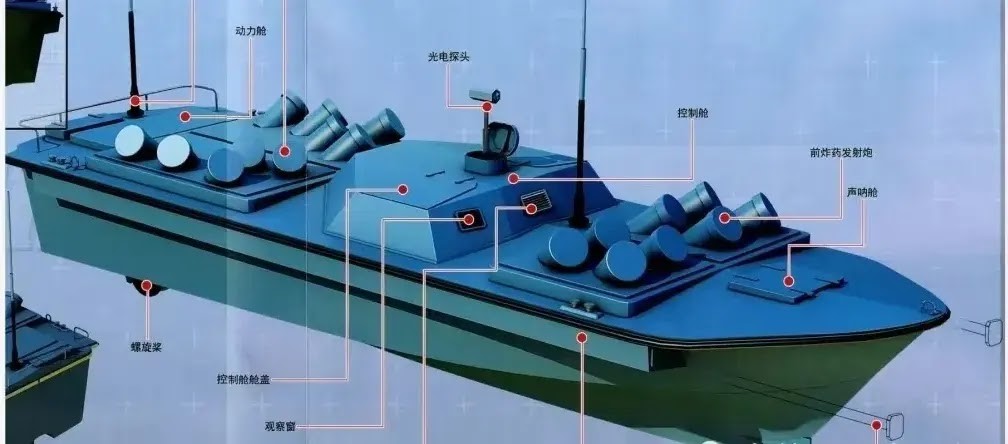
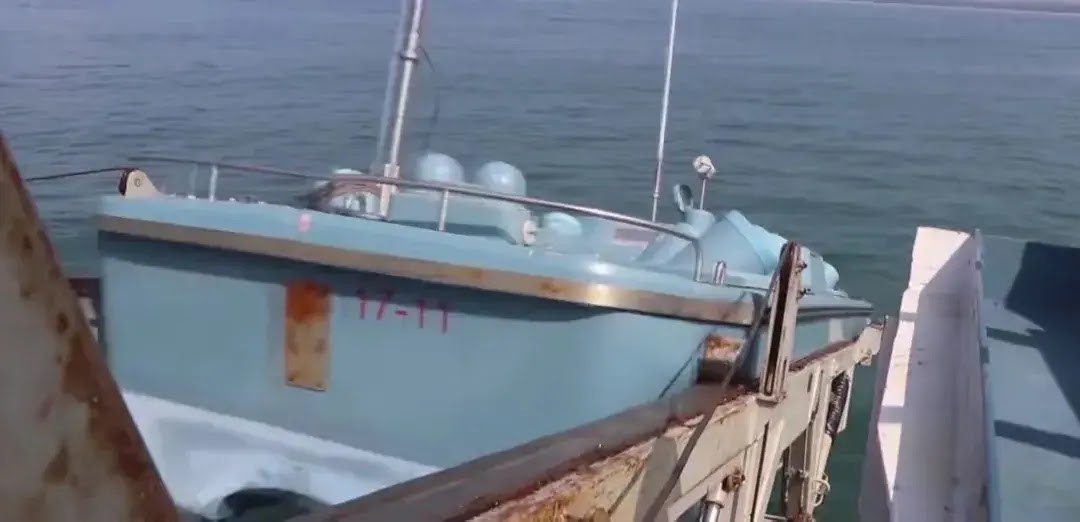
The Tiannv Sanhua Chinese Autonomous Surface Vehicle (ASV) is an Unmanned breaching boat mounted on landing crafts, likely one on each side for balance. The new generation of unmanned breaching boats offers significant advantages. These reusable boats use simple, engineless munitions, similar to the mines used in past conflicts. Their low profile evades radar detection, and as crewless vessels, they can close in on obstacles before firing. This eliminates the need for complex fire control systems, achieving high accuracy at a lower cost.
Naval & Littoral Specifications
Beam
3.00 m
System
Alternative Designation
Tiannv Sanhua
Type
Autonomous Surface Vehicle (ASV)
Builder
INA
Crew
Unmanned
Operator
Operators onboard landing craft or other vessels control the boats via a 12-button remote, which includes steering, speed, and firing sequence options.
The controller also features a screen to monitor an onboard camera, likely equipped with night vision.
Antennas
These boats have front and back antennas to extend the remote control range.
Anti-Grounding System
The system consists of two parts: a sonar, placed at the hull's front to avoid interference, measures the distance to the sea floor to prevent grounding. Two extendable probing rods on the boat's sides can be remotely deployed near the coast, alerting the operator to any obstructions via signals or video. The ship also has a manual operation mode for adjustments or handling anomalies.
Battlefield Effectiveness
The boat's effectiveness in clearing obstacles varies based on specific environmental conditions. In one simulation with mild conditions (southeast winds at Force 3, visibility level 5, sea state level 4), the boat cleared a path of 0.5L width, allowing for a theoretical passageway over 20 meters wide—sufficient for large landing ships like the 072A, which is 16.4 meters wide. In a second test under harsh conditions (westerly winds at Force 7, visibility level 4, sea state level 6), the
boat failed to create a uniform cleared path, falling short of landing requirements. In a third scenario, under highly adverse conditions (east winds at Force 8, visibility level 4, sea state level 7), a formation of four boats cleared a path of 0.6L width, demonstrating that the ship can be effective in more challenging environments when used in a formation. These tests show that the unmanned breaching boat can clear paths effectively under various tactical conditions, confirming its utility in ensuring successful landings. Six main factors influence the effectiveness of unmanned breaching boats: Weather, Sea conditions, Obstacle characteristics, Deployment timing, Battlefield situation, and Decision-making ability.
Dimensions
Length
7.0 m
Height
INA
Beam
3.0 m
Draft
INA
Displacement
INA
Propulsion System
Engine Name
INA
Engine Type
Likely Electric
Engine Power
INA
Maximum Range
INA
Maximum Speed
INA
Main Weapon System
Note
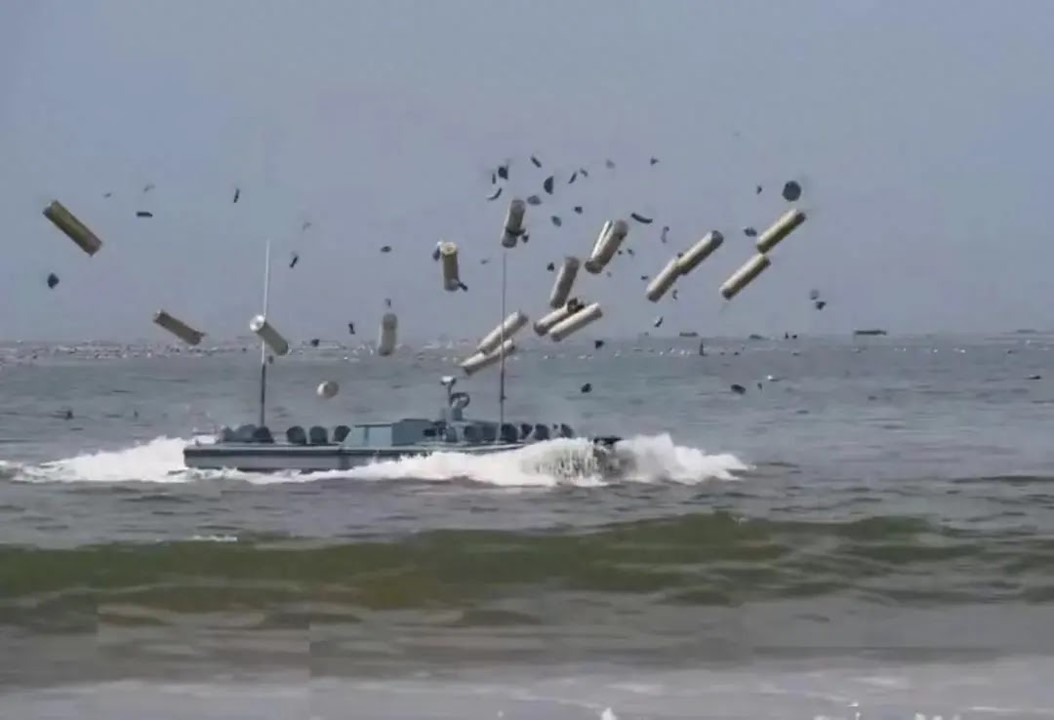
Once in position, the boats release 18 munitions—eight from the front and ten from the back—using an internal mechanism. These munitions are likely 252 mm in caliber and weigh between 30-50 kg -- lighter than previous rocket breaching munitions. Videos show munitions entering the water 2-4 seconds post-launch, landing 7-20 meters in front and 1-7 meters to the side of the boat. A safety concern arises if the breaching munitions detonate quickly upon water entry. The interface suggests that the unmanned ship will reverse to a safe distance after deploying the munitions. The operator can then remotely trigger the explosion or rely on a pre-set delay. The munitions' fuses lack impact-detonation features. Simultaneous detonation of all munitions is crucial to ensure effective breaching. A delay could displace unexploded ordnance, compromising effectiveness. The munitions use high-explosive warheads to damage fortifications through shock waves. Lightweight, cost-effective materials like aluminum alloys are likely used for the casing. A drawback of aluminum alloys is that they are prone to oxidation in marine environments. Pre-scored fragmentation can minimize risk to infantry wading to shore. Light and affordable casing materials also help control costs.
Protection
Hull
INA
Image Sources
Details
Country of Origin
China
Category
Naval
Naval
Filter Label
T
Classification
Domain
Naval & Littoral
Equipment Status
Active
Dimensions
Length
7 m
Width
3 m
Height
—
Weight
—
Operators (1)
China
Something went wrong. Please reload the page.
Reload