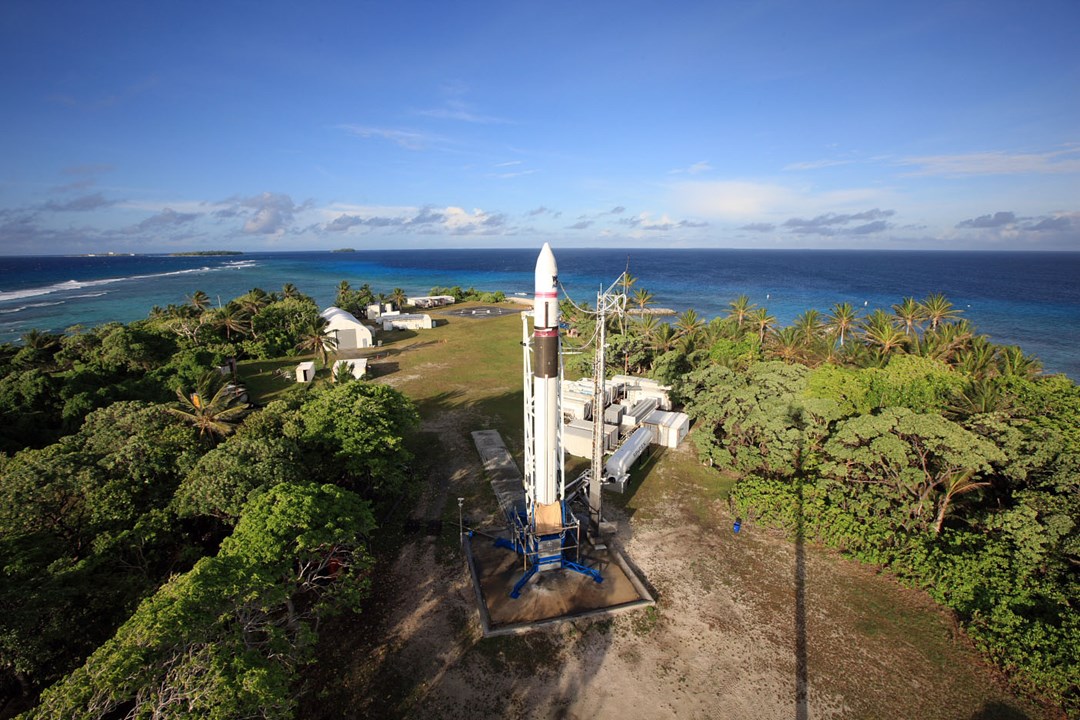
Falcon 9
Falcon 9
The Falcon 9 rocket was first launched on June 4, 2010, and consists of a two-stage layout, a liquid oxygen powered by SpaceX Merlin 1C engine and a rocket grade kerosene powered by SpaceX Kestrel engine. It uses the same design of Falcon 1 but with a wider diameter. It is intended to carry a wide variety to payloads to Low Earth Orbits (LEO) and Geosynchronous Transfer Orbits (GTO). The Falcon 9 rocket is able to place a 10,450 kg payload into a circular LE orbit or a 4,680 kg payload into a GTO orbit for $51.5 million. Powered by Merlin 1D engines the Falcon 9 can carry heavier payloads into orbit. The Falcon 9 was replaced by the new variants powered with Merlin 1D engines delivering its maximum thrust in late 2015. In December 2008, NASA announced the selection of SpaceX's Falcon 9 launch vehicle and Dragon Spacecraft to resupply the International Space Station (ISS) when the Space Shuttle retires in 2010. The $1.6 billion contract represents a minimum of 12 flights, with an option to order additional missions for a cumulative total contract value of up to $3.1 billion.
deagel.com: https://www.deagel.com/x/x/a000103