ARMSNET
Military Equipment Database
Initializing 0%

Cockerill i-X Belgian 4x4 Armored Fighting Vehicle

Cockerill i-X
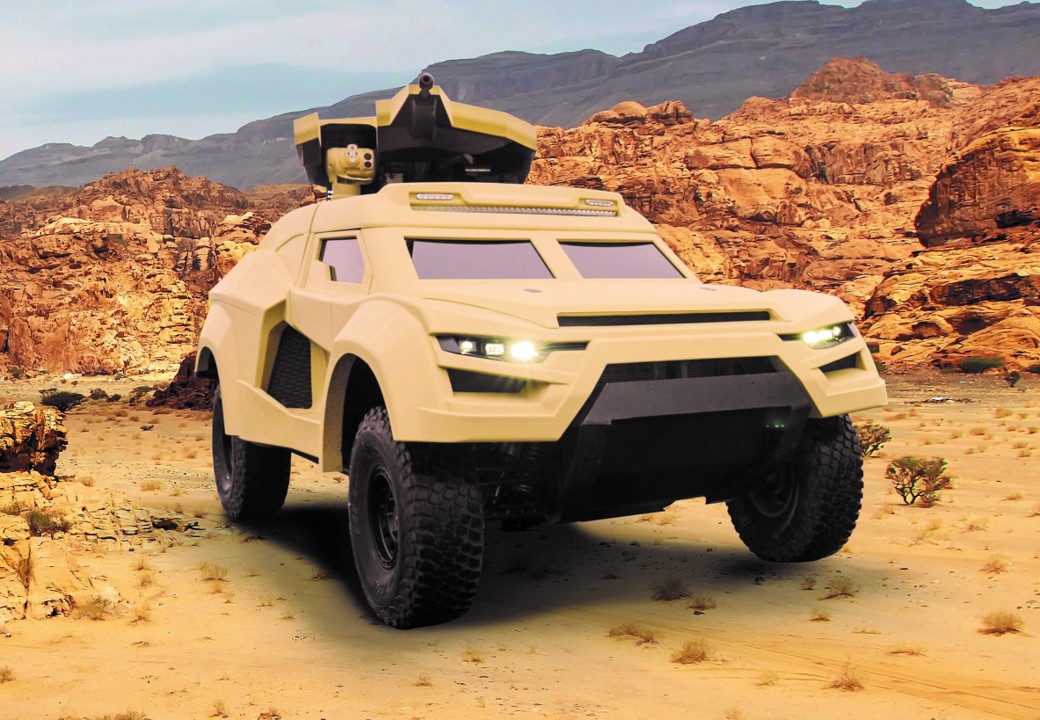
Armored Combat Vehicle
Spotted an error? Sign in to suggest an edit.
Basic Information
Name
Cockerill i-X Belgian 4x4 Armored Fighting Vehicle
Designation
Cockerill i-X
Alternate Designation
Cockerill i-X
Equipment Type
Armored Combat Vehicle
Manufacturer
John Cockerill Defense
Date of Introduction
2022
Description

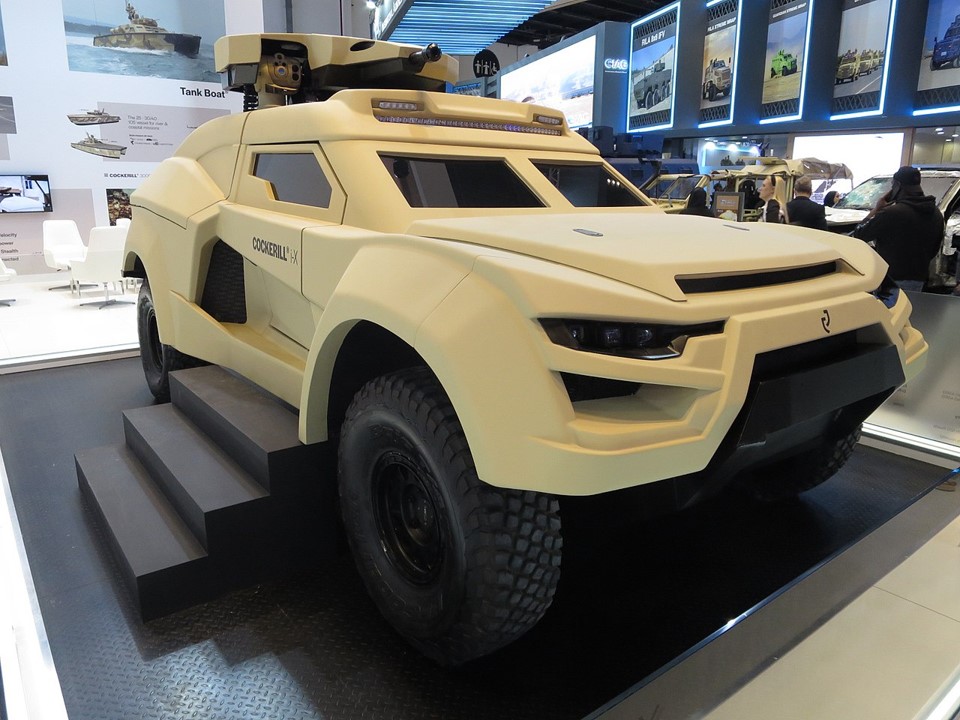
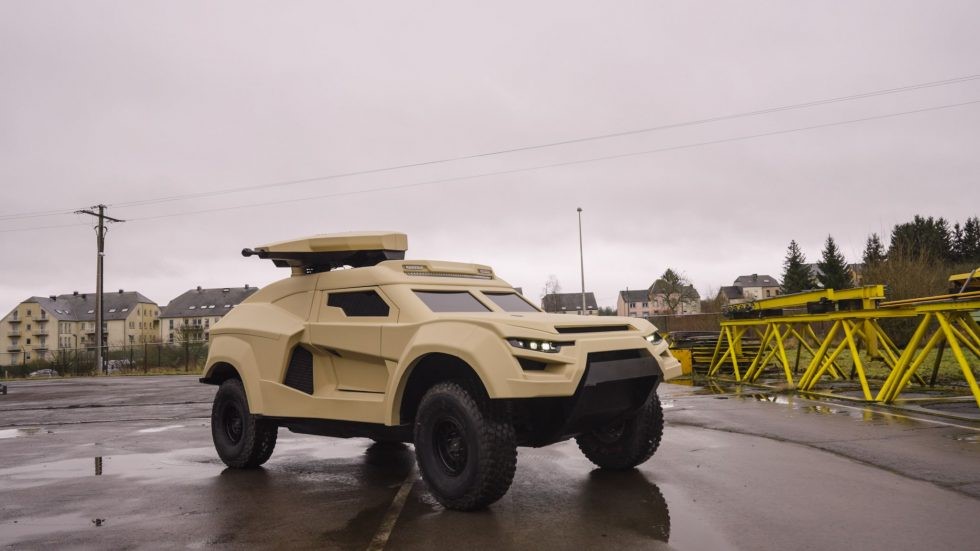
The Cockerill i-X Belgian 4x4 Armored Fighting Vehicle represents a fundamental departure from conventional armored fighting vehicle design, establishing a new category of combat systems designated as the "ground interceptor." Developed by John Cockerill Defense of Belgium, this four-ton, 4x4-wheeled platform merges high-velocity rally-raid mobility with advanced weapon systems and artificial intelligence-driven targeting to create a system optimized for rapid territorial defense interception. The operational philosophy underpinning the i-X diverges sharply from existing mechanized warfare paradigms. Rather than emphasizing heavy armor protection or sustained engagement firepower like traditional infantry fighting vehicles (IFVs) or MRAPs, the i-X prioritizes speed, stealth, and tactical mobility to neutralize threats before they reach critical assets—functioning operationally as a land-based interceptor analogous to air defense concepts. This strategic positioning addresses an increasingly visible gap in modern European territorial defense, particularly against hybrid threats, drone incursions, irregular mechanized threats, and border protection scenarios where static defenses prove insufficient, and a rapid, unpredictable threat response is essential. The platform remains air-transportable by fixed-wing aircraft and helicopter platforms, with parachute drop capability enabling rapid strategic deployment. Integrated self-recovery systems, including built-in hydraulic jacks, address soft-terrain immobilization risks inherent to high-mobility operations in austere environments. The Cockerill i-X ground interceptor represents a deliberate and consequential paradigm shift in land warfare vehicle architecture, prioritizing speed-driven interception over traditional protection, firepower, and mobility trade-offs. The platform successfully demonstrates that advanced mobility, artificial intelligence-enabled targeting, stealth architecture, and modular armament can collectively address contemporary territorial defense requirements within a lightweight, rapidly deployable package. Ongoing field trials, international partnerships, and strategic industrial consolidation position the i-X as a potential category-defining system for European rapid response capabilities and future expeditionary land defense operations.

Ground Specifications
Crew 2
Mobility Type Wheeled (4x4)
Main Weapon 25mm or 30x113mm automatic cannons
NBC Protection Yes
Max Speed 200.0 km/h
Range 600.0 km
System
Alternative Designation Cockerill i-X
Type Armored Fighting Vehicle
Manufacturer John Cockerill Defense
Configuration 4x4
Crew 2 ea
Sensory Integration & AI Decision The i-X implements integrated multi-sensor data fusion underpinned by artificial intelligence algorithms optimized for threat detection, identification, localization, and assessment in high-tempo engagement scenarios. Onboard sensor arrays include high-performance cameras, passive acoustic gunshot detection and localization systems, laser warning systems (LWS), and dedicated radar integration points. The artificial intelligence processing engine executes autonomous threat classification while providing operator decision-support prompts, thereby compressing the observation-orientation-decision-action (OODA) loop, which is essential to interceptor performance. ​ The operator-system interface features a revolutionary Smart Helmet system that integrates multimodal human-machine interaction via visual, auditory, vocal, and haptic feedback channels. This interface architecture—actively displayed and refined during 2024 EuroSatory—enables target selection via eye-tracking and vocal commands, accelerating engagement responses during high-speed mobile operations where traditional joystick or trackball controls prove operationally inefficient. The helmet system functions as an intelligent information manager, prioritizing threat data and enabling split-second tactical decision-making under the extreme cognitive load of high-velocity intercept engagements. A squad-level data-sharing architecture enables adaptive cooperation between equivalent i-X systems, facilitating distributed tactical networks in which multiple vehicles share threat-tracking and priority information to optimize squad-level engagement decisions. This networked intelligence architecture reflects NATO integration standards and the evolution of the European rapid response doctrine.
Dimensions
Length INA
Width INA
Height INA
Weight, Combat 4.0 tons
Automotive
Engine Name INA
Engine Type INA
Engine Power 750 hp thermal or 800 hp hybrid thermal-electric drivetrain.
Maximum Range The total operational range reaches 600 km, with the hybrid variant offering approximately 30 km of full-electric range for covert repositioning.
Maximum Speed, Road 200 km/h
Maximum Speed, Off-Road 160 km/h
Acceleration 0–100 km/h accomplished in 6 seconds—performance parameters exceeding conventional wheeled combat vehicles by substantial margins.
Amphibious No
Main Weapon System
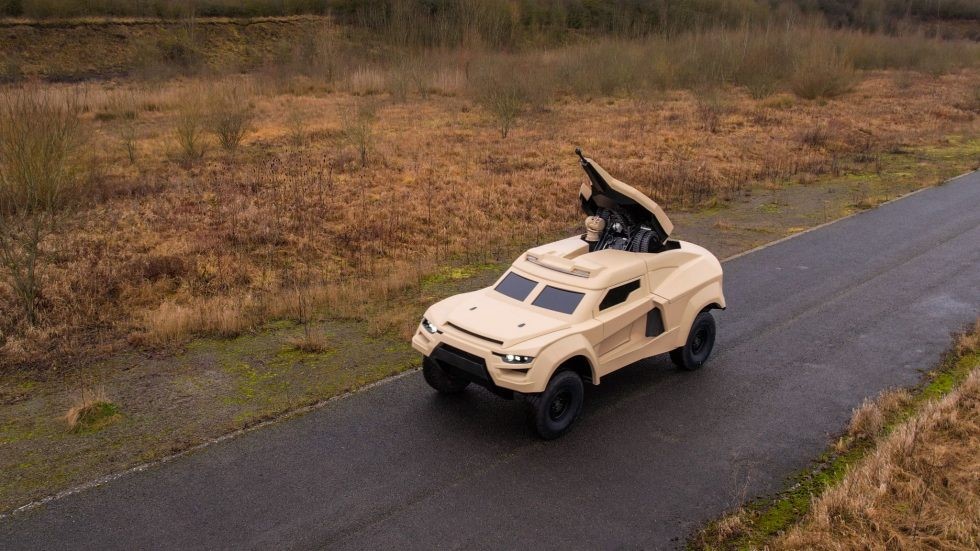
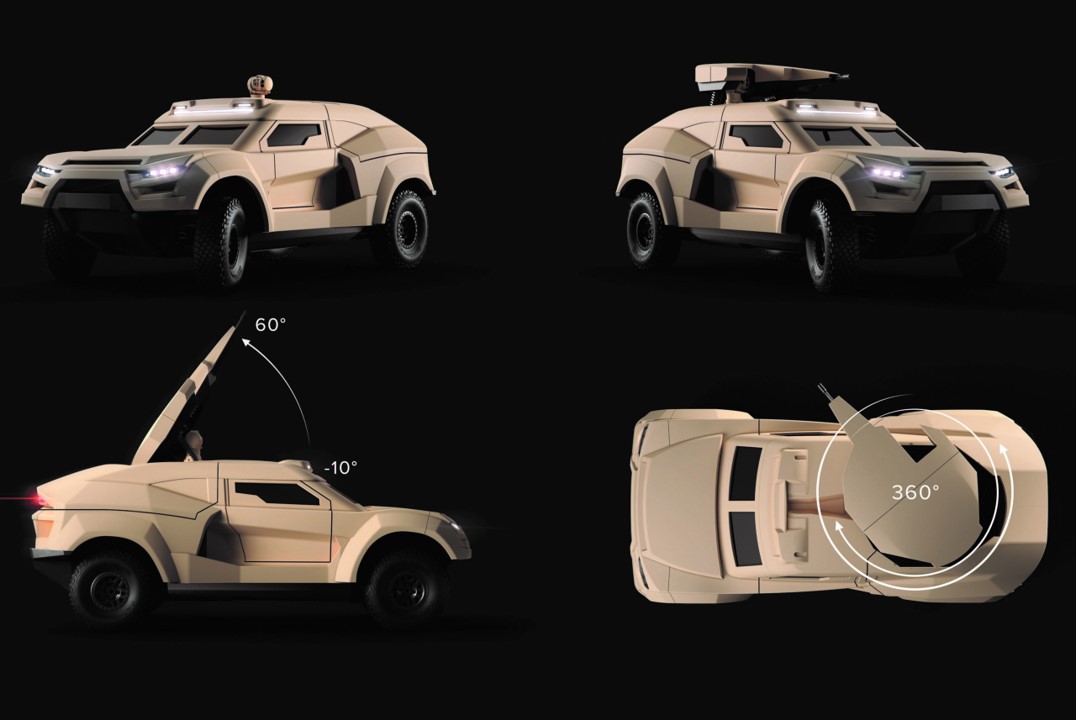
Note The i-X integrates modular, retractable weapon architecture enabling mission-specific armament reconfiguration. Primary options include 25mm or 30x113mm automatic cannons operating with dual-feeder systems and 120 ready-to-fire rounds each, supplemented by coaxial 7.62mm or 12.7mm secondary armament carrying 400–600 ready rounds. Alternative configurations support anti-tank guided missile (ATGM) mounting of 2–4 ready rounds with secondary 12.7mm machine gun integration, or rocket launcher arrays with up to seven launch tubes. Armament flexibility extends to future integration of emerging effector systems, with counter-drone engagement capabilities currently under development. The defining innovation in fire control comprises full-stabilization capability at extreme vehicle velocities. This stabilization architecture employs advanced electro-mechanical systems supporting precise targeting across dynamic ballistic solutions. The electro-optical sighting system provides 360-degree, two-axis stabilized observation through integrated television, infrared imaging, and laser rangefinding modules. Detection range extends to 16.8 km using color day cameras and 13.5 km via thermal imagers, with target recognition and identification extending to 8.3 km and 6.1 km respectively. Image fusion algorithms merge thermal and day-channel data streams for comprehensive target discrimination. The weapon system elevation range spans -10 degrees to +60 degrees, accommodating both ground-based and emerging air-defense engagement requirements.
Protection
Armor Ballistic protection certification extends to Level 2 STANAG 4569 standards, providing validated small-arms fire and fragmentation resistance across the vehicle crew compartment.
Anti-Mine Protection Anti-mine protection achieves Level 3 STANAG 4569 specification, protecting against beneath-hull explosive threats typical of asymmetric warfare environments. The protective architecture employs survival cell design principles derived from motorsport Formula 1 technology, concentrating structural integrity around the crew compartment rather than distributing armor across the entire vehicle—a deliberate trade-off optimizing crew survivability while minimizing overall weight and performance penalty.
Stealth Architecture The stealth architecture represents a primary design differentiator. The weapon system retracts entirely into the vehicle chassis when unmounted, reducing observable profile and lowering center of gravity during tactical movement phases. Adaptive camouflage systems manage visible appearance management while infrared and acoustic signature modification technologies suppress thermal and acoustic detection signatures. The hybrid thermal-electric drivetrain enables silent-watch positioning and covert repositioning over 30-kilometer ranges with minimal thermal or auditory detection exposure—a capability unavailable to purely thermal-engine platforms.
Applique Armor INA
NBC Protection Yes
Smoke Equipment INA
Details
Country of Origin Belgium
Category Wheeled Light Armored Vehicles
Land > Infantry Vehicles > Wheeled Light Armored Vehicles
Filter Label
C
Classification
Domain
Ground
Equipment Status
Active
Dimensions
Length
Width
Height
Weight
4000 kg
Operators (2)
France
Belgium
Something went wrong. Please reload the page. Reload