ARMSNET
Military Equipment Database
Initializing 0%

AMX-10P French Amphibious Infantry Fighting Vehicle (IFV)

AMX-10P
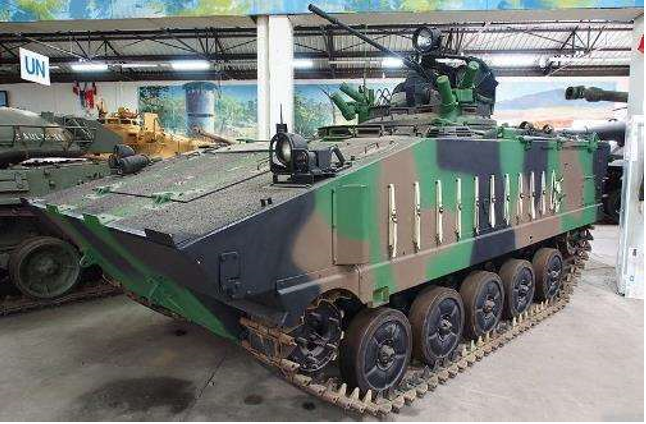
Infantry Fighting Vehicle (IFV)
Spotted an error? Sign in to suggest an edit.
Basic Information
Name
AMX-10P French Amphibious Infantry Fighting Vehicle (IFV)
Designation
AMX-10P
Alternate Designation
AMX-10P
Equipment Type
Infantry Fighting Vehicle (IFV)
Manufacturer
GIAT
Date of Introduction
1973
Description

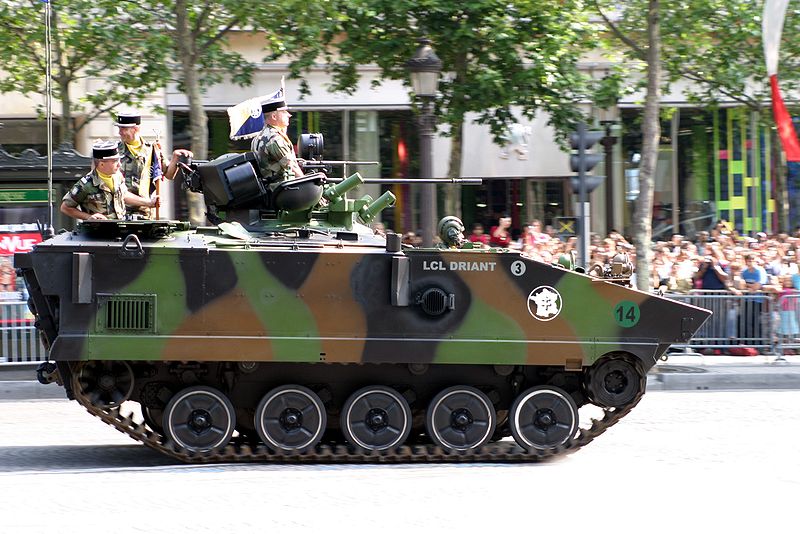
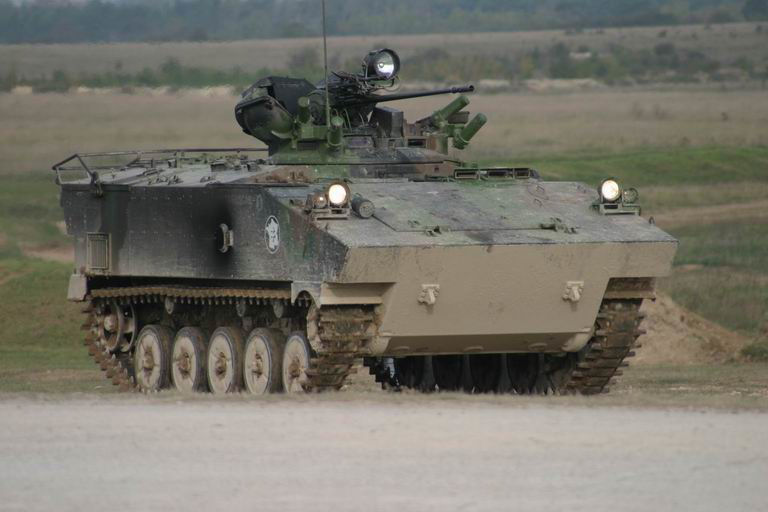
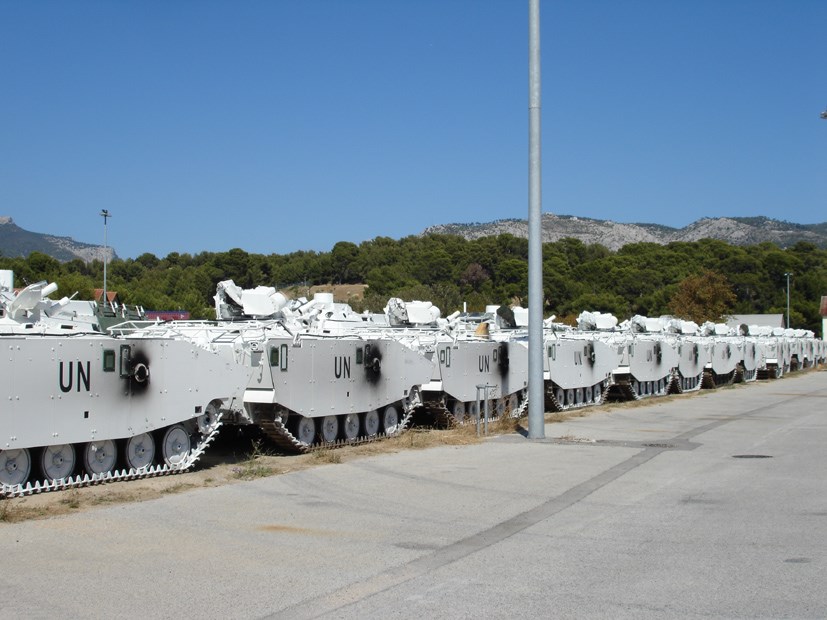
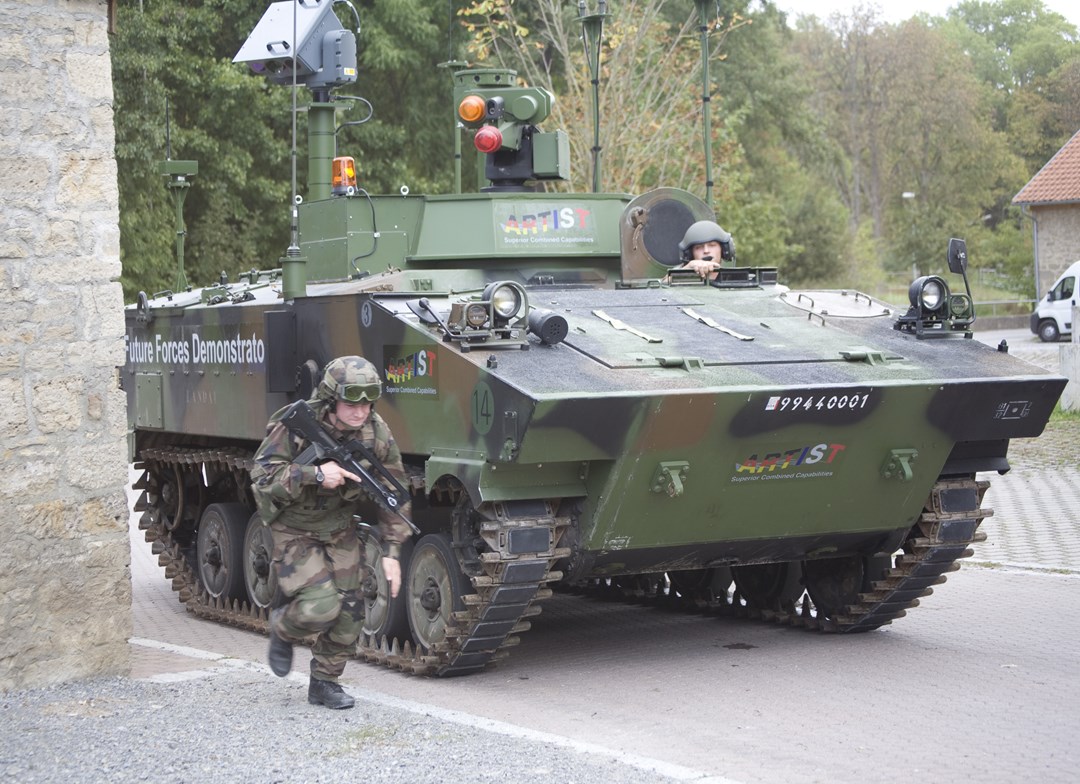
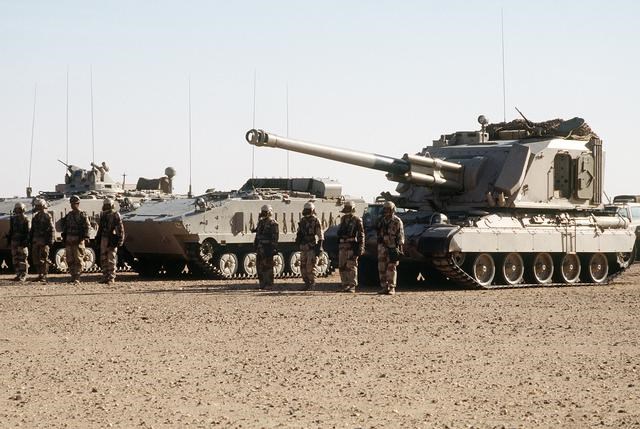
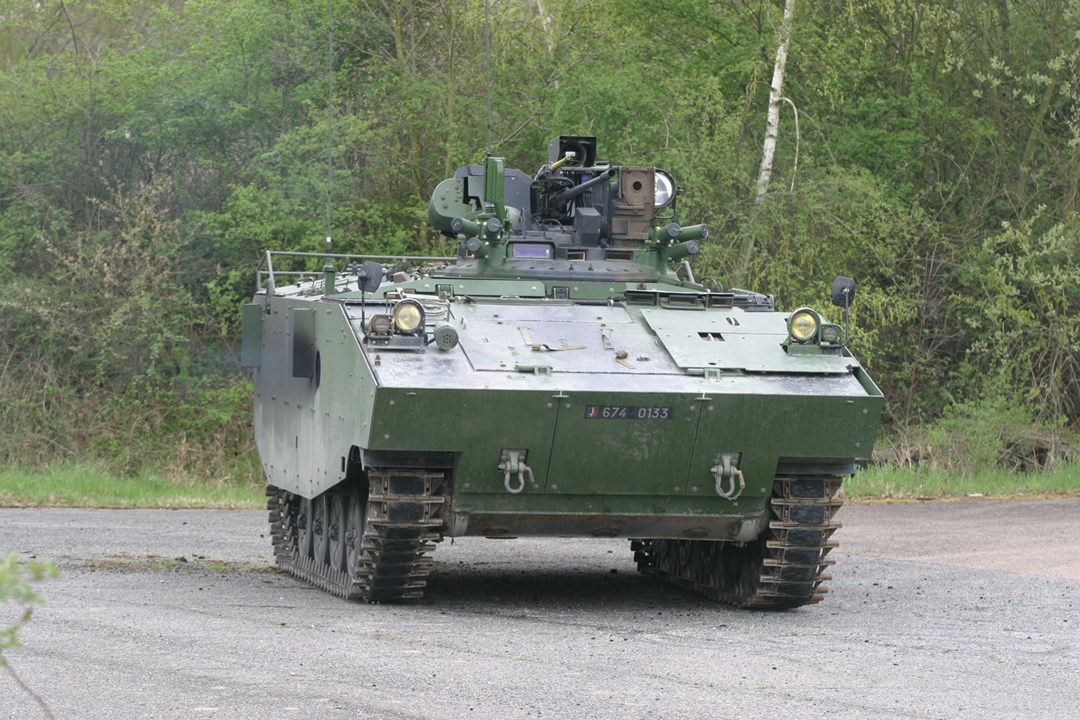
The AMX-10P is a French amphibious infantry fighting vehicle. It was developed after 1965 to replace the AMX-VCI in service with the mechanized regiments of the French Army; the first prototypes were completed in 1968. Production commenced between 1972 and 1973. The AMX-10P is fully amphibious, being propelled through water at speeds of up to 7 km/h by twin waterjets. It is also fitted as standard with a trim vane and bilge pumps to assist with the flotation process. AMX-10Ps were popular with a number of Arab armies and have been operated by Iraq, Qatar, Saudi Arabia, and the United Arab Emirates.[2] Special marine variants were also developed for Singapore and Indonesia, including a fire support model known as the AMX-10 PAC 90, which mated the AMX-10P chassis to the complete turret and 90 mm gun assembly of the Panhard ERC-90 Sagaie. AMX-10Ps share a number of common transmission and chassis components with their armored car counterpart, the AMX-10RC. AMX-10P hulls are fabricated from a welded steel or aluminum alloy[ and notable for their parallel incorporation of the driving and engine compartments. The driver is seated at the front of the vehicle and to the left. An AMX-10P's driving compartment is provided with a single hatch cover opening to the rear and three periscopes intended for observation purposes when the hatch is closed. Night vision equipment was not fitted as standard to the base production model; however, one of the three driving periscopes could be replaced with combined day/night intensification sights as needed. The troop compartment is at the rear of the hull and provided with two roof hatches. Passengers embark and debark from a ramp, which is accessed through two doors at the rear. The transmission consists of a hydraulic torque converter coupled to a gearbox with one reverse and four forward driving gears. The AMX-10P utilizes a torsion bar suspension, which supports five road wheels with the drive sprocket at the front and idler near the rear. These can be accessed from inside the hull through maintenance panels. Standard AMX-10P turrets are equipped with a GIAT M693 automatic cannon firing two different types of both high explosive ammunition and armor-piercing ammunition. More than one ammunition type may be loaded at once and fired alternatively. The high explosive rounds have a muzzle velocity of 1,050 m/s, while the latest armor-piercing round has a muzzle velocity of 1,300 m/s and is capable of penetrating 20 mm of rolled homogeneous armor at an incidence of 60°. The autocannon has a cyclic rate of fire of 740 rounds per minute, with the gunner being able to switch between semiautomatic, limited burst, or fully automatic fire as necessary.

Ground Specifications
Crew 3
Mobility Type Wheeled (6x6)
Main Weapon GIAT M693 automatic cannon
Engine Diesel (276 hp)
NBC Protection Yes
Max Speed 7.0 km/h
Range 600.0 km
Variants
AMX-10P Marines The AMX-10P Marines is a variant of the AMX-10P specifically developed to provide improved amphibious capabilities at sea or in rivers of the original AMX-10P.
AMX-10 PAC 90 The primary role of the AMX-10 PAC 90 is that of anti-tank and fire support on the battlefield at ranges between 1,000 and 2,500 m, but it can also be used as a reconnaissance vehicle or as an APC.
AMX-10 ECH The AMX-10 ECH is an ARV based on the hull of the AMX-10P. It is designed to support AMX-10P vehicles in combat and maintain readiness by conducting repairs as close to the battlefield as possible.
AMX-10 Ambulance The AMX-10P is also used to perform as a battlefield ambulance. It is based on the same hull as the AMX-10P to ensure that it can perform alongside other armoured formations.
AMX-10PC The AMX-10PC is an armored command post designed to support the operations of armored formations during combat.
AMX-10 HOT This was the basic AMX-10P, with the Toucan II turret replaced by a new two-man Lancelot turret based on the TH 20, with four ready-to-launch 4,000 m range MBDA HOT missiles and a further 14 missiles carried in the rear of the hull. The crew of five consisted of the commander and gunner in the turret, two missile loaders, and the driver.
AMX-10 VOA This was based on the AMX-10PC command vehicle chassis and has been designed for use by artillery observers. Its crew of four consisted of a commander, observer, radio operator, and driver. The turret, which was manned by one or two men, was provided with equipment for day and night observation and local defence.
AMX-10 SOA The AMX-10 SOA was used for battlefield observation and artillery fire-control. It was essentially an AMX-10P with its Toucan II turret replaced by a new two-man turret armed with an externally-mounted 7.62 mm MG on the right side.
AMX-10 SAF This was also known as the AMX-10PC SAF and was used with the ATILA artillery FCS. It had a crew of five consisting of the radio operator, driver, two warrant officers, and one commanding officer.
AMX-10 TM This model towed a 120 mm TDA Model MO-120-RT-61 muzzle loaded rifled mortar, and carried 60 rounds of ammunition, for the mortar. The AMX-10 TM had a crew of six consisting of commander, aimer, artificer, loader, ammunition carrier and driver, and was fitted with a Toucan I turret.
AMX-10 SAT This was based on the AMX-10 PC command vehicle but had been modified internally to carry a gyro-stabilised theodolite, a topographic survey theodolite, distance measuring equipment, and a navigation system.
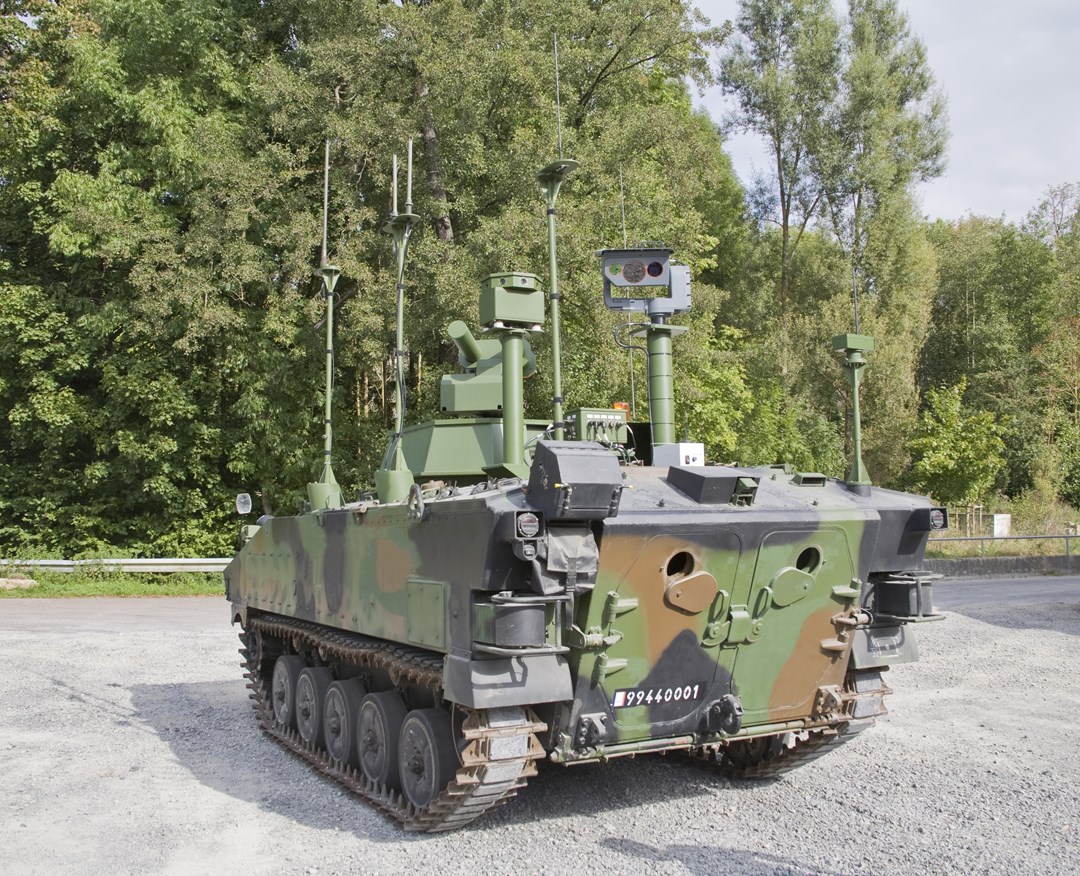
AMX-10P with RATAC radar This had no turret and was fitted with a roof-mounted radar for field artillery fire (RATAC) pulse Doppler radar scanner. The vehicle had a crew of five: commander; radar operator; assistant radar operator; radio operator; driver. The radar had four operating modes: ground surveillance; acquisition and identification; angular deviation measurement; automatic tracking.
AMX-10P upgrade The AMX-10P ICV upgrade included the installation of a new passive armor package to the front, sides, rear, and hull top to provide an enhanced level of survivability. Other enhancements included a modified rear power-operated ramp, new torsion bars, and reinforced transmission. The original AMX-10P was fully amphibious, propelled in the water by two water-jets mounted one either side of the hull at the rear. These and the trim vane installed at the front of the hull were removed to save weight but the vehicle retained its fording capability.
System
Alternative Designation AMX-10P
Manufacturer GIAT Industries
Type Infantry Fighting Vehicle (IFV)
Family AMX-10
Crew 3 ea
Passenger Capacity 8 ea
Dimensions
Length 5.77 m
Width 2.78 m
Height 2.57 m
Weight, Combat 14.5 tons
Ground Pressure 0.53 kg/cm2
Ground Clearance 0.45 m
Automotive
Engine Name Hispano-Suiza HS-115
Engine Type Diesel
Engine Power 276 hp
Fuel Capacity 528 liters
Maximum Range 600 km
Speed, Maximum Road 65 km/h
Speed, Average Cross 40 km/h
Speed Maximum Swim 8 km/h
Gradient 60 %
Side Slope 30 %
Vertical Step 0.7 m
Trench 1.6 m
Fording Depth Amphibious
Main Gun
System
Name GIAT M693 (F2) Main Gun, 20mm Duel Feed Cannon
Type 20 mm
Max Rate of Fire 900 rds/min
Traverse Range 360 deg
Traverse Left 180 deg
Traverse Right 180 deg
Maximum Elevation +50 deg
Minimum Elevation -8 deg
Length 2,600 mm
Recoil Stoke 60 mm
Height 260 mm
Weight 71 kg
Maximum Effective Range 1,500 m
Ammunition
Type Rifle
Caliber 20 mm
Muzzle Velocity 1,050 m/s
Maximum Effective Range 1,500 m
Penetration 20 mm of armor plating at a range of 1,000 meters
Basic Load 800 ea
Coaxial Weapon System
System
Name AA-52, 7.62mm Machine Gun
Type 7.62 mm
Manufacturer Manufacture d'armes de Saint-Étienne (MAS)
Max Rate of Fire 900 rds/min
Weight 9,970 kg
Length 1,080 mm
Barrel Length 600 mm
Action Lever-delayed blowback
Effective Firing Range 600 m
Maximum Firing Range 3,200 m
Feedd System Belt
Sights Iron Removable APX (SOM) telescopic sights IR scope
Ammunition
Type Rifle
Caliber 7.62 mm
Cartridge 7.5×54mm French, 7.62×51mm NATO
Muzzle Velocity 830 m/s
Basic Load 900 ea
Anti-Tank Guided Missile (ATGM)
MILAN Anti-Tank Guided Missile (ATGM)
Country France / Germany
Service 1972-present
Prolferation Thousands deployed by the French, German, Belgian, and Spanish armies, but Italy and soon India were assembling MILANs under license. All in all, the MILAN’s customer list has reached 41 countries and at least several non-state groups.
Range 2 km
Basic Load 10 ea
Armor Penetration 350 mm
Missile Length 918 mm
Missile Diameter 103 mm
Fin Span 267 mm
Missile Weight 6.73 kg
Total Weight with Launcher 24 kg
Warhead Weight 2.7 kg
Warhead Type High Explosive
Guidance System Wire-Guided
Note The iconic MILAN is the most successful Western European anti-tank missile ever made and is only surpassed by the BGM-71 TOW when it comes to international customers.
Fire Control
Name INA
Computerized FCS Yes
Thermal Sight Vehicle Commander Yes, M371 day sight with a magnification of ×1 and ×6
Thermal Sight Gunner Tes, OB-40 day/night periscope
Main Gun Stabilization Non-stabilized
Protection
Hull Armor Welded from aluminum armor plates, which protect the vehicle from 14.5mm rounds.
Turret Armor Welded from aluminum armor plates, which protect the vehicle from 14.5mm rounds.
Applique Armor Available
Explosive Reactive Armor Available
Active Protection System INA
Mine Clearing No
Self-Entrenching Blade No
NBC Protection Yes
Smoke Equipment 4 × turret-mounted 80 mm Smoke grenade launcher.
IR Signature INA
Details
Country of Origin France
Category Land
Land
Filter Label
A
Classification
Domain
Ground
Equipment Status
Active
Dimensions
Length
5.77 m
Width
2.78 m
Height
2.57 m
Weight
14500 kg
Operators (11)
France
South Korea
Bosnia and Herzegovina
Greece
Indonesia
Iraq
Morocco
Qatar
Saudi Arabia
Singapore
United Arab Emirates
Something went wrong. Please reload the page. Reload