AAVP7A1
AAVP7A1
Tracked Armored Vehicles
Spotted an error? Sign in to suggest an edit.
Basic Information
Name
AAVP7A1
Designation
AAVP7A1
Alternate Designation
KAAV7A1, KAAVP7A1, LVTP7
Equipment Type
Tracked Armored Vehicles
Manufacturer
United Defense
Date of Introduction
1984
Description
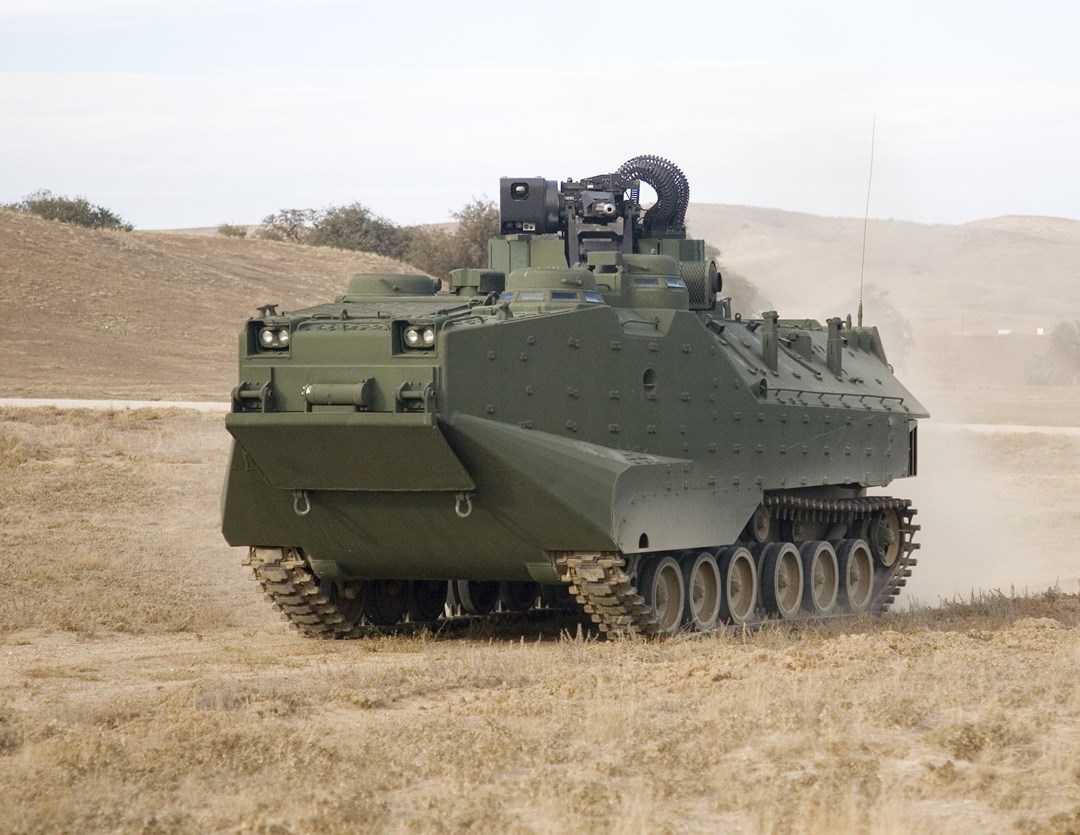
The AAVP7A1 is designed for troops and cargo transport like the US Army M2 Bradley. The AAV7 vehicles can be upgraded to the RAM/RS (Reliability, Availability and Maintainability/Rebuild to Standard) configuration which turns conventional AAV7 hulls into highly mobile machines transporting cargo and troops from ship to shore. The US Marine Corps completed the RAM/RS remanufacturing program in 2006. The modification work was done by United Defense, now a BAE Systems subsidiary. RAM/RS was originally designed to encompass a more powerful turbocharged diesel engine and power train and a Bradley Combat System suspension, providing superior durability and maintainability.
Ground Specifications
Crew
3
Troop Capacity
21
Mobility Type
Tracked
Main Weapon
12.7 millimeter (13mm)
Max Speed
72.0 km/h
Range
483.0 km
Overview (Deagel)
Group
Tracked Armored Vehicles
Status
Active
Also Known As
KAAV7A1, KAAVP7A1, LVTP7
Origin
United States of America
Contractor
United Defense
Initial Operational Capability (IOC)
1984
Total Production
?
Unitary Cost
USD $2.5 million
Specifications (Deagel)
Crew
3
Troops
21
Dimensions — Main Gun Caliber
12.7 millimeter
Mass — Combat Weight
27,560 kilogram
Mass — Empty Weight
21,000 kilogram
Mass — Payload
4,536 kilogram
Performance — Max Range
483 kilometer
Power — Power
525 shp
Speed — Cross Country Speed
48 kph
Speed — Top Speed
72 kph
Speed — Top Swimming Speed
7 knot
Variants
Variant 1
AAVP7A1
Variant 2
AAVC7A1
Variant 3
AAVR7A1
Details
Country of Origin
United States
Sources
deagel.com: https://www.deagel.com/x/x/a000546
Classification
Domain
Ground
Equipment Status
Active
Dimensions
Length
—
Width
—
Height
—
Weight
27560 kg
Related Equipment (1)
Variant of
Operators (8)
United States
Italy
Japan
South Korea
Brazil
Argentina
Indonesia
Taiwan
Something went wrong. Please reload the page.
Reload