Shahab Saghib (Shooting Star) Iranian Short-Range Air Defense Missile System
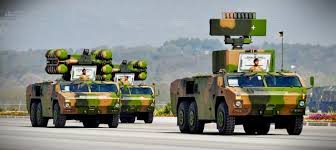
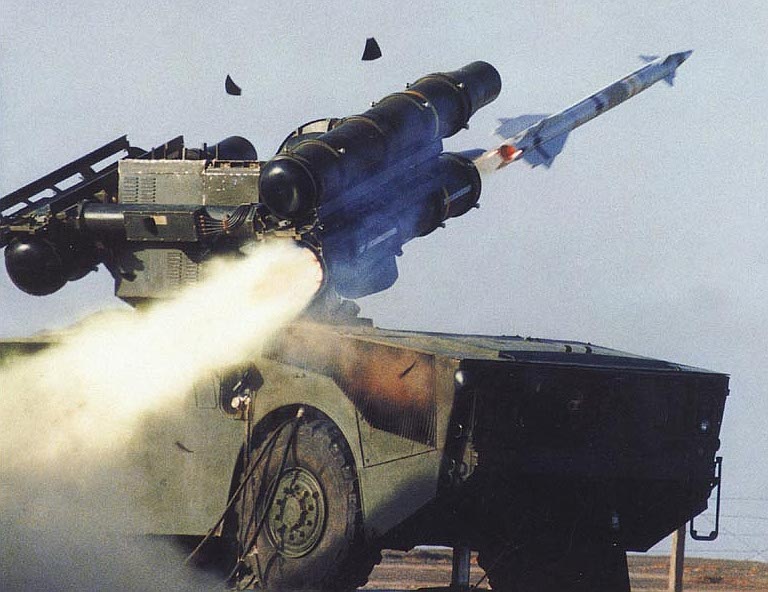
Shahab Saghib (Shooting Star) is based on the Chinese FM-80. The HQ-7 is a Chinese clone of the French Thales/Thomson CSF Crotale SAM. During the 1970s the French supplied samples of the Crotale which was promptly reverse engineered. The cloned Crotale has been built in two configurations, a high mobility variant for PLA Army units on a 4 x 4 cloned French Thomson-Hotchkiss P4R armoured vehicle, and a less mobile PLA-AF air field defence system, using either a trailer or a truck platform. Since then, derivative variants have emerged in the FM-90 series, in addition to the shipboard variants. The Thomson-Hotchkiss P4R vehicle uses either a diesel or gasoline engine driving an alternator which powers electrical motors driving the wheels. Chinese sources sometimes label the P4R as a B-20. A naval variant of the Crotale as also been developed. A four round elevating tube launcher turret is used, mounting the Ku-band Automatic Command to Line Of Sight monopulse radar dish antenna. Export variants are the FM-80 and improved FM-90 with a FLIR tracker and longer ranging missiles. HQ-7/FM-80/90 batteries are typically supported by an acquisition radar system, the FM-90 usually on a new design indigenous 6 x 6 light armoured personnel carrier. The HQ-7 SAM is used by PLA and PLAAF for short-range air-defense. At some PLAAF bases, the HQ-7 is deployed in hardened shelters. The PLA has mounted the HQ-7 on towed trailers. The HongQi 7 (HQ-7) short-range air defense missile system has been developed in China in the 1980s. It is a reverse engineered copy of the French Crotale. Sometimes it is referred as Sino Crotale. In 1978-1979 China imported some of the Thomson-CSF Crotale systems for evaluation. These where both land-based and ship-based versions. Some French R-440 Sea Crotale systems were purchased and installed on the Chinese warships. Eventually China reverse engineered this system. First Chinese clone of the ground-based version was produced for testing in 1983. In 1986-1988 it was approved for production. The HQ-7 was also deployed by the Chinese air force and protected the air bases from air attacks. Since 1989 the HQ-7 was proposed for export customers as the FM-80.