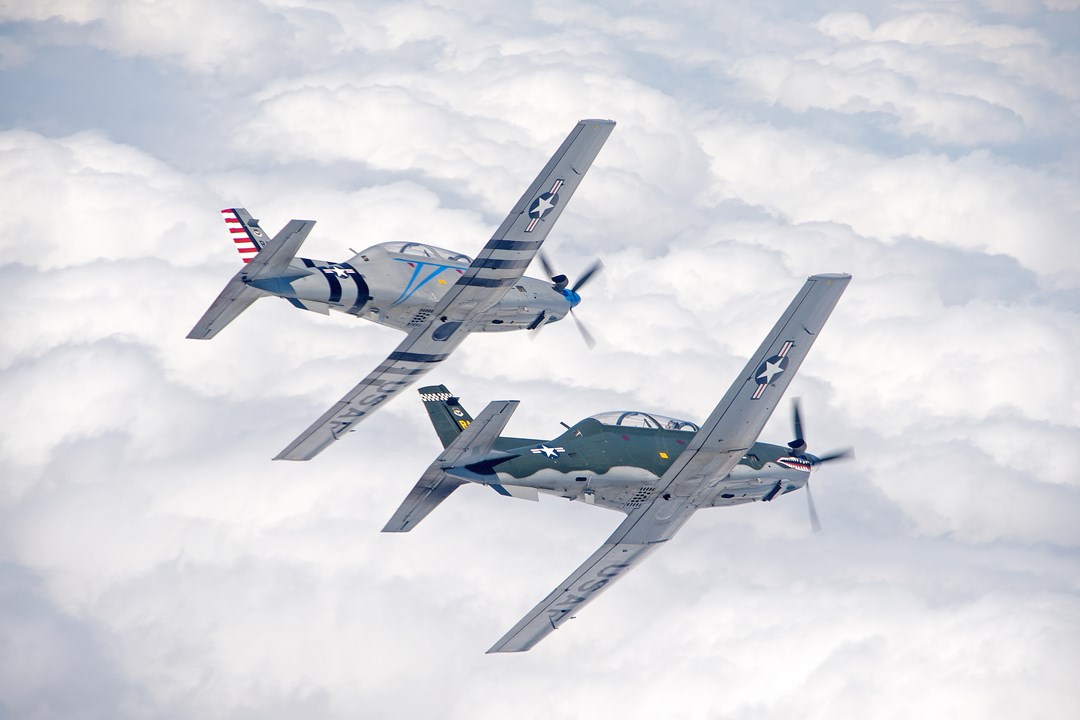
T-6A Texan II
T-6A Texan II



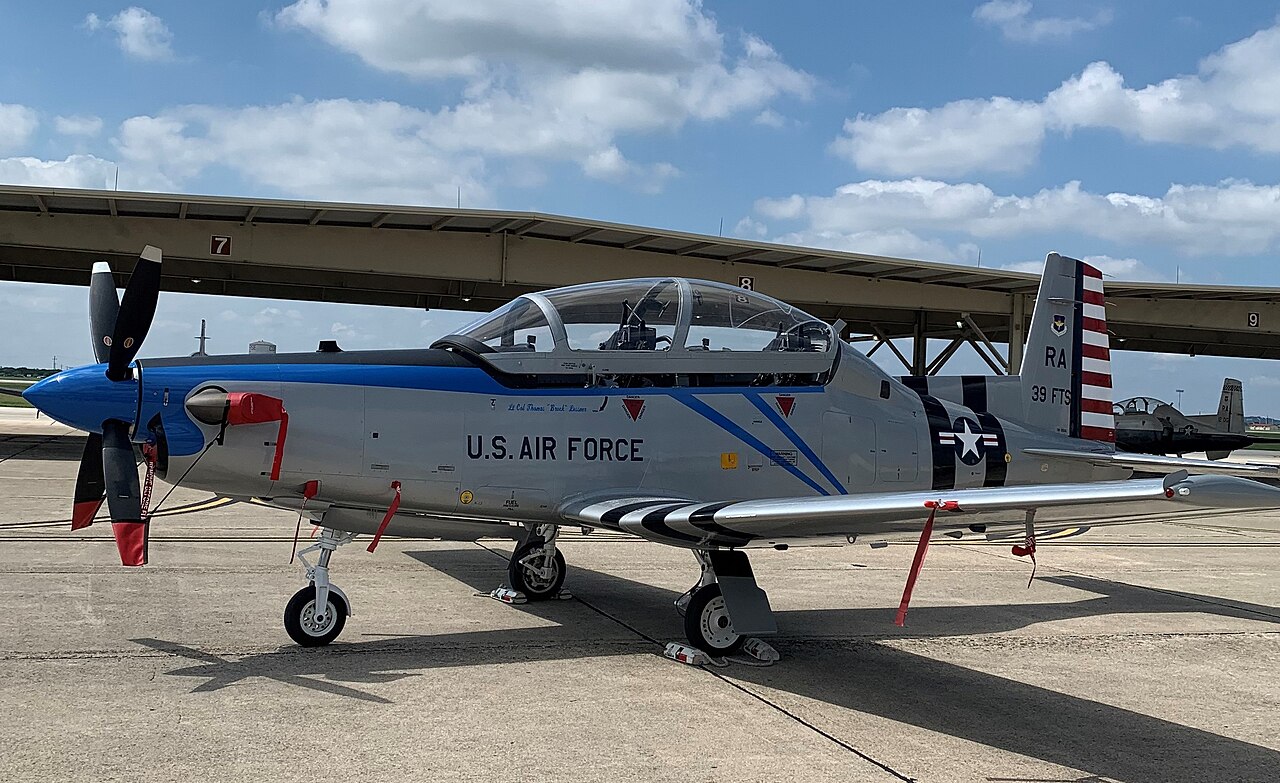


The JPATS system includes the Texan II aircraft, a suite of simulators, training devices, and a training integration management system. Production of the T-6A is expected to end in 2017 with some 800 aircraft rolling off the assembly line. Raytheon estimated that the JPATS aircraft fleet is expected to last until 2050. The T-6A is powered by a single Pratt & Whitney Canada PT6A-68 turboprop engine that delivers 1,100-shp. The aircraft is fully aerobatic and features pressurized cockpit with an anti-G system, ejection seats, and an advanced avionics package. The first T-6A achieved operational capability in May 2000 at Randolph Air Force Base, Texas. Training began at Moody Air Force Base (Georgia) in October of 2001. The United States Air Force and the Navy have agreed to procure up to 418 T-6As through 2010. These aircraft are replacing the USAF T-37B and the Navy T-34C. In addition, the NATO Flying Training in Canada program purchased 26 T-6A aircraft and the Hellenic Air Force of Greece ordered another 45 T-6As. The Hawker Beechcraft AT-6 is a tandem twin-seat light attack aircraft derived from the proven T-6 Texan II trainer. The AT-6 can be equipped with sensors and its weapon options include: gun pods, laser guided bombs, anti-tank missiles, and rockets. The aircraft is suitable for a wide range of missions (netcentric ISR, urban close air support, forward air control, convoy escort, critical infrastructure protection, border security, port security, and counter-narcoterrorism) at an affordable cost.
deagel.com: https://www.deagel.com/x/x/a000247 deagel.com: https://www.deagel.com/x/x/a001009 Wikidata (https://www.wikidata.org/wiki/Q814025)