JY-9 Wall Eye Chinese Mobile Low-Altitude Search Radar
Jy-9 Wall Eye
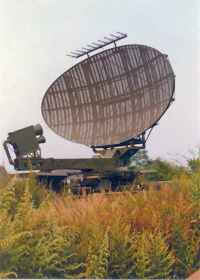
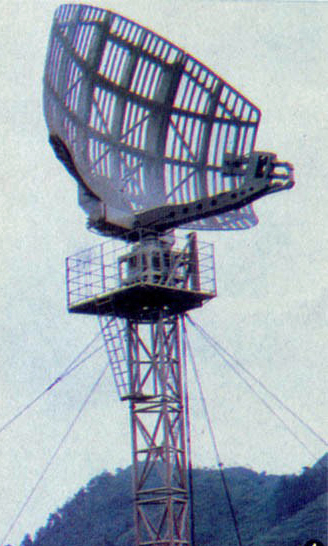
The JY-9 Radar is a mobile S-band, low-altitude search radar designed for use in air defense, gap filling, airport surveillance, and coastal defense. It is designed for effective detection of targets at low altitude in both ECM and natural clutter environments. The general designer of JY-9 is the head of the 38th Research Institute, academician of the Chinese Academy of Sciences, Mr. Wu Manqing, who is also the general designer of JY-8 and the general designer of the radar systems for KJ-2000 and KJ-200. It consists of a radar/operations shelter, an antenna pallet, and a power station shelter and is transportable by air, rail, and sea. It has a setup and dismantle time of 90 minutes by a team of 8 men. The JY-9 utilizes a dual-beam antenna assembly comprising a deformed parabolic reflector, two horns, and two feed channels. One channel is used for transmission, but both are used for reception. The antenna rotates at 6 or 12 rpm to provide all-around coverage and can be mounted on a shelter or the ground. The JY-9 features high anti-jamming and anti-clutter capabilities due to the use of advanced techniques, including pulse-to-pulse frequency agility, dual-channel operation, JATS, a wide operating band, low sidelobes, MTD automatic spectrum processing, an automatic clutter map, and an automatic residue map. The mean time between failures is better than 900 hours with Built-in test equipment (BITE). The JY-9F three-dimensional low-altitude surveillance radar is a new derivation of the JY-9 low-altitude radar. It is a fully coherent pulse-compression radar with high reliability and mobility, providing low-flying target information for national air defense information networks, as well as AAA or air traffic control systems. The JY-9F consists of an antenna assembly, an operations shelter, a trailer-installed shelter housing two diesel generators, and an optional trailer-installed shelter. The antenna can be folded down or erected by a motor-driven mechanism, and the system can be assembled and disassembled by a crew of eight men within one hour. This advanced radar incorporates state-of-the-art techniques. The excellent low sidelobe antenna employed in the system has significantly enhanced the radar's anti-clutter capability and ECCM performance, resulting in improved low-altitude detection performance. Three AMTI processing channels are used, each equipped to handle a particular environmental condition, thereby providing maximum low-altitude target detection. The wideband and highly stable TWT+CFA transmitter guarantees a super-clutter visibility over 40 dB in the presence of ground clutter. The quadriphase Taylor code ensures a desirable consistency, high reliability, and high stability. Meanwhile, the waveform agility can be realised. The JY-9F radar is characterised by high reliability and maintainability with an MTBF of more than 400 hours and an MTTR of less than 30 minutes. Due to the extensive BITE adopted in the system, the troubleshooting probability reaches 95 percent. In comparison, 85 percent of faults can be isolated to the PCB level, and all faults can be isolated to the replaceable unit level. The system is manufactured by the East China Research Institute of Electronic Engineering (ECRIEE), also known as No. 38 Research Institute.